
Volcanoes for kids begin with a simple idea: a mountain with a hot belly. First, heat melts rock into magma under the ground. Then pressure forces magma and gas upward. When magma reaches the surface it becomes lava. Wow! In 2023, there were 75 confirmed eruptions from 71 different volcanoes worldwide, with 27 of those being new eruptions that started during the year.
Volcanoes for Kids: What is a volcano?
A volcano is a mountain that opens to molten rock below. Most volcanoes have a pool of magma deep inside. When that magma escapes we see eruptions. This idea makes volcanoes feel alive and dramatic.
How volcanoes erupt
Heat melts rock and turns it into magma. Also, gases dissolved in magma expand as pressure drops. Magma moves through cracks and rises up a pipe. Sometimes lava flows gently. Other times it blasts ash and rock into the sky. Kids often say “just one more!” when they hear about eruptions. For example, on July 14, 2023, Alaska’s Shishaldin volcano erupted, sending an ash cloud 6 to 7.5 miles (9 to 12 kilometers) into the air, prompting aviation alerts.
Parts of a volcano
Learn a few simple names for big ideas. These help children picture what is happening under the mountain.
- Magma chamber
- Conduit or pipe
- Vent and crater or caldera
- Lava flows and ash cloud
Types of volcanoes
There are a few main types. Each looks and behaves differently.
- Shield volcanoes are broad and gentle. They have runny lava, like Mauna Loa.
- Stratovolcanoes or composite volcanoes are steeper and layered. Think Mount Fuji.
- Cinder cones are small and sharp.
- Lava domes form from thick, slow lava.
Where volcanoes form
Most volcanoes sit along tectonic plate boundaries. In particular, many ring the Pacific Ocean. Also, some volcanoes rise above hotspots, such as the Hawaiian islands. Others build new ocean crust at mid ocean ridges.
Eruption styles and magma types
Effusive eruptions pour lava in calm flows. Explosive eruptions blast ash, rock, and gas high into the sky. Magma composition helps decide the style. Basaltic magma is low in silica and flows freely. Andesitic and rhyolitic magmas are thicker. They trap gas and can erupt explosively. As of November 2023, 46 volcanoes worldwide were in a continuous eruptive state, with 19 volcanoes actively erupting at that time.
Hazards of volcanoes
Volcanoes can be dangerous. Common hazards include:
- Lava flows
- Ash that harms lungs and engines
- Fast pyroclastic flows
- Lahars or volcanic mudflows
- Volcanic gases such as sulfur dioxide
Scientists watch earthquakes, gas, ground swelling, and heat to give early warning. However, people must always follow local authorities near active volcanoes.
Gifts from volcanoes
Volcanoes shape Earth and help people. Repeated lava builds islands and new land. Weathered volcanic rock creates rich soil. Also, humans use geothermal energy and mine minerals. Volcanoes often draw tourists who love drama and wonder. In 2023, a total of 30 countries, overseas territories, and departments experienced volcanic eruptions of all levels.
Famous eruptions
Some eruptions changed history. For example, Vesuvius buried Pompeii in 79 AD. Krakatoa in 1883 changed weather for years. Mount St. Helens in 1980 reshaped a mountain. Eyjafjallajokull in 2010 grounded flights and taught us about ash.
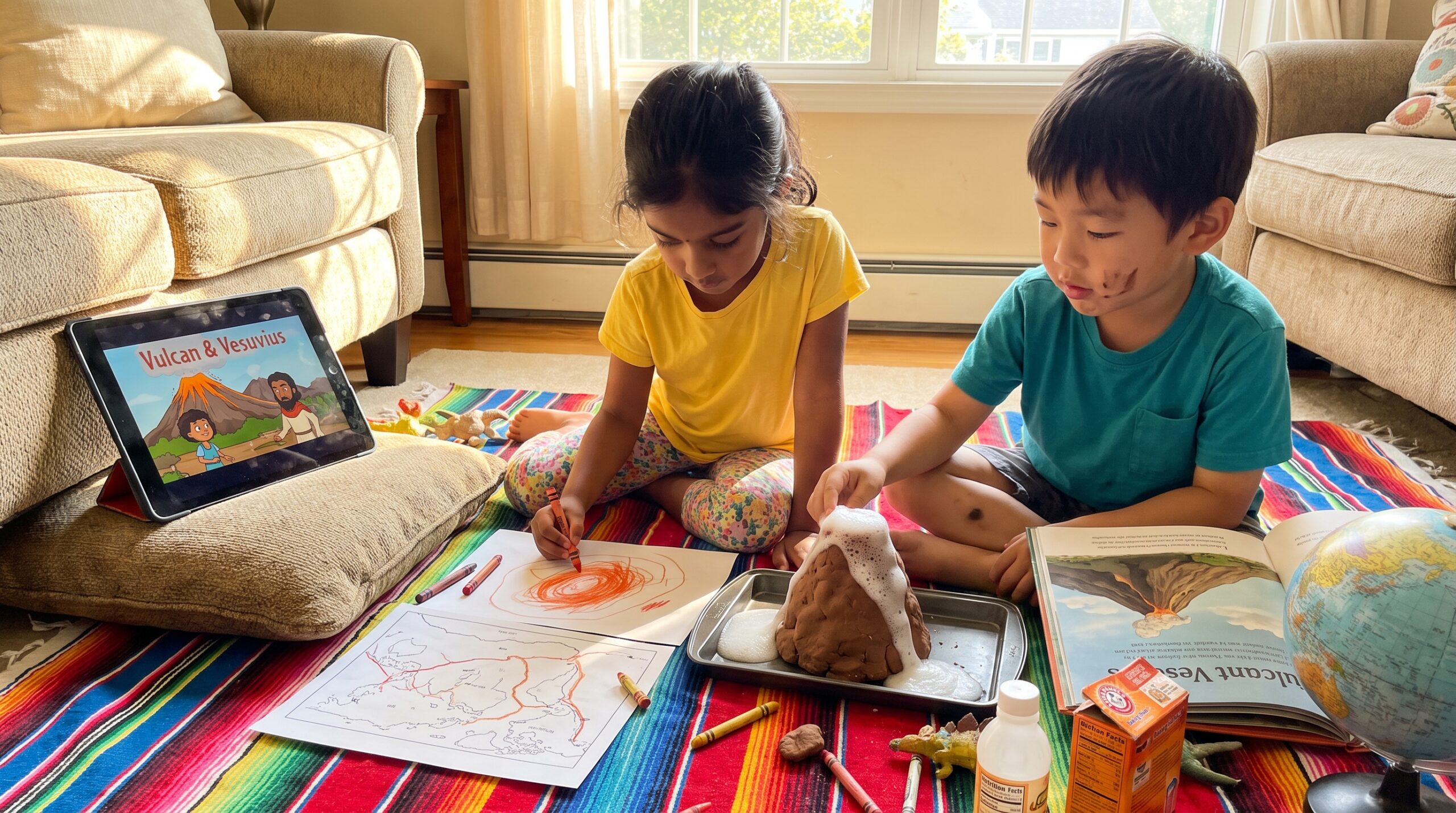
Try this at home or school
These activities spark curiosity and keep learning playful.
- Draw and label a volcano
- Make a baking soda and vinegar model
- Map active volcanoes
- Watch a live volcano webcam
Ask children: What would it look like up close? Where would lava go? What grows best in volcanic soil?
Safety note
Follow local authorities and avoid restricted zones. If ash falls, stay indoors and cover faces. Safety keeps curiosity safe and smart.
Read or listen to a story about Volcanoes now: For 3-5 year olds, For 3-5 year olds, For 6-8 year olds, For 8-10 year olds, and For 10-12 year olds.
At Storypie, a volcano tells its tale. We cover myths, tectonic plates, and how eruptions build land. After listening, ask your child to draw the volcano to spark imagination and talk. Visit Storypie for more age-friendly science stories.