
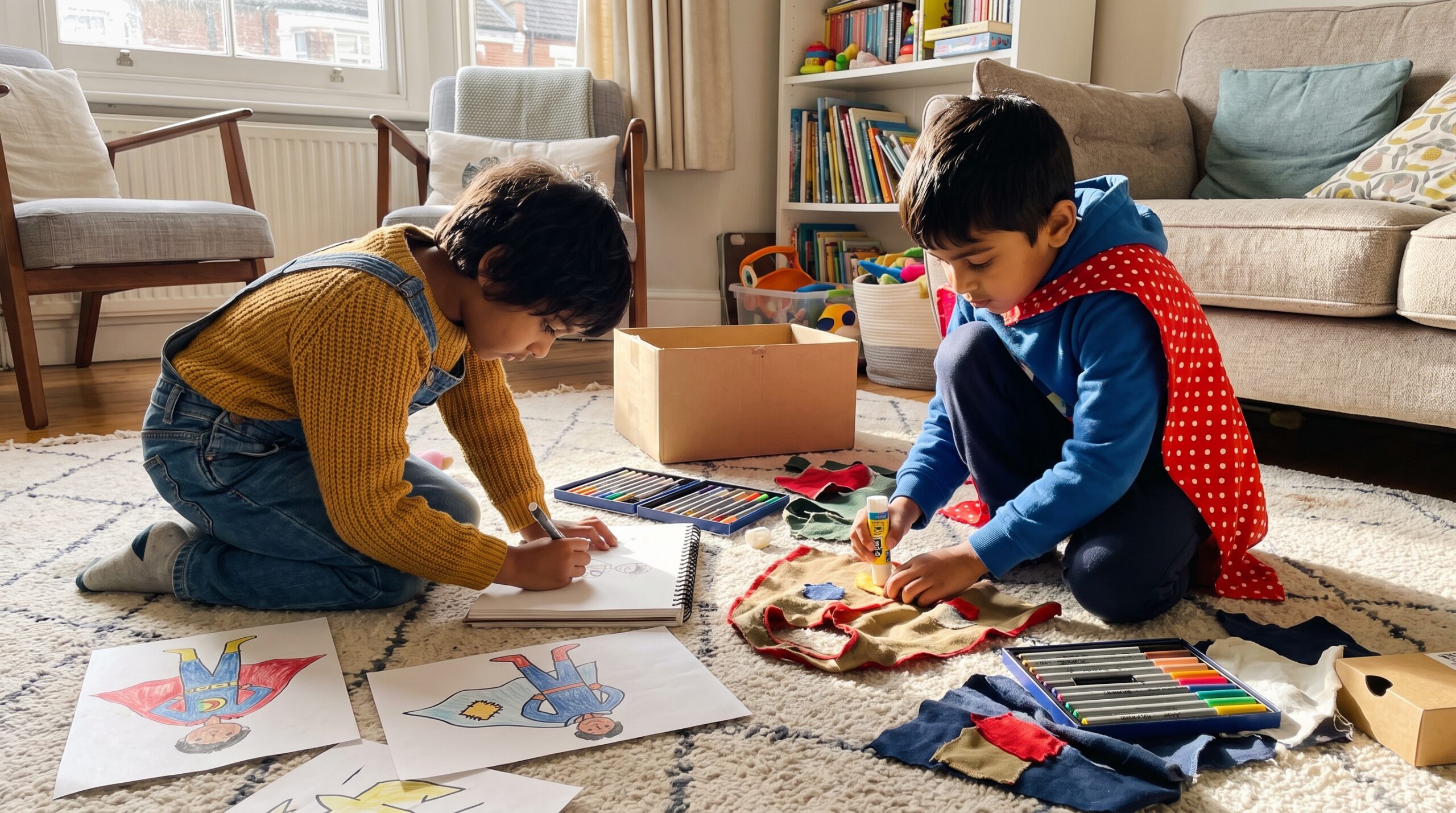
weekend imagination challenge create your own hero starts with one small question. Kids lean in. They draw, name, and grin. That tiny spark leads to big delight.
What it is
This challenge is a short family activity for a lazy afternoon or a rainy weekend. In 5 to 30 minutes, children invent an original hero. They share a quick sketch or a brief description. The prep is low and the joy is high. A 2025 study involving 300 children aged 4–6 found that a 16-week intervention with digital games significantly improved drawing innovativeness and storytelling plot richness, showcasing the positive impact of structured imaginative play on children’s creativity.
How the weekend imagination challenge create your own hero works
Keep it cozy. Ask one vivid line and then wait. Offer a silly sound effect. Celebrate the messy bits and the tiny triumphs. Most sessions last under half an hour, but five minutes can do wonders.
Core elements to prompt
- Name. Who is this hero?
- Appearance. What makes them special or ordinary?
- Powers or skills. Try unexpected gifts, like gardening super senses.
- Flaw or challenge. What do they worry about, and how might they fix it?
- Motivation. What does the hero protect or stand for?
- Origins and props. Where are they from, and who helps them?
Quick 5-minute version
Set a timer for five minutes. Ask: What is your hero called? What one thing are they afraid of? How will they fix it? Draw for two minutes. Then tell the rest in two short sentences. Share a sketch or a line. That tiny prompt, a flaw and a fix, sparks problem solving and cheer.
Age-friendly variations
Adapt the challenge by age. For preschoolers, keep it tactile and simple. For older kids, add backstory and a sidekick. Tweens can explore values, culture, and stereotype-busting details.
- Preschoolers: Draw and name. Use stickers or playdough.
- Early primary (5 to 8): Add one sentence about a flaw and a fix.
- Older primary (9 to 12): Try a two-paragraph backstory or a tiny comic strip.
- Tweens: Explore motivation, values, and cultural details.
Why this matters
Imaginative play grows language and symbolic thinking. It asks children to take another point of view and builds empathy. Including a flaw teaches problem solving and resilience. Short prompts fit busy lives and reward curiosity.
Share, privacy, and inclusion
Many families save sketches and mini stories. For an easy place to collect audio, sketches, and family creations, try the Storypie app. Use first names or nicknames when sharing. Avoid exact locations in photos. Invite diverse heroes and avoid stereotypes. Also, include tactile and audio options for children with different needs.
Ready to try right now? Gather paper and a pencil. Ask one bright question. Wait quietly. Then cheer the tiny triumphs.
Want a simple way to keep these mini stories? Get the Storypie app to collect creations and audio in one safe spot: get the Storypie app.