English

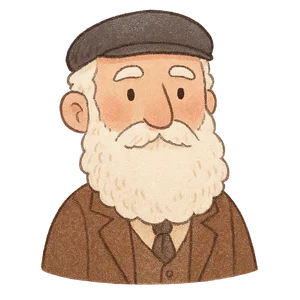
Camille Pissarro
A Danish-French painter…
Reads at Grades 6–8 Listens at Grades 4–8
Print & create
Answer keys·No prep·Free with an account
28 worksheets · answer keys · full story · quiz · Ages 10-12 · CEFR B2
Plus adds 164,000+ more stories in 27 languages, audio for every one, and printables for all of them.
Just want Camille Pissarro?
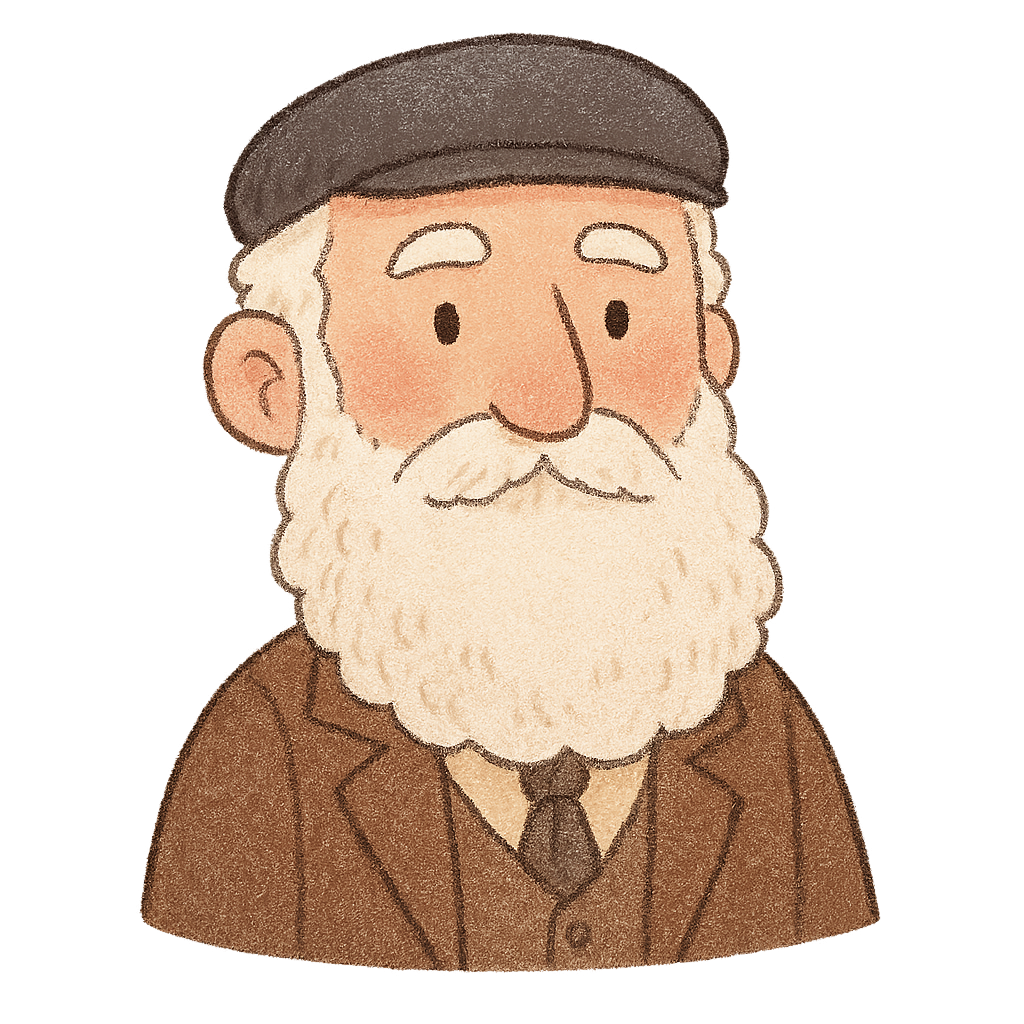
Hello, my name is Camille Pissarro, and I am a painter who helped change the way people see the world. My story begins on the beautiful, sun-drenched island of St. Thomas, where I was born on July 10th, 1830. The world around me was full of brilliant colors and a special kind of tropical light that I found fascinating. From a young age, I loved to draw everything I saw. My family, however, owned a business and expected that I would one day join them in their work. Art was seen as a hobby, not a serious career. Around 1842, when I was twelve, my parents sent me to a boarding school in France. It was there that a teacher saw my passion for drawing and became the first person to truly encourage my artistic talents. He told me to draw from nature, a piece of advice that would shape my entire life.
I returned to St. Thomas around 1847, but my heart was no longer in the family business. Every spare moment I had, I spent sketching the docks, the markets, and the people of my island home. My mind was set on art. A turning point came when I met a Danish artist named Fritz Melbye. He saw the passion in my work and became a great friend and mentor. He was the one who convinced me that I could become a professional painter. With his encouragement, I made the biggest decision of my life. In 1855, at the age of 25, I left my home and family behind and moved to Paris, the center of the art world, to dedicate myself completely to my dream. Once there, I began my studies, but I quickly grew frustrated with the official art world. The most powerful institution, called the Salon, had very strict and traditional rules about what a painting should look like. I found their methods rigid and uninspiring; they did not capture the world as I truly saw it.
Camille Pissarro: A New Way of Seeing
Hello, my name is Camille Pissarro, and I am a painter who helped change the way people see the world. My story begins on the beautiful, sun-drenched island of St. Thomas, where I was born on July 10th, 1830. The world around me was full of brilliant colors and a special kind of tropical light that I found fascinating. From a young age, I loved to draw everything I saw. My family, however, owned a business and expected that I would one day join them in their work. Art was seen as a hobby, not a serious career. Around 1842, when I was twelve, my parents sent me to a boarding school in France. It was there that a teacher saw my passion for drawing and became the first person to truly encourage my artistic talents. He told me to draw from nature, a piece of advice that would shape my entire life.
I returned to St. Thomas around 1847, but my heart was no longer in the family business. Every spare moment I had, I spent sketching the docks, the markets, and the people of my island home. My mind was set on art. A turning point came when I met a Danish artist named Fritz Melbye. He saw the passion in my work and became a great friend and mentor. He was the one who convinced me that I could become a professional painter. With his encouragement, I made the biggest decision of my life. In 1855, at the age of 25, I left my home and family behind and moved to Paris, the center of the art world, to dedicate myself completely to my dream. Once there, I began my studies, but I quickly grew frustrated with the official art world. The most powerful institution, called the Salon, had very strict and traditional rules about what a painting should look like. I found their methods rigid and uninspiring; they did not capture the world as I truly saw it.
In Paris, I found I was not alone in my frustration. During the 1860s, I began meeting other young artists who felt the same way, including Claude Monet and Paul Cézanne. We shared a revolutionary idea: instead of painting historical scenes in a studio, we wanted to paint modern life as it happened, right before our eyes. We took our easels outdoors, a practice known as painting 'en plein air,' to capture the immediate feeling of a moment. We were fascinated by the way light changed, how the air felt, and how everything seemed to be in constant motion. Our paintings were filled with visible brushstrokes and bright colors, which was shocking to the art world at the time. Naturally, the Salon rejected our work, calling it messy and unfinished. But we did not give up. In 1874, we decided to organize our own independent show, which became known as the first Impressionist exhibition. It was a bold move, and I was proud to be a central part of it. In fact, between 1874 and 1886, our group held eight exhibitions, and I was the only artist to show my work in every single one of them.
While my artistic life was exciting, my personal life was often a struggle. I married a wonderful woman named Julie Vellay, and together we raised our children. We often faced financial difficulties, as our new style of painting did not sell well at first. Despite these challenges, I never stopped being curious and was always eager to learn. I believed an artist must never stand still. In the 1880s, I became interested in the scientific theories of color and light being explored by younger artists like Georges Seurat. For a time, I adopted their new style, called Neo-Impressionism or Pointillism. This technique involved painting with thousands of tiny, distinct dots of pure color that would blend together in the viewer's eye. It was a very demanding and different way of working, but it showed my commitment to always experimenting and pushing the boundaries of art. After a few years, I returned to a freer, more spontaneous Impressionist style, but the experience taught me a great deal about color.
In my later years, I developed a recurring eye problem that prevented me from working outdoors as I once had. But I refused to let this stop me from painting. I found a new way to see the world by renting rooms in hotels and painting the bustling city life I saw from the windows. This led to my famous series of cityscapes capturing the boulevards and bridges of Paris, Rouen, and Le Havre in different weather and seasons. I lived a full and creative life dedicated to art. I lived to be 73 years old. Today, I am remembered not only for my paintings of quiet countrysides and lively cities, but also as a kind and patient teacher. I was a mentor who guided and encouraged many other famous artists, including Cézanne and Gauguin. My story is one of perseverance, of believing in a new vision, and of a lifelong dedication to seeing and sharing the beauty of the world in a new light.
Wow facts
About
A Danish-French painter, Camille Pissarro was a key figure in the Impressionist movement and the only artist to exhibit in all eight Impressionist exhibitions from 1874 to 1886. He is often called the 'Father of Impressionism.'
Take a Quiz
Question 1 of 5
Based on the story, which word best describes Camille Pissarro's approach to art throughout his life?
Explore next






Want to do even more?
Go beyond exploring. Unlock tools that turn every story into real learning.

Storypie Plus for families
Full stories, quizzes, and printables. Nights and car rides, sorted.
- Unlimited audio stories
- Create Mode: your child stars in the story
- Offline downloads
- Printable worksheets & coloring pages

Why Storypie for Schools
Students engaged. Prep in seconds. Evenings back to you.
- Worksheets & Quizzes
- Classroom Management
- Formative Assessment
- Custom Curriculum & Lesson Plans
- 27 Languages

Why Storypie for Homeschool
Curriculum done. They'll ask for more. Hours back in your day.
- Worksheet Generator
- First-Person Audio Stories
- Built-in Comprehension Quizzes
- Custom Curriculum & Lesson Plans
- Print & Go Activities