English

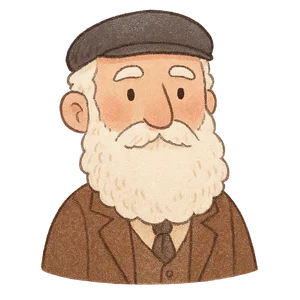
Camille Pissarro
A Danish-French painter…
Reads at Grades 3–5 Listens at Grades 1–5
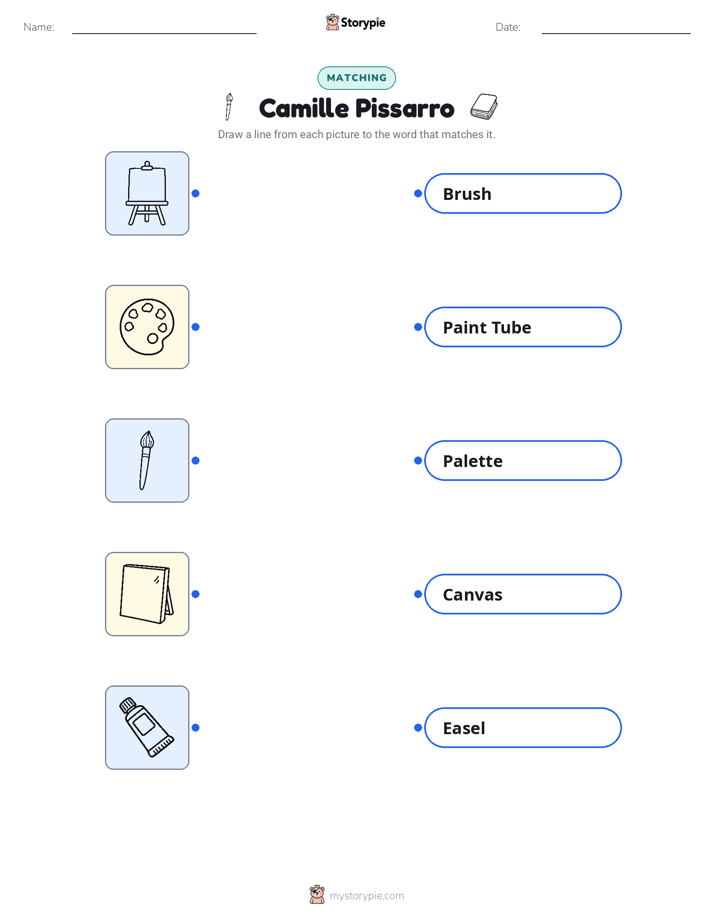
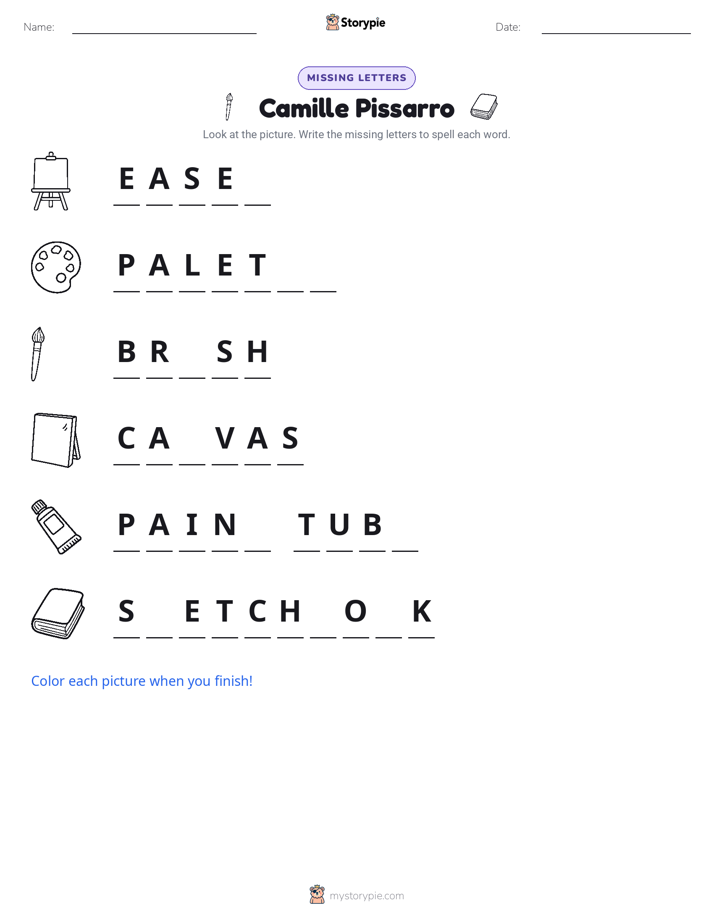
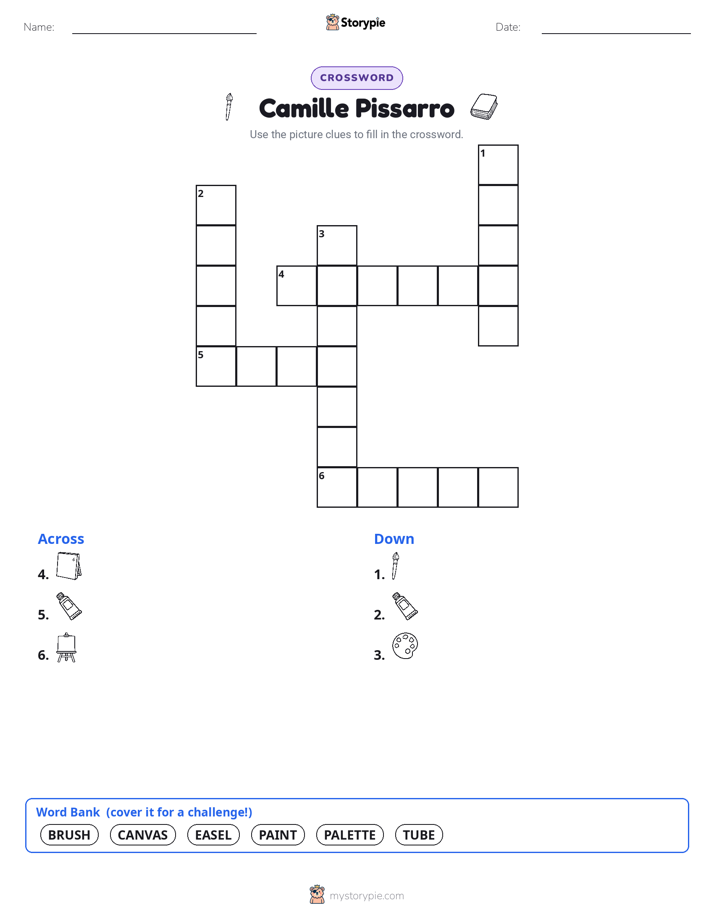
Print & create
Answer keys·No prep·Free with an account
28 worksheets · answer keys · full story · quiz · Ages 8-10 · CEFR B1
Plus adds 164,000+ more stories in 27 languages, audio for every one, and printables for all of them.
Just want Camille Pissarro?
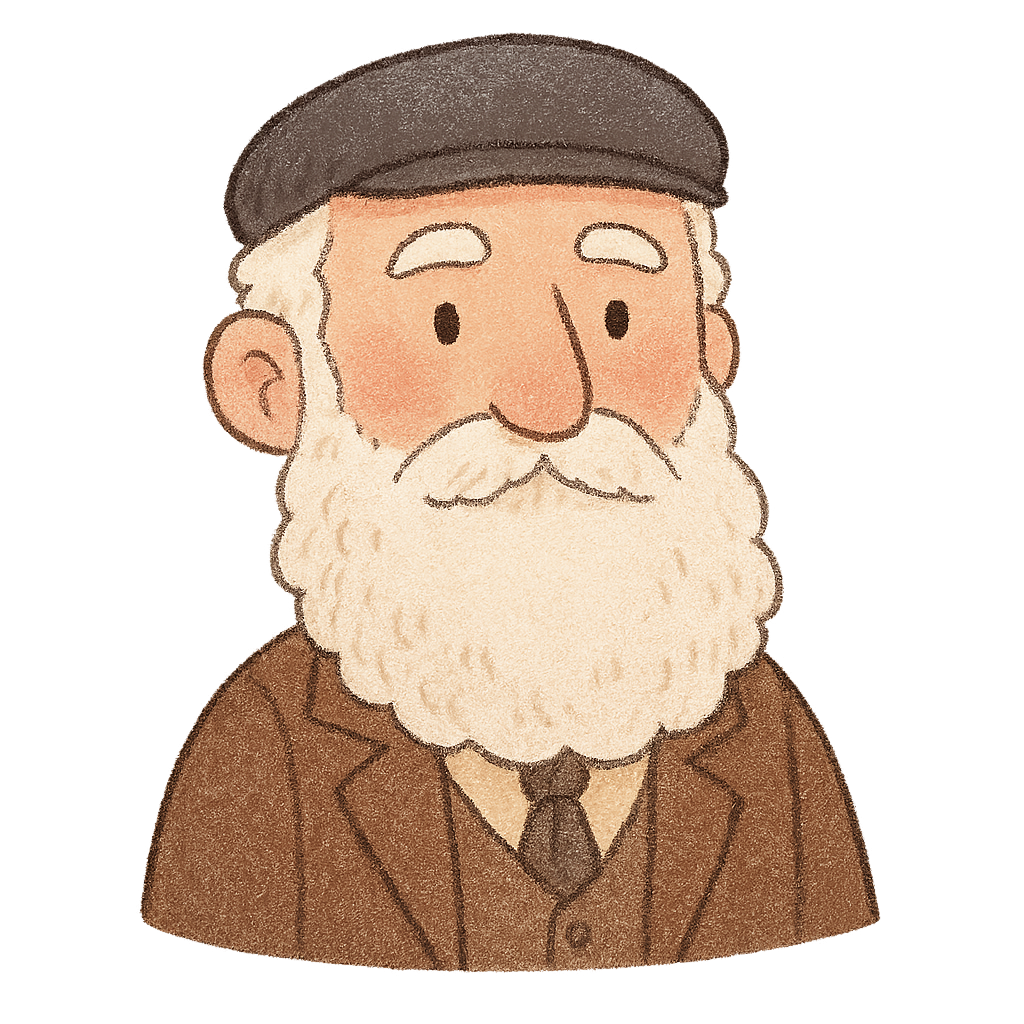
Hello, my name is Camille Pissarro. My story begins on the warm, sunny island of St. Thomas, where I was born on July 10th, 1830. My home was filled with bright, beautiful colors, from the deep blue of the sea to the vibrant greens of the tropical plants. From the time I was a young boy, I loved to draw everything I saw. When I was twelve years old, in 1842, my parents sent me to a boarding school near Paris, France. It was a big change from my island home, but something wonderful happened there. My teacher saw my drawings and noticed I had a special talent. He encouraged me to go outside and draw from nature, to really look at the world around me and capture it on paper. That advice stayed with me and shaped the kind of artist I would become.
After I finished school, my family expected me to return home and work in their business. It was a good plan for them, but my heart belonged to art. I knew I had to be a painter, and I couldn't imagine doing anything else. Back on St. Thomas, I met a Danish painter named Fritz Melbye who saw my passion and encouraged it. In 1852, I made a very bold choice. I decided to travel with him to Venezuela, where we spent our days painting the incredible landscapes and colorful scenes of daily life. This journey was my first real taste of life as an artist, and it gave me the confidence I needed to follow my dream. A few years later, in 1855, I made an even bigger move and set off for Paris, France. At that time, Paris was the center of the art world, the most important place for an artist to be. It was there that I met other young painters who also wanted to break the old rules and create art in a new and exciting way. Two of my new friends were Claude Monet and Paul Cézanne. We talked for hours, shared ideas, and dreamed of showing the world a different way of seeing through our paintings.
Camille Pissarro: A Father of Impressionism
Hello, my name is Camille Pissarro. My story begins on the warm, sunny island of St. Thomas, where I was born on July 10th, 1830. My home was filled with bright, beautiful colors, from the deep blue of the sea to the vibrant greens of the tropical plants. From the time I was a young boy, I loved to draw everything I saw. When I was twelve years old, in 1842, my parents sent me to a boarding school near Paris, France. It was a big change from my island home, but something wonderful happened there. My teacher saw my drawings and noticed I had a special talent. He encouraged me to go outside and draw from nature, to really look at the world around me and capture it on paper. That advice stayed with me and shaped the kind of artist I would become.
After I finished school, my family expected me to return home and work in their business. It was a good plan for them, but my heart belonged to art. I knew I had to be a painter, and I couldn't imagine doing anything else. Back on St. Thomas, I met a Danish painter named Fritz Melbye who saw my passion and encouraged it. In 1852, I made a very bold choice. I decided to travel with him to Venezuela, where we spent our days painting the incredible landscapes and colorful scenes of daily life. This journey was my first real taste of life as an artist, and it gave me the confidence I needed to follow my dream. A few years later, in 1855, I made an even bigger move and set off for Paris, France. At that time, Paris was the center of the art world, the most important place for an artist to be. It was there that I met other young painters who also wanted to break the old rules and create art in a new and exciting way. Two of my new friends were Claude Monet and Paul Cézanne. We talked for hours, shared ideas, and dreamed of showing the world a different way of seeing through our paintings.
In the mid-1800s, the accepted way to paint was to work inside a studio, creating very detailed and perfectly finished pictures. But my friends and I felt that this style didn't capture the real world. We wanted to paint life as it was happening. So, we started a new art movement that would later be called Impressionism. We took our easels and paints outdoors to capture the feeling of a moment. We used quick, visible brushstrokes to show how light changed on a field or how water shimmered in the sun. It was a radical new way of painting. In 1874, we held our very first art show to display our work. Many people who came to see it were shocked. They were not used to our bright colors and what they saw as unfinished-looking paintings. Despite the criticism, we kept going. Between 1874 and 1886, our group held eight Impressionist exhibitions, and I am very proud to say that I was the only artist who showed paintings in every single one. My journey wasn't always easy. During the Franco-Prussian War in 1870, I had to flee my home. Tragically, many of my early paintings were lost during that time, a great sadness for me.
Throughout my career, I found beauty everywhere. I loved painting the peaceful countryside with its rolling hills and quiet farms, but I was also fascinated by the energy of busy city streets. I painted markets full of people, grand boulevards in Paris, and busy ports. As I grew older, however, I developed a recurring eye problem that made it very difficult for me to be outside for long periods. The bright sun and blowing wind irritated my eyes, making it almost impossible to paint outdoors as I had always done. But an artist must find a way to create. Instead of giving up, I adapted. I began renting rooms on the upper floors of hotels and apartment buildings. From my window, I had a perfect view of the world below. I painted the amazing cityscapes of Paris, capturing the horse-drawn carriages, the crowds of people, and the changing light and weather throughout the day.
Looking back, my life was dedicated to art. I was a painter, but I was also a teacher to other artists, and a husband and father. I loved sharing what I knew and encouraging younger painters to find their own style. I lived to be 73 years old and passed away in 1903. Today, people remember me as one of the 'fathers' of Impressionism. I earned this title because I was there from the very beginning, helping to start the movement and supporting so many of my fellow artists along the way. I hope that when you look at my paintings, you are reminded to find the beauty that exists in everyday moments, whether it's in a quiet, sunlit field or on a bustling city street.
Wow facts
About
A Danish-French painter, Camille Pissarro was a key figure in the Impressionist movement and the only artist to exhibit in all eight Impressionist exhibitions from 1874 to 1886. He is often called the 'Father of Impressionism.'
Take a Quiz
Question 1 of 5
The story says Paris was the 'center of the art world' in the 1850s. What does this mean?
Explore next






Want to do even more?
Go beyond exploring. Unlock tools that turn every story into real learning.

Storypie Plus for families
Full stories, quizzes, and printables. Nights and car rides, sorted.
- Unlimited audio stories
- Create Mode: your child stars in the story
- Offline downloads
- Printable worksheets & coloring pages

Why Storypie for Schools
Students engaged. Prep in seconds. Evenings back to you.
- Worksheets & Quizzes
- Classroom Management
- Formative Assessment
- Custom Curriculum & Lesson Plans
- 27 Languages

Why Storypie for Homeschool
Curriculum done. They'll ask for more. Hours back in your day.
- Worksheet Generator
- First-Person Audio Stories
- Built-in Comprehension Quizzes
- Custom Curriculum & Lesson Plans
- Print & Go Activities