Pronunciation: AH-kan. This Akan people guide explains who the Akan are and why they matter to families.
Quick facts about the Akan people guide
The Akan form an ethnolinguistic family in West Africa. They live mainly in Ghana and eastern Ivory Coast, with an estimated population of approximately 20 million, making them a significant demographic group in the region. According to the CIA World Factbook, as of 2021, the Akan constitute 45.7% of Ghana’s population. Additionally, many subgroups keep distinct histories and names. For example, Ashanti, Fante, Bono, Akyem, Akuapem, Kwahu, and Nzema are well known.
Short history
The Ashanti state rose in the late 1600s. Leaders such as Osei Tutu and Komfo Anokye shaped the new kingdom. The Golden Stool became sacred and bound Asante unity. Contact with Europeans and the gold trade later made the region famous as the Gold Coast.
Kinship and leadership
Akan families follow matrilineal rules. Thus, lineage and inheritance pass through the mother’s line. Clans called abusua link people to shared ancestors. Often, political life pairs a chief, the Omanhene, with a queen mother, the Ohemaa. The queen mother advises on lineage and names leaders. She also cares for social welfare.
Belief and ritual
Traditional Akan religion centers on a Supreme Being called Nyame. In addition, people honor smaller spirits, called abosom, and ancestors. The phrase Gye Nyame captures the idea of God’s supremacy. Today, many Akan are Christian or Muslim. However, they often keep customary rites for life events.
Material culture
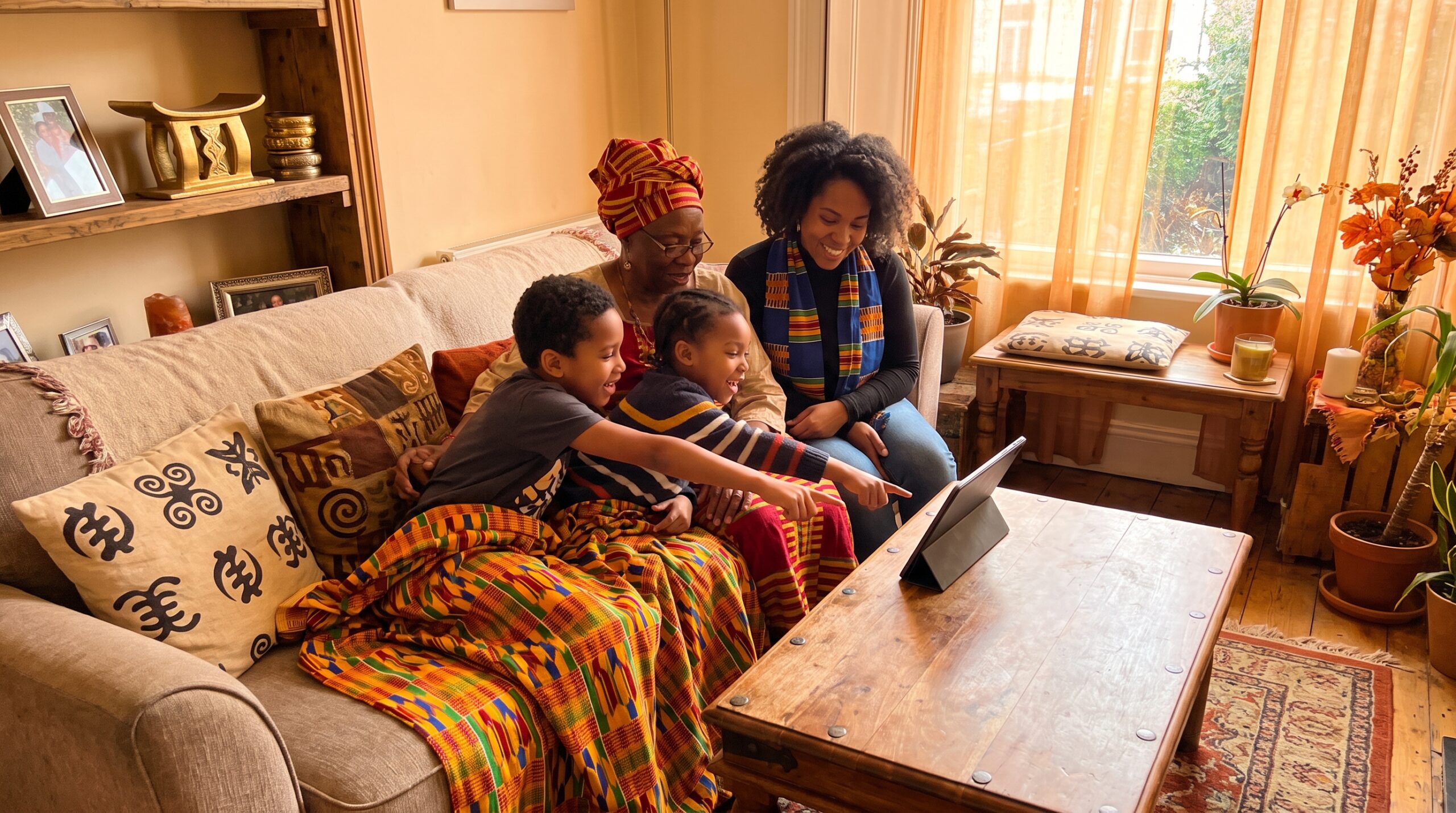
Kente cloth shines with colour and meaning. Moreover, Kente patterns carry names and proverbs. Likewise, Adinkra symbols stamp short ideas into cloth and art. For example, Sankofa means learn from the past. Stools act as more than furniture. People treat carved stools as lineage seats and memory holders.
Also, delicate goldwork and small brass goldweights recall a long metalworking tradition. These items show skill and stories from generations past.
Stories, names, and festivals
Anansi the spider stands out as a famous trickster. Anansi stories travel widely and teach cleverness and caution. In daily life, many Akan use day names. For instance, Kofi, Kwame, Akosua, and Yaa are common. Remarkably, about 80% of Ghana’s population speaks the Akan (Twi-Fante) language as a first or second language, while around 44% of Ghanaians are native speakers, based on language data updated as of 2026.
Festivals bring music, drumming, and dance. Popular events include Adae, Akwasidae, and Odwira. Also, Akan funerals can be elaborate and bring families together.
How families and teachers can share the Akan people guide
Start small and stay curious. Show a Kente pattern, point out an Adinkra symbol, or read a short Anansi tale. For pronunciation, try these: Asante is uh-SHAN-tee, Kente is KEN-teh, Adinkra is ah-DEEN-krah, and Anansi is uh-NAN-see. Kids love textures, colours, and folktale rhythm.
Finally, explore a Storypie story to hear Akan voices. Read or listen to a story about Akan People now:
Read or listen to a story about Akan People now: For 3-5 year olds, For 6-8 year olds, For 8-10 year olds, and For 10-12 year olds.
Respect living culture and keep stories warm and joyful. Also, visit Storypie to discover age-appropriate tales and learning moments.