Ancestral Puebloans (Anasazi) lived on high sunlit plateaus of the Colorado River country.
Today I share who they were, where they lived, and what they made. Also, I invite wonder and respect.
Ancestral Puebloans (Anasazi): Where and When
Their history spans roughly AD 1 to AD 1300 in many places. For example, families lived in the Four Corners region. Notably, the Ancestral Puebloans inhabited the Mesa Verde region from approximately 550 to 1300 CE, during which they constructed over 600 alcove dwellings and numerous farming villages, showcasing their remarkable architectural achievements according to the U.S. National Park Service.
Places we name often include Chaco Canyon, Mesa Verde, and Hovenweep. Each place shows a different time and choice.
Homes, Architecture, and Sky Knowledge
Pueblos grew from small rooms into large stone and adobe towns. Kivas were round, quiet rooms for ceremony and community.
Chacoan builders planned masonry carefully. They also aligned stones and light for sun and moon events. Their sky knowledge served as a calendar for planting and ceremonies.
Cliff Dwellings and Great Houses
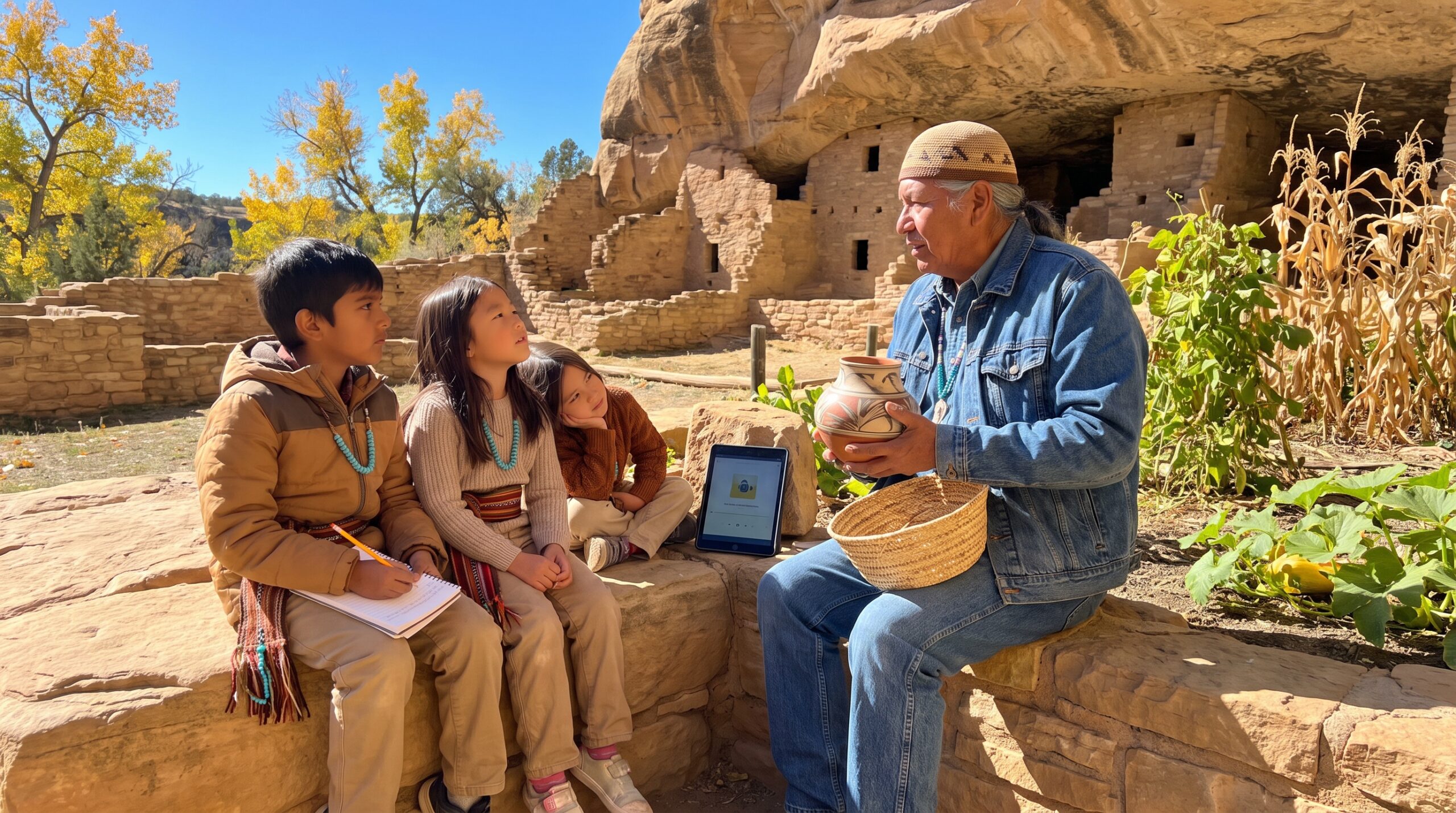
Mesa Verde offers cliff dwellings tucked into rock faces. They look like secret rooms, and they are astonishing to see.
Daily Life: Food, Craft, and Trade
The Three Sisters of corn, beans, and squash fed families then and now. People grew crops in small terraces and saved seeds for the next years.
Crafts included basketry, weaving, and pottery. Pottery changed over time from simple coils to painted black-on-white designs.
Trade connected communities widely. For example, turquoise, shells, and even macaw feathers traveled long distances.
Why People Moved and Who Lives On
Long dry years, fewer trees, soil loss, and social change pushed families to new homes. Research indicates that from AD 1260 to 370 years before 2000 BCE, the pre-Hispanic Pueblo period experienced some of the driest and most variable climatic conditions in the past 3,400 years, which correlated with the Ancestral Pueblo occupation according to a study published in PMC. Yet migration did not erase their influence.
Modern Pueblo peoples carry many threads of Ancestral Puebloans lives. For example, Hopi, Zuni, and the 19 Pueblo nations keep traditions alive. Across the Northern Rio Grande region, around 1300 CE, the Ancestral Puebloan population is conservatively estimated at between 13,500 and 16,300 individuals, illustrating their demographic significance in the region during a critical period as summarized by ScienceDirect.
Please treat archaeological sites as fragile and follow park rules. Respect goes a long way.
Learn More on Storypie
Read or listen to a story about Ancestral Puebloans (Anasazi) now: For 3-5 year olds, For 6-8 year olds, For 8-10 year olds, and For 10-12 year olds.
Also visit the concept overview: Read or listen to a story about Ancestral Puebloans (Anasazi) now. For more, go to Storypie.
Try a small hands-on activity tonight if you like. For example, make a simple pinch pot or try a paper basket. Then pause and look up at the brightest star. The sky once guided planting and gatherings.
I hope this short guide helps families meet the Ancestral Puebloans with curiosity and care. Their homes, crafts, and sky knowledge remain inspiring and full of wonder.