Archaeology for kids turns everyday objects into exciting human stories. It invites children to dig, notice and wonder. Best of all, it makes history feel hands on and playful.
Archaeology for kids: What it is
Archaeology studies how people lived in the past. It looks at tools, pottery, buildings, bones and seeds. In short, archaeology shows human lives through objects. According to the British Museum, in 2023, the Portable Antiquities Scheme (PAS) recorded a record high of 74,506 finds made by the public, showcasing how everyday people contribute to historical discoveries.
What archaeologists do
Surveying finds likely places to dig. Excavation removes soil one thin layer at a time. Recording keeps careful notes, drawings and photos. Dating tells us when objects were used.
Tools are simple. Trowels, brushes, sieves, tape measures, notebooks and cameras do most of the work. Remember this rule: thin layers and tidy notes. Imagine soil as a layered cake. The deepest slice is usually the oldest.
Why archaeology matters
A broken pot or a house foundation can reveal diet, trade and technology. Famous sites such as Stonehenge, Pompeii, Tutankhamun’s tomb, Skara Brae and Sutton Hoo show big moments and daily life. Archaeology links history, geology, biology, chemistry and art. As of the end of fiscal year 2023, the U.S. National Park Service (NPS) archaeologists care for 85,692 archaeological sites identified in national parks—an increase of 2,244 sites since the end of fiscal year 2020, emphasizing the scale of archaeological preservation efforts in the U.S.
Because archaeology studies people over time, it helps children see how humans adapt to changing environments. It builds curiosity, patience and careful observation. And it feels surprisingly heroic and wildly fun.
Tools, labs and careers
Conservation and laboratories matter a great deal. Conservators clean, test and stabilize fragile finds. Scientists date objects with radiocarbon, tree rings and pottery styles.
Career paths include field archaeologist, conservator, museum educator and analyst. Local digs and museums welcome volunteers and families. These programs let kids watch trained archaeologists at work.
Ethics and safety
Real sites are protected by law. In the UK, the Treasure Act 1996 and the Portable Antiquities Scheme encourage reporting finds. In the USA, ARPA and NAGPRA protect sites and indigenous remains. Never dig at a known site without permission. Always respect human remains and descendant communities.
Easy, child-safe activities
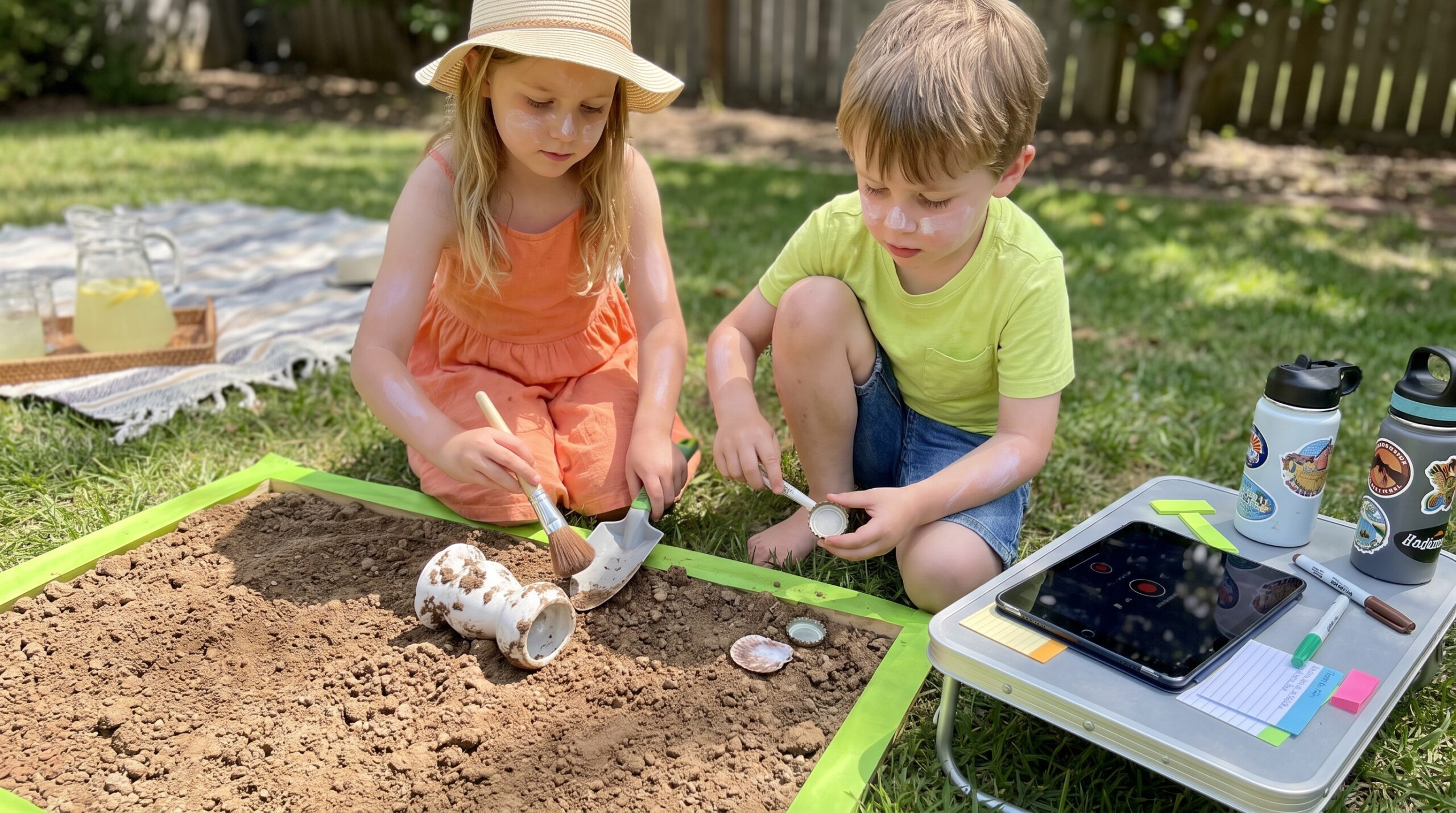
Try a backyard mini-dig to make archaeology come alive. Bury small modern objects in labelled envelopes inside a shallow tray. Mark a simple grid. Give children brushes, a small trowel and a notebook.
- Work in thin layers and brush gently.
- Photograph and draw each find.
- Ask: what might this object tell us?
Museums offer handling boxes and family workshops. Local archaeology groups also run supervised activities. These experiences make science tactile, gentle and joyful.
Conservation and care
Conservation is part of the story. Fragile finds need special care in labs. Conservators stabilize objects, study residues and prepare pieces for display. Museums often run family workshops where kids can try safe tasks under supervision.
Tips and tiny rules
- Keep it local and legal.
- One collection per box to avoid chaos.
- Rotate a small set of objects for study.
- Make a simple field journal with drawings and guesses.
Read or listen to a story about Archaeology now: For 3-5 year olds, For 3-5 year olds, For 6-8 year olds, For 8-10 year olds, and For 10-12 year olds.
At Storypie, we love how everyday objects tell our shared human story. For a gentle next step, try a supervised backyard mini-dig this summer. Or bring stories to life with the Storypie app: Get the app.