
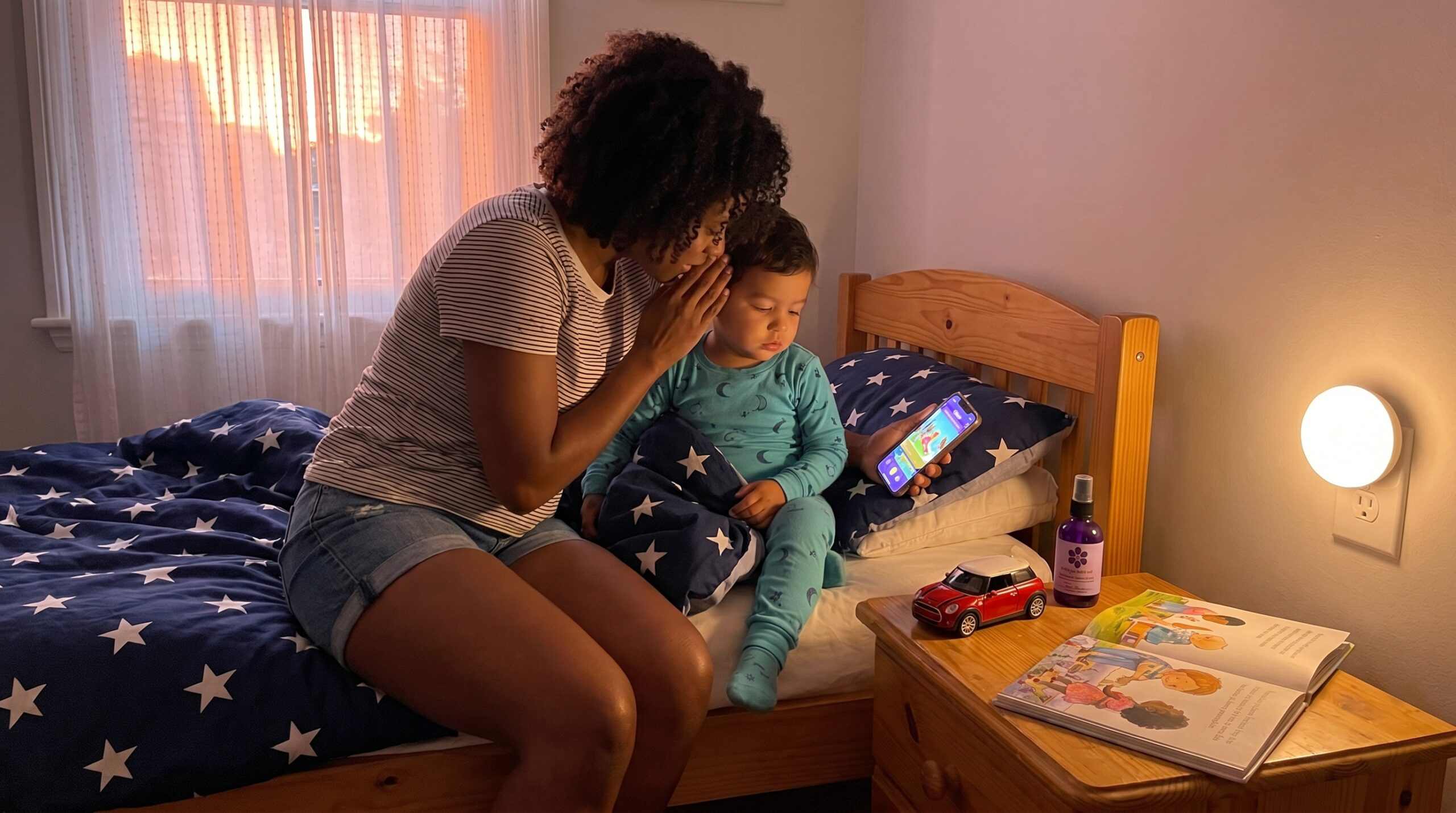
The bedtime mini story ritual is a short, calming practice parents and teachers use to mark the end of the day. It usually lasts three to seven minutes, with five minutes as a practical sweet spot. Predictability and gentle language help it feel cozy and reliable. In fact, according to a 2024 CDC study, 85.6% of U.S. children ages 2–17 had a regular bedtime “most days or every day,” highlighting the prevalence of bedtime routines among children.
What is the bedtime mini story ritual?
The bedtime mini story ritual is a tiny, repeatable storytelling moment. It signals the shift from play to rest. It lowers arousal and gives a clear cue that the day is done. Over time, kids learn the pattern and settle faster. A 2024 systematic review found that greater bedtime-routine consistency at age 1 predicted fewer night wakings at 1.5 years and fewer sleep problems at 1.5 years; consistent routines were also associated with increased sleep duration.
Why the ritual works
First, predictability calms the nervous system. Next, short format reduces stimulation. Then, repeated cues train the body to expect sleep. Gentle imagery and steady pacing soothe attention. Also, the ritual supports language and narrative skills as a pleasant side benefit. Research from a 2025 survey found that 71% of parents agreed that storytelling helps their children wind down at bedtime, with 49% naming it their preferred method. Additionally, a 2025 primary-care pilot study found that families who participated in a bedtime-routine intervention reported an increase in consistent bedtime routines, which included storytelling as a key component.
Key characteristics of a mini story ritual
- Short length: typically three to seven minutes.
- Predictable cues: same opening, middle, and soft ending.
- Simple language: calming words and familiar images.
- Low stimulation: quiet voice or audio-only playback.
- Consistent timing: often placed just before lights-out.
Typical content and example
Stories used inside a bedtime mini story ritual favor nature, routines, and reassuring journeys. They end calmly and avoid surprises. Here is a short example that shows the tone and rhythm you might hear in this ritual:
I see a sleepy pond.
I feel a small yawn.
I walk slowly in my slippers.
I breathe slow and soft.
I tuck my blanket close.
I watch the stars drift.
Variations and adaptations
The bedtime mini story ritual has natural variations. For infants, simple melodies or the same short phrase can serve. For older children, extend the language or choose a slightly longer version. For children with sensory needs, change the room cues rather than the story itself. These adjustments keep the core ritual intact while meeting each child’s needs.
Seasonal and safety notes
Summer evenings may need stronger cues because daylight lasts longer. In such seasons, darkening the room and keeping a steady schedule helps the ritual keep its effectiveness. Also, keep devices away from the bed. Prefer audio-only tracks and low volume for safety and comfort. Finally, maintain consistent timing and environment to protect the ritual’s signal.
Where the ritual fits
The bedtime mini story ritual lives between evening activities and sleep. It serves as a tiny bridge. It supports calm, sleep onset, fewer night wakings, and early language exposure. For many families, the ritual becomes a beloved, low-effort part of the night. Additionally, a 2026 study found that a two-week nightly bedtime reading routine improved empathy and creativity in children aged 6–8, showing significant gains in cognitive empathy and creative fluency.
If you want tools that match this gentle approach, explore Storypie for short calming tracks and child-friendly collections. Visit the Storypie app for ideas and ready-made pieces that match the mini story ritual.