
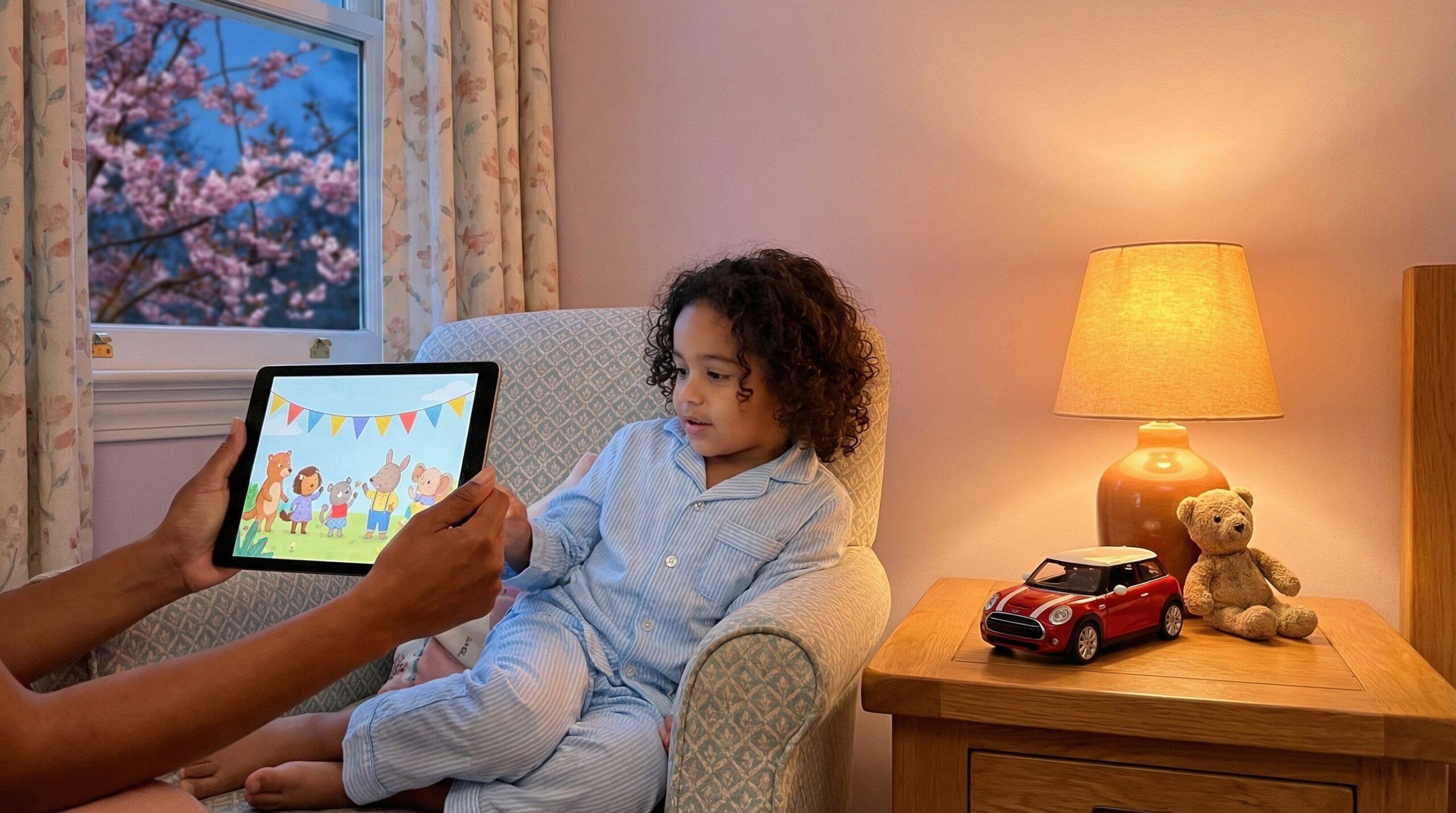
Bedtime wind-down mini story ritual signals the end of active time and the start of sleep. Use a brief tale that lasts three to five minutes. Also, keep it calm, familiar, and steady.
Why the mini story works
Short, predictable rituals help children settle. Pediatric sleep experts recommend a calming activity such as a short story for bedtime hygiene. In fact, a 2025 study by the Sleep Foundation summarizes that a consistent bedtime wind-down of about 30 minutes composed of 2–4 calming activities, including short stories, can produce measurable sleep improvements in just a few nights. The mini story lowers arousal and builds predictability. Over weeks, the routine becomes a reliable sleep cue. Additionally, a 2025 survey found that 71% of parents agreed that storytelling helps their children wind down at bedtime, with 49% naming it their preferred method.
When and how to fit it in
Place the mini story in the final phase of the routine after pajamas, teeth, and a last tuck. Then dim the lights, play soft music, and add a tactile cue like tucking a favorite toy. On brighter spring evenings, start a touch earlier or use darker curtains so the ritual stays steady.
Simple steps to set the scene
- Keep lights low and voices calm.
- Use a quick tactile tuck or favorite toy.
- Play low-volume narration or choose a single illustrated page.
- Use the same two-sentence tuck line; make it sweet and simple.
Formats that help
Mini stories can be read aloud, played as low-volume audio, or shown as one illustrated page. If you use an app, choose voice-first options and low brightness. Also, Storypie offers ready-made short tales that fit this cozy five-minute ritual.
Age friendly choices
For infants, use calm, simplified language and a steady cadence. For toddlers and preschoolers keep plots quiet and familiar. Early primary children may enjoy slightly longer scenes, but avoid suspense. Repetition helps. The same five-minute snippet night after night becomes the sweetest sleepy ritual. A 2025 study reported that consistent bedtime routines, including storytelling started as early as 3 months, were associated with fewer night-time awakenings, reduced sleep problems, and longer sleep durations by age 3.
Benefits at a glance
- Children fall asleep faster and stay calmer.
- Language grows through repeated age-appropriate words.
- Caregivers gain a focused bonding moment and lower bedtime stress.
- Audio-only versions help when a caregiver cannot read aloud.
Practical tips
Keep each story under ten minutes. Also, make it the final cue in a predictable sequence. If you travel, keep the script and length the same so the ritual travels too. For example, one five-minute Storypie tale and the same tuck line often work wonders in a hotel room. It’s worth noting that a 2025 survey indicated that 90% of parents of 1–6-year-olds reported having a bedtime routine for their child, with 67% including reading bedtime stories, underscoring the importance of storytelling.
The test is simple: when your child drifts to sleep after this tiny ritual, it is working. So start tonight with the same five-minute snippet and a two-sentence tuck: “I love you, sleep well.” Repeat nightly and watch resistance shrink. It is sweet, tiny, and utterly comforting for both child and caregiver.
For a gentle place to find short, soothing tales, try the Storypie app. Visit the Storypie app to explore short mini stories that match your family rhythm.