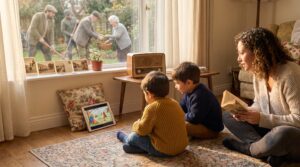
At Storypie we played a new audio tale where composting with kids speaks for itself. My child and I curled up and listened. The story turned scraps into a tiny, joyful mystery.
Composting with Kids: Simple soil science
Composting with kids means turning kitchen and garden waste into rich soil. First, microbes, fungi and worms work hard. Next, they break scraps into plant food. Think soil superheroes helping seedlings grow. In fact, composting is not just beneficial for the garden; it plays a crucial role in waste management. In 2019, the United States generated approximately 66.2 million tons of wasted food, with only 5% of that being composted.
Quick history and modern home composting
People have reused organic matter for thousands of years. For example, civilizations from Mesopotamia to Rome practiced simple composting. Later, modern methods formed in the nineteenth and twentieth centuries. By the late twentieth century, backyard composting became common. It’s important to note that composting can significantly reduce greenhouse gas emissions; a 2020 study by the University of California, Berkeley, found that composting can reduce emissions by up to 50% compared to landfilling organic waste.
Home systems that fit family life
Home options are flexible. Cold composting is low effort, but it is slow. Hot composting heats to about 55 to 65 degrees Celsius and kills many weed seeds. Vermicomposting uses red wigglers and works well in small spaces. Bokashi ferments kitchen scraps, including cooked food. Tumblers speed aeration. Trench composting buries scraps directly in the garden. Implementing composting programs can be especially impactful; a 2022 study published in the journal ‘Waste Management’ found that composting initiatives in urban areas can reduce waste sent to landfills by up to 40%.
Popular choices at a glance
- Cold pile: easy and patient.
- Hot pile: faster and sanitising.
- Vermicompost: great for apartments.
- Bokashi: ferments cooked food.
- Tumbler: keeps things tidy and aerated.
What to add and what to avoid
Balance greens and browns. Greens include veggie peelings and fresh grass. Browns include dry leaves, straw and shredded cardboard. Aim for a practical carbon to nitrogen mix near 25 to 30 to 1.
Avoid meat, dairy, oils, pet feces and diseased plants. These items attract pests and raise health risks. According to a 2021 report by the National Academies of Sciences, Engineering, and Medicine, composting can divert up to 30% of organic waste from landfills, significantly reducing methane emissions.
Easy recipe for success
- Add a layer of browns over fresh scraps to stop flies.
- Keep moisture like a wrung-out sponge.
- Turn the pile for air unless using worms or bokashi.
How you know compost is ready
Finished compost looks dark and crumbly. It smells earthy, not sour. Most of the original material should not be visible. Finished compost mixes well into beds and improves potting mixes. However, do not use unfinished compost on baby seedlings.
Kid-safe chores and tiny daily wins
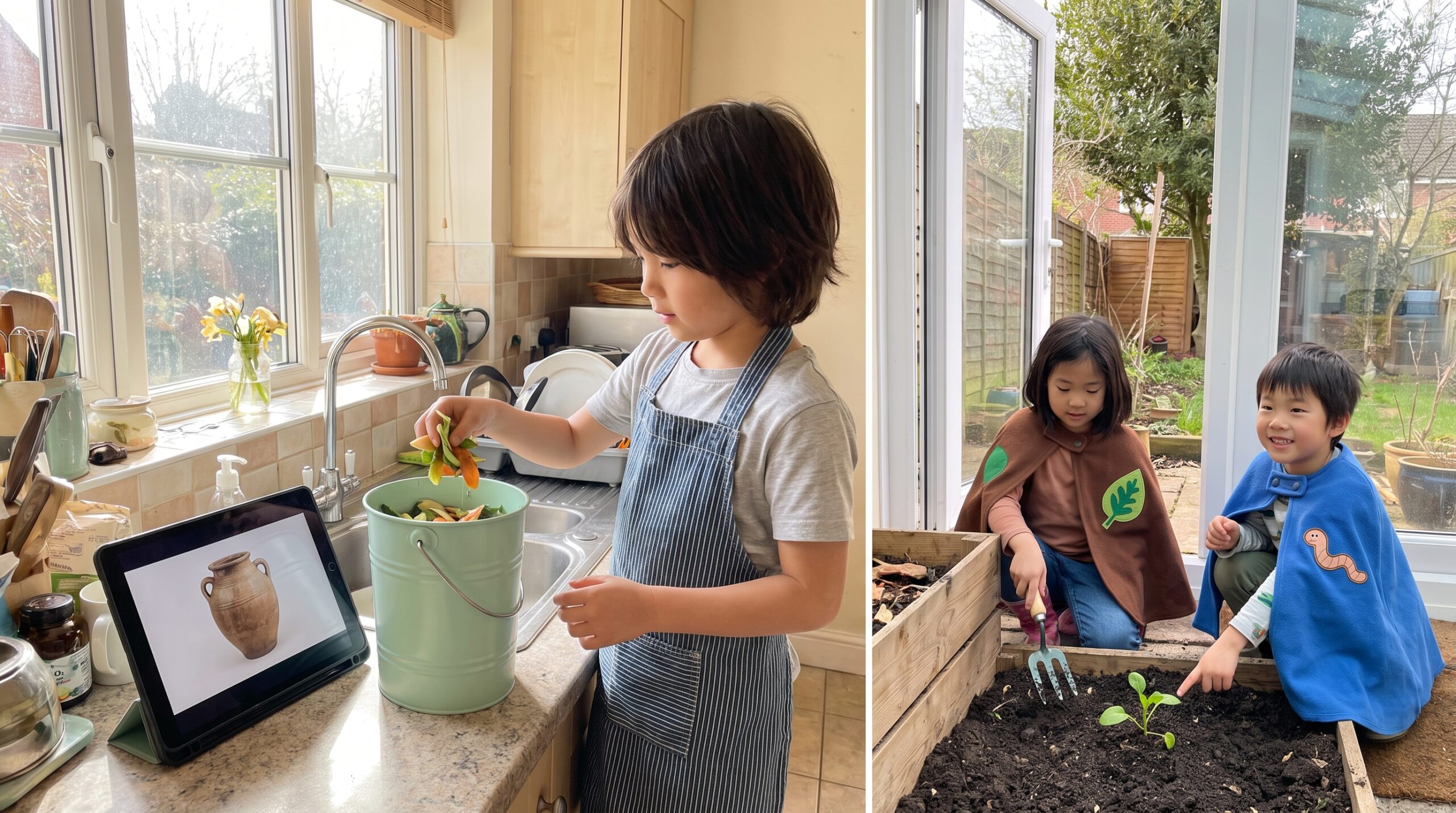
Make composting with kids fun and simple. First, let children add veggie scraps to a small kitchen caddy. Next, give short tasks that build curiosity and responsibility. Small wins feel epic.
- Decorate the caddy.
- Check moisture together.
- Note worms and bugs.
- Cover scraps with browns each time.
Troubleshooting and safety
Bad smells usually mean too wet or no air. So add browns and turn the pile. If the pile does not heat, add greens, insulate or turn more. Fruit flies can be stopped by burying scraps or covering with paper. Rodents prefer meat and dairy. Therefore use sealed bins or tumblers and never add those items.
Always supervise children. Wash hands after handling raw compost. If someone in the home is immunocompromised, avoid risky materials. Choose a system that fits your life and schedule.
Composting scales up from worm towers to municipal organics collection. In addition, community heaps and backyard bins keep organics out of landfill and cut methane. For example, in 2019, the city of San Francisco achieved a composting rate of 80%, making it one of the leading cities in the U.S. for organic waste diversion. Check local council rules for accepted materials.
Read or listen to a story about Composting now: For 3-5 year olds, For 6-8 year olds, For 8-10 year olds, and For 10-12 year olds.
Tonight try a small experiment. Keep a caddy, let kids add scraps, and watch what disappears first. It is soil magic and a lovely way to show life cycles. For more friendly stories and ideas visit Storypie.