Computer for kids is a gentle way to name a powerful idea. First, it means a machine that follows instructions to solve problems. Then, it takes input like typing or touching. Next, it runs programs and gives output as pictures, sounds, or actions. Say the words out loud. You hand a child a tiny map to learning and wonder.
Computer for Kids: A Short Timeline
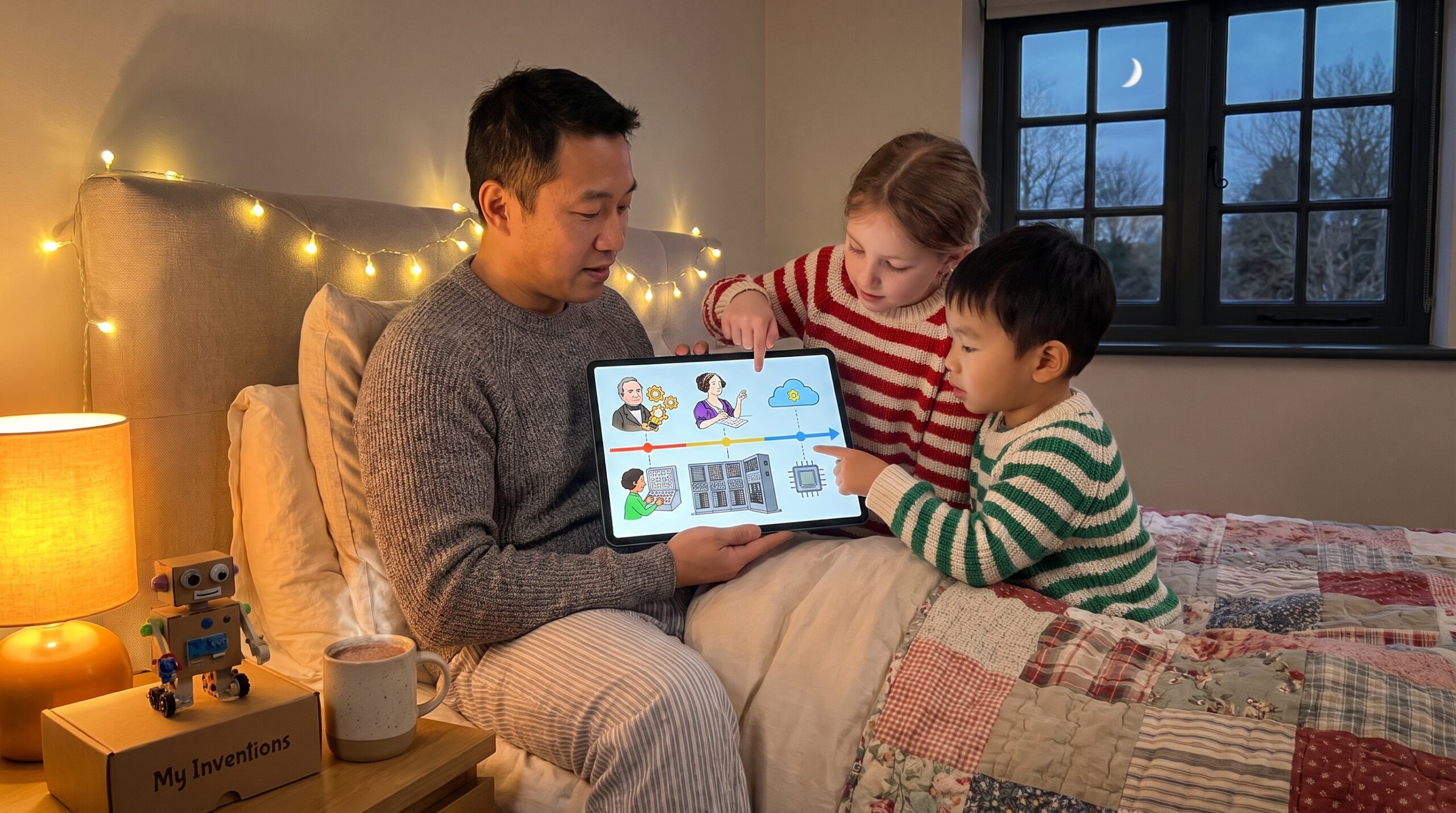
Long ago, in the 1830s, Charles Babbage imagined automatic calculation. Then Ada Lovelace wrote what we now call the first program. In the 1940s and 1950s machines like Colossus and ENIAC filled rooms. Later, the transistor and tiny chips made devices smaller and faster. In the 1970s and 1980s home computers arrived, including the BBC Micro and Sinclair. The web came in the 1990s. Today a smartphone acts as a pocket computer. These changes show how bright ideas can grow into surprising, useful tools. In fact, as of 2023, there were approximately 5,177,400 individuals employed in computer and mathematical occupations in the United States, highlighting the significant career opportunities available in this field.
How a Computer Works
In one short line, a computer follows steps to turn input into output. For parents and teachers this is clear and calm. Here are the main parts:
- CPU is the brain.
- RAM is short memory for now.
- Storage keeps files for later.
- Input devices like keyboards and touchscreens tell the machine what you want.
- Output shows results on screen or in sound.
- Software is the set of instructions. Apps are the things you ask the computer to do.
Play, Projects, and Small Experiments
Try tiny projects to make the idea stick. For example, make a digital postcard or a silly animation. Also try a short sound recording and play it back. For older kids, a Raspberry Pi can create real projects. Small kits invite safe tinkering. Keep it playful and patient. Tiny sparks of delight matter most. It’s also worth noting that in 2023, 126,268,663 households in the U.S. had a computer, with many families accessing the internet, emphasizing the importance of digital engagement in learning today.
Safety, Time, and Kindness
Use strong passwords and check privacy settings. Set simple rules about time. Co-read and watch together. Talk about being kind online. These shared moments teach safe habits and confidence.
Think About the Planet and Access
Devices contain metals and plastics. So repair, reuse, and recycle when you can. Many charities and firms run take-back programs and refurbishment schemes. Also show children accessibility features like captions, larger text, and screen readers. These tools help everyone learn and join the fun. However, it’s important to recognize that in 2024, approximately 17.7 million U.S. households either had no computing device or relied solely on a smartphone, highlighting the ongoing digital divide that impacts access to technology for many families.
Read or listen to a story about Computer now: For 3-5 year olds, For 6-8 year olds, For 8-10 year olds, and For 10-12 year olds.
Also, visit Storypie to explore more gentle tales and related ideas. Keep asking what a computer can help make. Small rituals, a warm lamp, and one short story can spark a big question: what would you invent?