
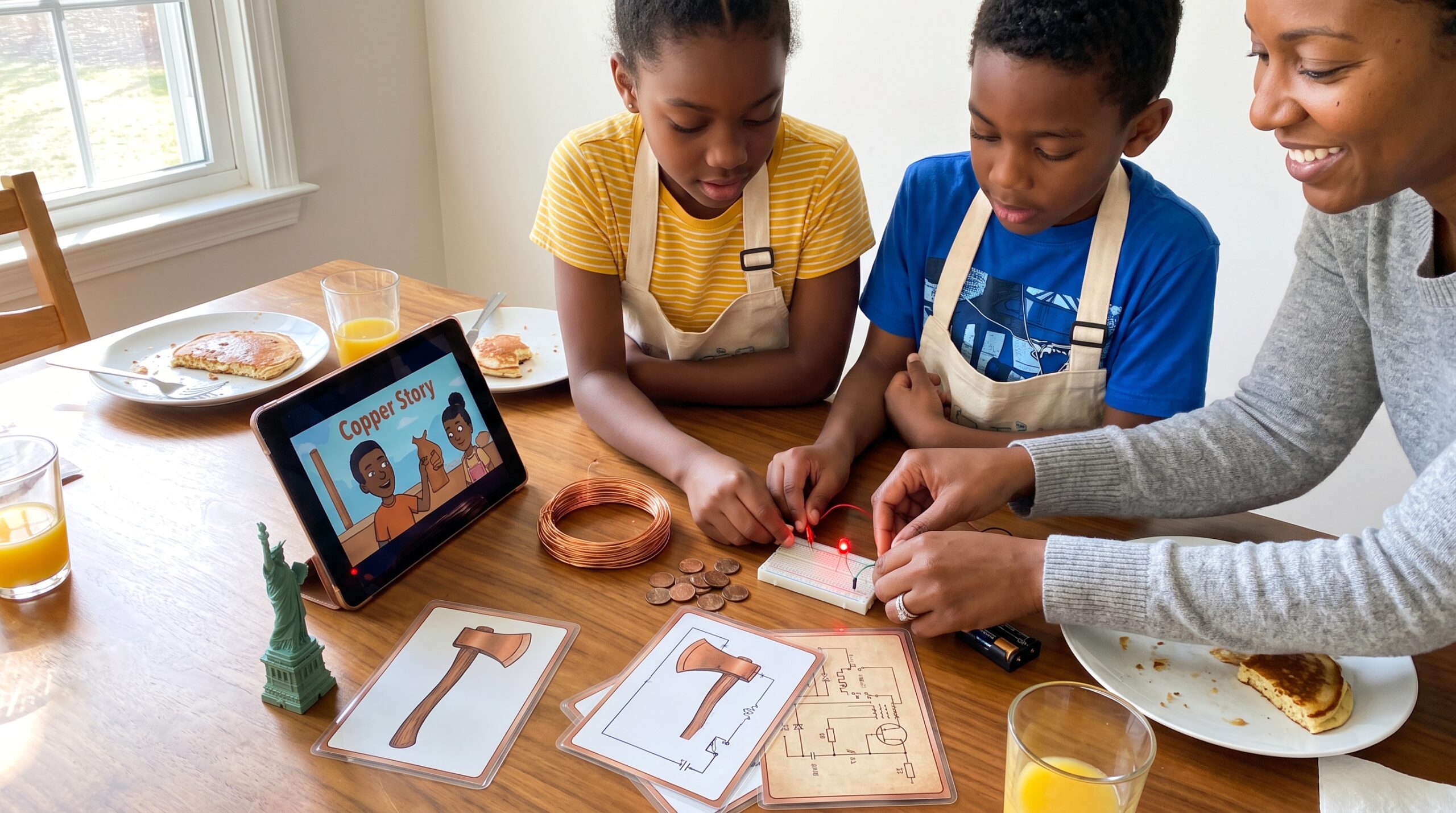
Copper facts for kids: Copper is a shiny, reddish-brown metal people have used for thousands of years. It feels smooth and warm. Kids often notice its bright color first.
Copper facts for kids: What is copper?
Copper has the chemical symbol Cu and atomic number 29. It bends easily and can become thin wire. Also, copper conducts heat and electricity very well. That makes it useful in wires, motors, and many devices.
Where does copper come from?
Copper forms in rocks and minerals. Chalcopyrite is the most common ore. Miners dig it from open pits or underground mines. Then, they concentrate and smelt the ore to get metal. In 2023, global copper mine production reached 22.4 million tonnes, with Chile being the largest producer, contributing approximately 5.3 million tonnes, accounting for about 23% of the world’s total mine production.
Major copper producers include Chile, Peru, China, the Democratic Republic of Congo, and the United States. In addition, scrap copper returns to industry through recycling. The International Copper Study Group (ICSG) reported that global refined copper demand was 26.5 million tonnes in 2023, with China being the largest consumer, utilizing over 15.5 million tonnes.
A short history of copper
People used native copper thousands of years ago. First, cultures worked copper by hammering it into shapes. Later, they mixed copper with tin to make bronze. The Copper Age came before the Bronze Age. The word cuprum comes from Cyprus, a famous source in Roman times.
Everyday uses and modern importance
Copper shows up in many common items. For example, you can find it in electrical wiring, plumbing pipes, coins, cookware, and musical instruments. The Statue of Liberty wears a thin copper skin that now looks green from patina. Today, copper plays a key role in renewable energy and electric vehicles.
Alloys and patina
Mixing copper with other metals changes its properties. Bronze combines copper and tin. Brass mixes copper and zinc. These alloys shift color, strength, and use. Patina is the green layer that forms on old copper. It protects the metal underneath.
Health, safety, and the planet
Copper is an essential nutrient. Adults need about 0.9 mg a day from foods like shellfish, nuts, seeds, and whole grains. However, too much copper can be harmful. Normal use of certified copper cookware and pipes is safe. Also, copper has antimicrobial properties. That helps reduce germs on touch surfaces. In addition, recycling copper saves about 85 percent of the energy compared with making new copper from ore. In 2023, the ICSG reported that secondary copper production by its member countries totaled 4.55 million metric tons, accounting for 16.9% of global copper production.
Moreover, global copper reserves were estimated at 1 billion metric tons in 2023, reflecting a significant increase over the years. Approximately 700 million metric tons of copper have been produced historically; identified undiscovered resources contain about 3.5 billion metric tons, bringing the total on Earth to around 6.3 billion metric tons of copper.
Fun experiments and safety note
Kids enjoy simple, supervised copper activities. Try the magnet test to show copper is not magnetic. Also, clean a small copper coin with vinegar and salt. With adult help, make a lemon battery using copper and zinc to light a tiny LED.
Safety note: always supervise hands-on activities. Do not let children put coins in their mouths.
Glossary for parents
- Ore: rock that contains metal
- Smelting: heating ore to extract metal
- Alloy: a mix of metals
- Patina: the green protective layer
- Conductor: a material that moves electricity
Read or listen to a story about Copper now: For 3-5 year olds, For 3-5 year olds, For 6-8 year olds, For 8-10 year olds, and For 10-12 year olds.
Quick tip: play our 3-minute Copper story at breakfast to spark curiosity. You can get the app from Storypie to listen together. Enjoy the shiny science moment!










