
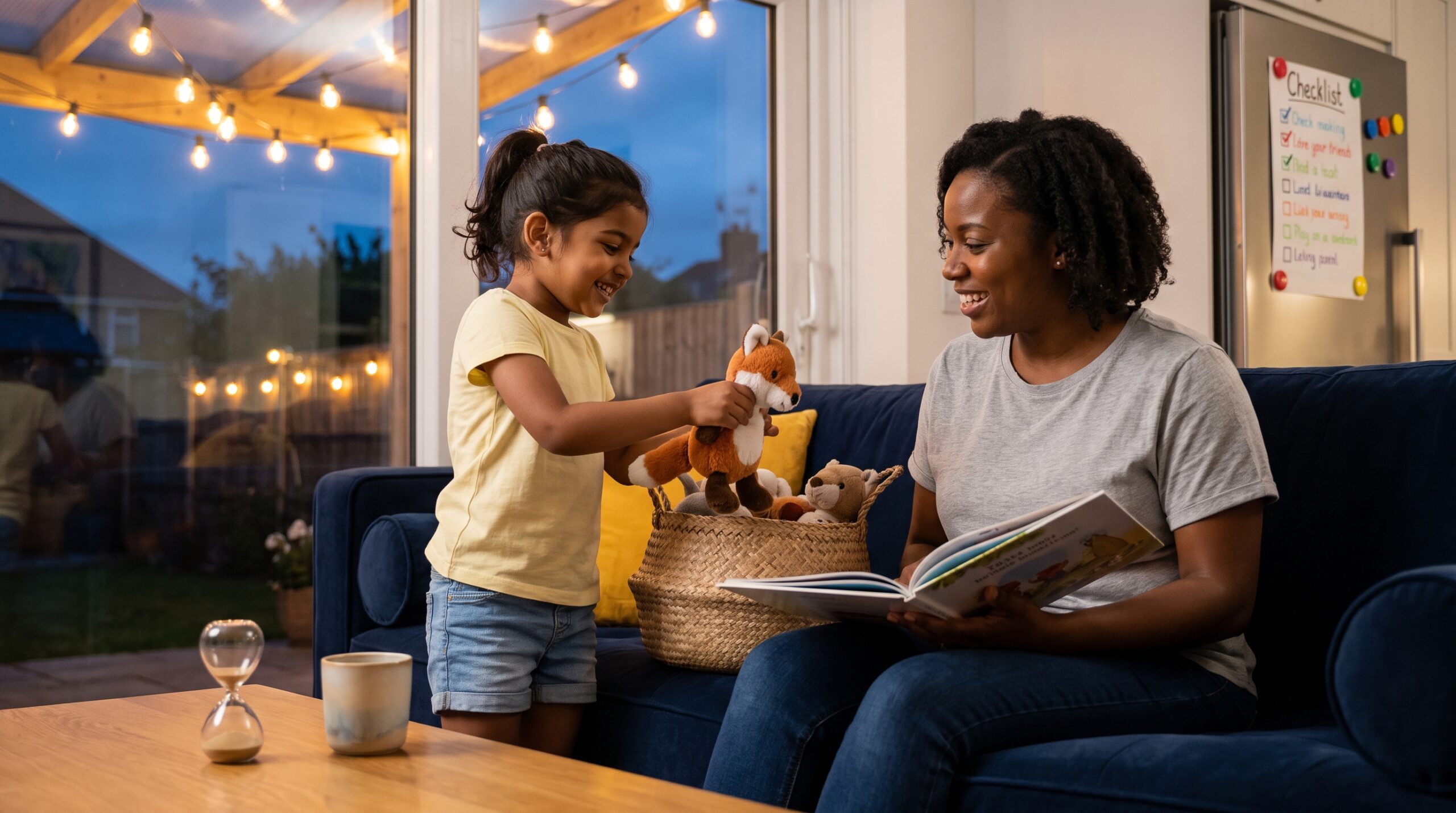
Finishing tasks for kids means more than putting a toy away. It means completing a started activity to its intended end, including tidy up, final steps, or handing off responsibility. When children learn to finish, they build self efficacy, planning skills, and a calmer household rhythm. Five minutes, a timer buzz, and a proud grin can create instant momentum. In fact, the average knowledge worker manages 63 tasks per week but completes only about 50% of them, highlighting the common challenge of task completion that resonates with parents teaching children about finishing tasks, according to Asana’s Anatomy of Work 2024.
Why finishing tasks for kids matters
The reason is simple and a little surprising. The Zeigarnik effect makes unfinished work tug at the mind. Therefore it creates tension until the task ends. Visible progress, sometimes called endowed progress, reduces that pull. As a result, children feel forward motion and want to do the next thing. Tasks with a single owner achieve a 67.3% on-time completion rate, compared to 40.3% for tasks shared by two people, emphasizing the importance of ownership in task completion, as noted in Chaser’s study.
What research shows in plain terms
Tiny visible wins change motivation. Marking a completed step, even a small one, signals success to the brain. For children, this reduces mental clutter and increases willingness to finish the next step. Executive function improves with practice. Thus more short, scaffolded finishes lead to better planning and persistence over time. Acknowledging a task within one hour results in an 82.2% on-time completion rate, making it 4.4 times more likely to be completed on time than tasks unacknowledged for three days, according to Chaser. This statistic illustrates the power of prompt acknowledgment, which can be a useful strategy for parents encouraging their children to finish tasks.
Practical ways families build finishing habits
Small steps work best. Break bigger jobs into tiny actions so working memory can hold each one. Also, use short timers and clear, single instructions. Keep language specific. Say what you want, not what you do not want. For example, ask a child to place a plate in the sink when the timer rings.
- Use a 3 to 7 minute timer for toddlers and 5 to 15 minutes for older children.
- Give one clear instruction at a time.
- Make simple visual checklists or step cards to reduce remembering.
- Offer limited choices, for example, Do socks or toys first?
- Praise completion specifically, for example, You finished putting the blocks away. Great job.
Tips for children who need more structure
Children with attention or executive function differences often need clearer scaffolds. Simplify steps and use visual timers. Provide immediate, predictable reinforcement. When resistance appears, shrink the task until it becomes irresistible. Then help a little less each time. In a dataset of 142 real goals set by 109 users of the Dendedo app, only about 24% of scheduled tasks were completed, and only around 1 in 5 users completed a task on their very first day, which can help parents understand the challenges their children face, as reported by the Dendedo Team.
Safety, fairness, and small rewards
Match tasks to ability. Supervise anything that could be hazardous. Also rotate chores so siblings feel the load is fair. Keep rewards simple and natural. Over time, consistent timing and small wins turn finishing into habit and pride. Interestingly, in a 2025 randomized experiment examining the impact of Microsoft’s M365 Copilot AI tool, workers using the tool completed documents 12% faster compared to those not using it, demonstrating how tools can enhance task completion efficiency, as shown in Microsoft Research. This could inspire parents to use similar strategies with their children.
Read or listen to a story about Finishing Tasks now: Read or listen to a story about Finishing Tasks now For 3-5 year olds, For 6-8 year olds, For 8-10 year olds, and For 10-12 year olds.
Quick pre-storytime trick
A tiny, timed tidy before a favorite activity creates momentum and eases transitions. For example, ask for a five-minute tidy before storytime. This builds pride and makes the rest of the evening calmer.
Final thought
Teaching finishing tasks is not about nagging. It is choreography, celebration, and habit. Start tiny and celebrate each win. Then watch confidence and calm spread through the house. Every child can learn to finish, and every family benefits from the quiet pride that follows a small well done job.
Want to explore more related stories? Visit our app to find age-based reads and activities, or get the app for easy access.