
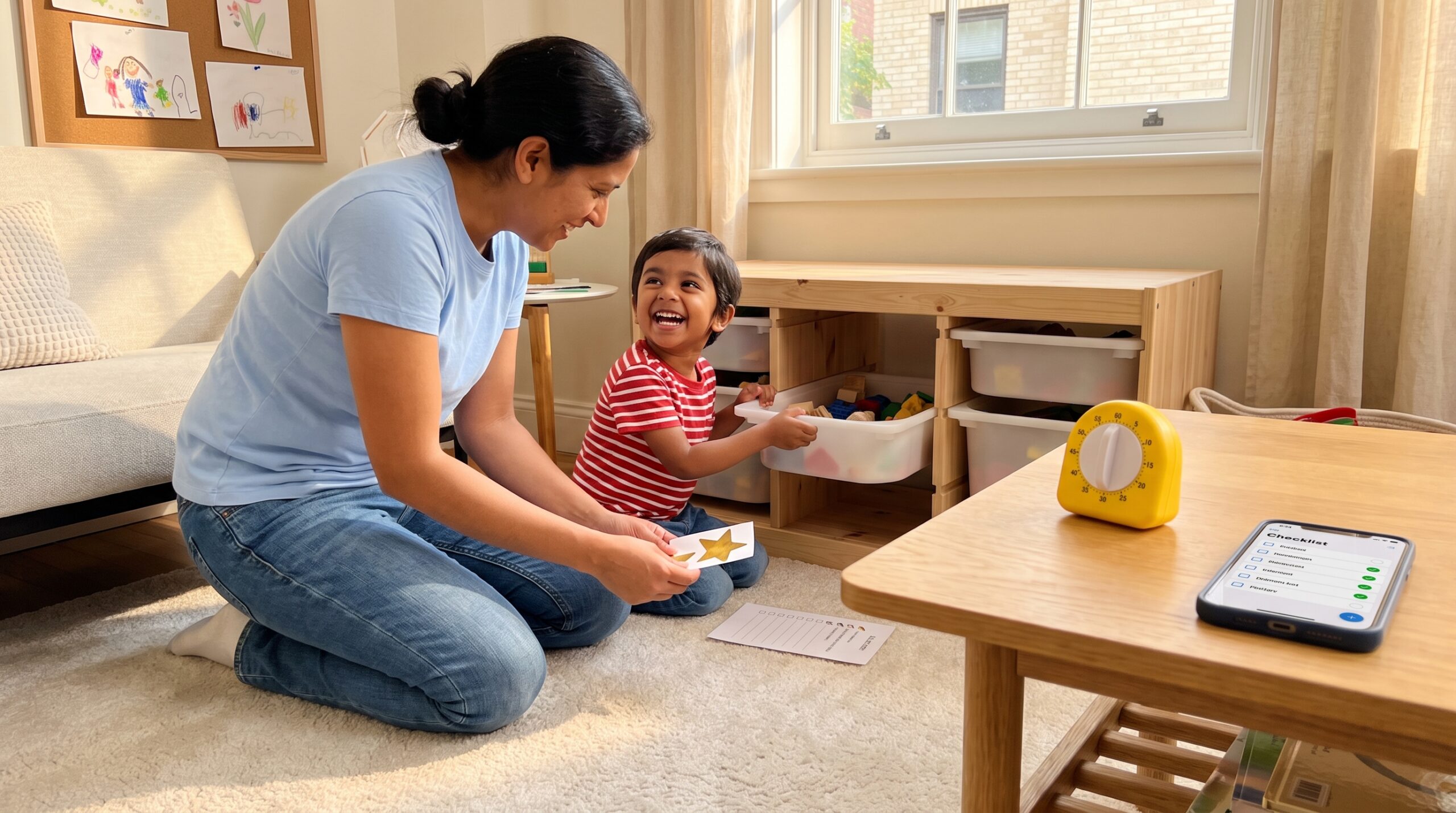
Helping kids finish tasks matters. The phrase helping kids finish tasks anchors this post and the tips that follow. When children complete small tasks, they build planning, self-control, and confidence. Also, families get less clutter and less nagging. Best of all, these wins are teachable and often feel like magic.
Why finishing tasks matters
Finishing tasks strengthens executive function. First, starting, persisting, and completing tasks trains planning and working memory. Next, it builds time-awareness and self-efficacy. For parents, short consistent wins cut household friction. Finally, finishes protect family calm and give children a proud sense of progress. The struggle with task completion is common; for instance, the average knowledge worker juggles 63 tasks per week but completes only about 50% of them, according to data from Asana. This statistic emphasizes the need for effective strategies to help children manage their tasks.
Simple routine to try now
Try one small routine today. It shows children how finishing works. Try this quick plan:
- Choose one small, specific area to finish.
- Set a 10-minute timer.
- Work together or side-by-side and model each step.
- Celebrate the finish with a high-five or sticker.
Timers make the end feel real. Also, short bursts match children’s attention. As a result, finishing tasks becomes easier and more fun.
Tools that help finishing tasks
Tools make tasks clear. For example, use visual schedules, picture checklists, timers, and a designated finish zone. Then, break big jobs into bite-sized steps. Instead of saying clean your room, say pick up books, put toys in the blue bin, and shoes on the shelf. These small cues guide children toward the finish.
Age-guided examples
Match task length to age. Below are quick scripts you can try.
Toddlers – guided, very short
Task: Put three blocks back in the box. Script: “Can you find three red blocks and put them in the box with me?”
Preschoolers – 5 to 10 minutes
Task: Tidy one toy area. Script: “Let us set the timer for 7 minutes. I will put cars in this bin. You do the animals.”
Early school-age – 10 to 20 minutes
Task: Read one short book and put it on the shelf. Script: “We will read for 12 minutes. When the bell rings, books go on the shelf.”
Older kids – more autonomy
Task: Set the table and wipe a small table. Script: “You have 15 minutes. Tell me when you are done and I will check.”
Motivation without undermining drive
Praise effort and completion with specific comments. For example say, “You worked for 10 minutes and the Lego is back in its box. Great job sticking with it!” Also add a short line like, “I loved how you focused on one thing.” Use small celebrations and slowly phase out treats over time.
Troubleshooting and fading support
If a child resists, shrink the task into smaller steps. Then offer a simple choice and remove distractions. To fade support, help fully for two weeks. Next, prompt every other day for two weeks. Finally, check weekly. If a child cannot start or finish age-appropriate tasks despite steady help, consult a pediatrician, teacher, or child psychologist for further guidance.
Read or listen to a story about Finishing Tasks now: For 3-5 year olds, For 6-8 year olds, For 8-10 year olds, and For 10-12 year olds.
Quick tip and gentle app suggestion
Tip: set a 10-minute timer with your child to finish one toy area or read one short story. Celebrate the win, then move on. Also, try the Storypie app for short, child-friendly stories and prompts. Visit Storypie at Storypie.
Final thought
Small, repeatable finishes add up. With clear steps, short timers, and joyful celebration, children learn finishing is possible and rewarding. Try one 10-minute sprint today and enjoy the calm that follows. Hooray for small wins!