
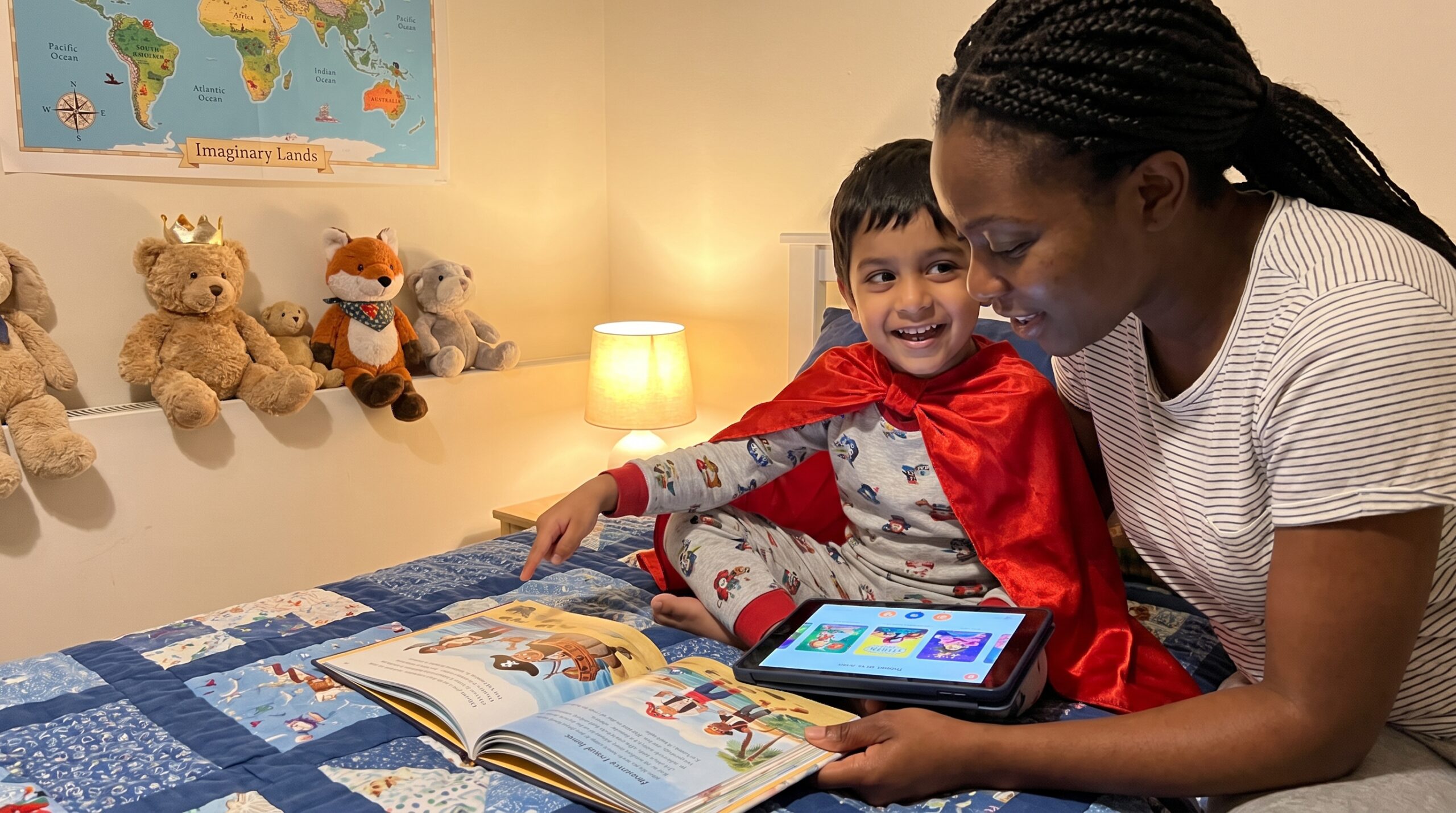
How kids become the hero starts with simple moments where the child leads the plot. In these scenes the child is the center. They decide, act, and feel agency. Small choices feel big. Tiny triumphs follow. These shifts build confidence and identity over time. Notably, between 2014 and 2024, the World Bank’s investments in early childhood development increased from $2.9 billion to $18.7 billion, resulting in 31 million children enrolling in quality preschool education, emphasizing the importance of nurturing creativity in young children.
How kids become the hero: what it means
Being the hero means the child is the protagonist of the action. The plot bends around their choices. They make decisions and imagine consequences. In short, this is identity work as much as play. Also, it strengthens a child’s sense of I can.
A short history
Classic children’s books gave kids starring roles. For example, Pippi Longstocking, Matilda, and Harry Potter place children in charge of the story. Later, Choose Your Own Adventure books let readers shape endings. Today, personalized books and interactive apps continue this tradition. Storypie is part of that modern wave and helps stories feel immediate and personal.
Why it works
Pretend play helps children explore roles between ages two and six. Meanwhile, theory of mind develops around four to five, allowing kids to imagine others and moral choices. Also, research shows that belief in one’s abilities changes behavior. In addition, meaningful choice raises motivation and supports self-regulation. Put together, these factors make the hero role a powerful engine for growth. For instance, in the 2023–2024 program year, Head Start programs served 805,919 children aged birth to 5 in the United States, providing them with comprehensive education and support, thereby empowering young children to take the initiative and lead their own learning experiences.
What families and educators notice
When children take the hero role they stay engaged longer. They grin more and often ask to read again. Moreover, they practice solutions and name feelings. Reading time turns into practice for problem solving, empathy, and calm decision making. Over time, language, confidence, and resilience all grow.
Where this happens
This phenomenon appears across common places: bedtime, playtime, classrooms, and libraries. Personalized media and interactive apps make the experience immediate. Role play with simple props achieves similar results. Also, project-based plays in classrooms let students lead and experiment with identity.
Age notes and typical characteristics
- Toddlers respond best to simple choices and visual props.
- Preschoolers enjoy pretend and repeated plots.
- Early elementary children handle dilemmas and multiple outcomes.
- Preteens seek authenticity and peer meaning.
Match complexity to the child’s age. In this way the hero role stays engaging and growth stays steady.
Representation and inclusivity
Representation matters. Children need heroes who reflect their gender, culture, and abilities. Diverse protagonists expand who can imagine themselves as the hero. Therefore, broader representation creates brighter mirrors and bigger possibilities for every child.
Small rituals and balance
Families often create tiny rituals that center the child. For example, a cozy reading moment or a simple choice can highlight agency. At the same time, it helps to choose age-appropriate content and to distinguish fantasy from real life. Supervising interactive media and setting gentle limits keeps play safe and healthy.
The simple test
The test is quiet and clear. If a child returns to books, play, or apps on their own, they are practicing leadership. Celebrate those small wins. Above all, the child learns to lead their own adventure. Additionally, a recent report indicates that in 2024/25, 68.3% of children in England achieved a good level of development by the end of the Early Years Foundation Stage, marking a 3.1 percentage point increase since 2021/22, indicating more children are prepared to take on roles as active participants in their own adventures.
Learn more about personalized stories and how they put kids at the center by visiting Storypie or trying the Storypie app.