Place value for kids is a small idea with big power. It explains that a digit’s worth depends on its place in a number. For example, in 4,235 the 4 means 4 thousands, the 2 means 2 hundreds, the 3 means 3 tens, and the 5 means 5 ones. Seeing numbers this way makes reading, writing, and mental math much easier. Kids often call it number magic. A 2023 study involving 279 kindergartners found that their early understanding of place value predicted their performance in multidigit calculations by second grade, emphasizing the importance of grasping this concept early on.
How place value for kids works
We use the base 10 decimal system. Thus each place is ten times the place to its right. For example, tens are ten ones. Hundreds are ten tens. Research shows that interventions using the Concrete–Representational–Abstract (CRA) sequence significantly improved third-grade students’ understanding of place value, rounding, and expanded notation, highlighting effective teaching strategies.
Also, decimals follow the same idea to the right of the point. For instance, 6.47 equals 6 ones plus 4 tenths and 7 hundredths. So decimals keep the place-value pattern.
Zero plays a heroic role. It acts as a placeholder. Without zero, a number like 305 would be confusing. Therefore zero marks an empty place and keeps the number clear. A 2023 comparative study of early years curricula highlighted differences in how place value is taught, focusing on the role of zero among other themes.
A short, kid-friendly history
Not every number system used place value. For example, Roman numerals are non-positional, so arithmetic was clumsy. Long ago the Babylonians used a positional sexagesimal idea. The Mayans used base 20 and had a true zero. Later the Hindu Arabic system with a systematic zero developed in India, then spread to Europe. Fibonacci helped popularize it in the West. That story makes zero feel like a tiny hero in a grand adventure.
Quick, playful activities
Try short, hands-on games that make place value visible. These activities work great at home or in class.
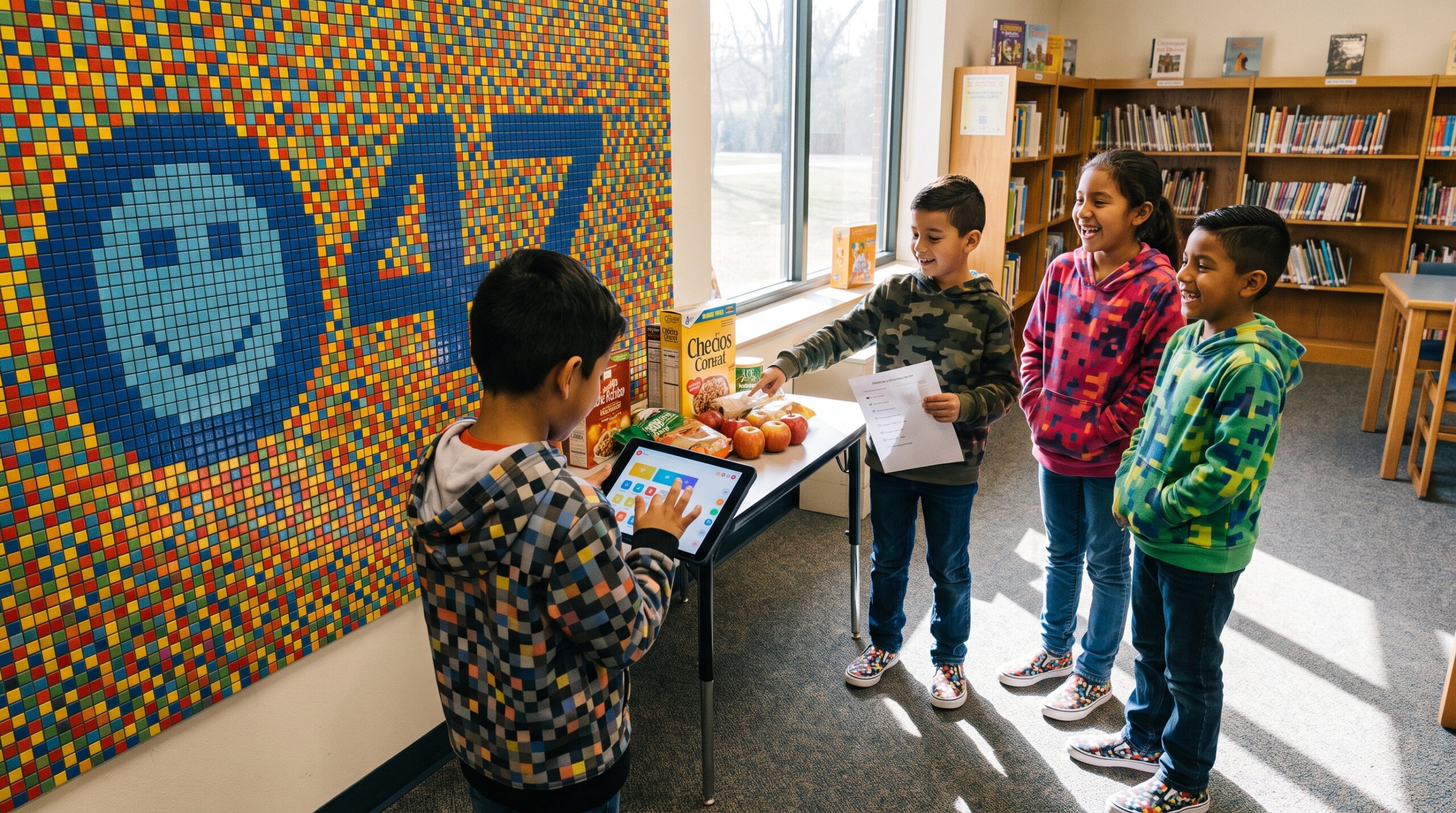
- Grocery-price scavenger hunt. Ask children to spot tens and ones in prices.
- Coin bundling. Group ten ones and swap them for one ten to show regrouping.
- Base-ten blocks. Build a number and write it in expanded form. For 4,235 write 4,000 + 200 + 30 + 5.
- Dice build. Roll three dice and arrange digits to make the biggest number. Then explain why it wins.
- Decimal money play. Use price tags to show tenths and hundredths with pennies or pence.
Try a short family challenge. Make two four-digit numbers and ask which is larger. For example, 5,312 is greater than 4,999 because the leftmost differing digit 5 beats 4.
Teaching steps and simple tools
Start with concrete materials like counters and ten-frames. Next move to place-value charts and expanded form. Later introduce decimals and larger numbers. A 2023 study involving second graders at risk for mathematics learning disabilities found that manipulatives with varying degrees of conceptual transparency significantly affected their understanding of place value.
Also mention other bases for older kids, such as binary, where places are powers of two. Helpful items include place-value charts, ten-frames, and coin sets. These tools make place value friendly and visible.
Common confusions and quick checks
Watch for children who treat a digit as always worth the same regardless of position. Also watch decimal point mistakes and zero misunderstandings. Use quick assessments to check understanding. A 2023 analysis of place value development in Australia found a wide range of understanding among students, suggesting that current educational approaches may need reevaluation.
- Ask children to write a number in standard, expanded, and word form.
- Ask them to round a price to the nearest ten.
- Compare two numbers and have them explain why one is larger.
Place value turns digits into characters with jobs. It makes arithmetic sensible and everyday money moments into learning moments. Read or listen to a story about Place value now: Read or listen to a story about Place value now: For 3-5 year olds, For 6-8 year olds, For 8-10 year olds, and For 10-12 year olds.
If you want gentle prompts and playful stories that make place value joyful, explore Storypie for narration and simple prompts. Try a story and watch digits come alive.