Steamboat for kids: start with a sound
Steamboat for kids opens with a steady chuff and a turning paddlewheel. Imagine river water fanning out in white lace. That noisy, riverish machine changed how people and goods moved across America.
What a steamboat is
A steamboat is a boat pushed by steam power. Inside sits a boiler that heats water until steam forms. Then steam pushes pistons or turns a simple rotary engine. That motion spins a paddlewheel or a propeller. The main parts are easy to spot: the boiler, the engine, the big paddlewheel, the hull, and the pilot house where the captain steers.
A little history in small bites
Inventors in the late 1700s and early 1800s tried steam on water. For example, names like John Fitch, James Rumsey, and William Symington proved the idea. Then Robert Fulton made it regular business. His North River Steamboat, often called the Clermont, began scheduled trips on the Hudson in 1807. That trip showed steam could run reliable passenger and freight routes.
How steam moves a boat, plain and simple
Boil water. Steam expands and pushes. That push moves a piston back and forth. A crank or shaft then turns that back-and-forth into a circle. The circle spins the paddlewheel. The wheel pushes water and the boat moves forward. It is like moving a spoon in the bath to give a rubber duck a ride.
Design and why the shape matters
River steamboats were flat and wide. They had shallow hulls so they could sail in low water and land close to banks. Side-wheelers carry a paddle on each side. Stern-wheelers carry one wheel at the back. Stern-wheelers do better in shallow, twisty rivers. Also, many decks meant room for people, mail, and goods.
Why they mattered
Steamboats made upstream travel feasible and faster. As a result, river towns grew. People took pleasure trips and day excursions. However, the boats brought risks. Boilers could explode and fires were common. Therefore, laws and inspections came in the mid 1800s to make travel safer.
Quick facts
- First commercial success: Clermont, 1807
- Fuel: early boats burned wood, later coal
- Rivers changed: Mississippi, Ohio, and Hudson saw many boats
- Cultural note: Mark Twain wrote about river life
Try this at home
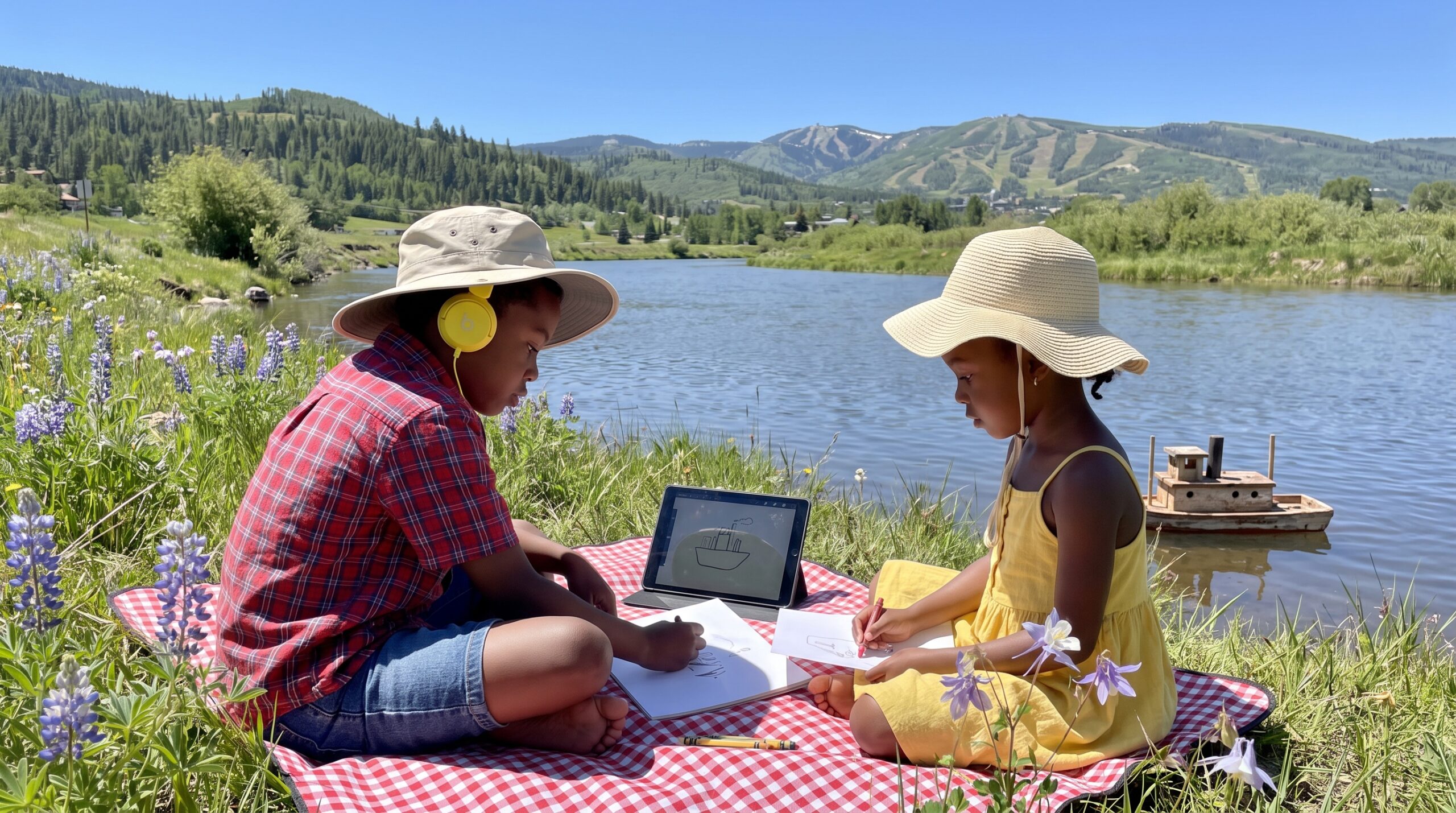
Five-minute drawing: set a two-minute timer. Ask a child to draw a steamboat and then label the boiler, paddlewheel, pilot house, and hull. Balloon boat demo: tape a blown-up balloon to a lightweight toy boat. Let the escaping air push it. It shows thrust without heat or steam. Keep it safe and simple.
Many cities keep the memory alive with restored boats, river festivals, and museums. If a family visit is possible, hearing a paddlewheel and smelling the river makes history tangible.
Interestingly, Steamboat Springs, a city that shares its name with these historical vessels, had an estimated population of 13,557 as of July 2025, reflecting a growth trend in the area. This vibrant community is also known for its winter sports, with the nearby Steamboat Ski Resort offering 3,741 skiable acres and an average annual snowfall of 314 inches. In fact, in 2023, Routt County recorded approximately 14.8 million skier season visits across all Colorado Ski Country USA resorts. Public transportation also plays a key role in the area, as evidenced by Steamboat Springs Transit carrying its one millionth passenger for the year in 2023.
Read or listen to a story about Steamboat now: Read or listen to a story about Steamboat now: For 3-5 year olds, For 6-8 year olds, For 8-10 year olds, and For 10-12 year olds.
For more short listens and family-friendly learning, visit Storypie.