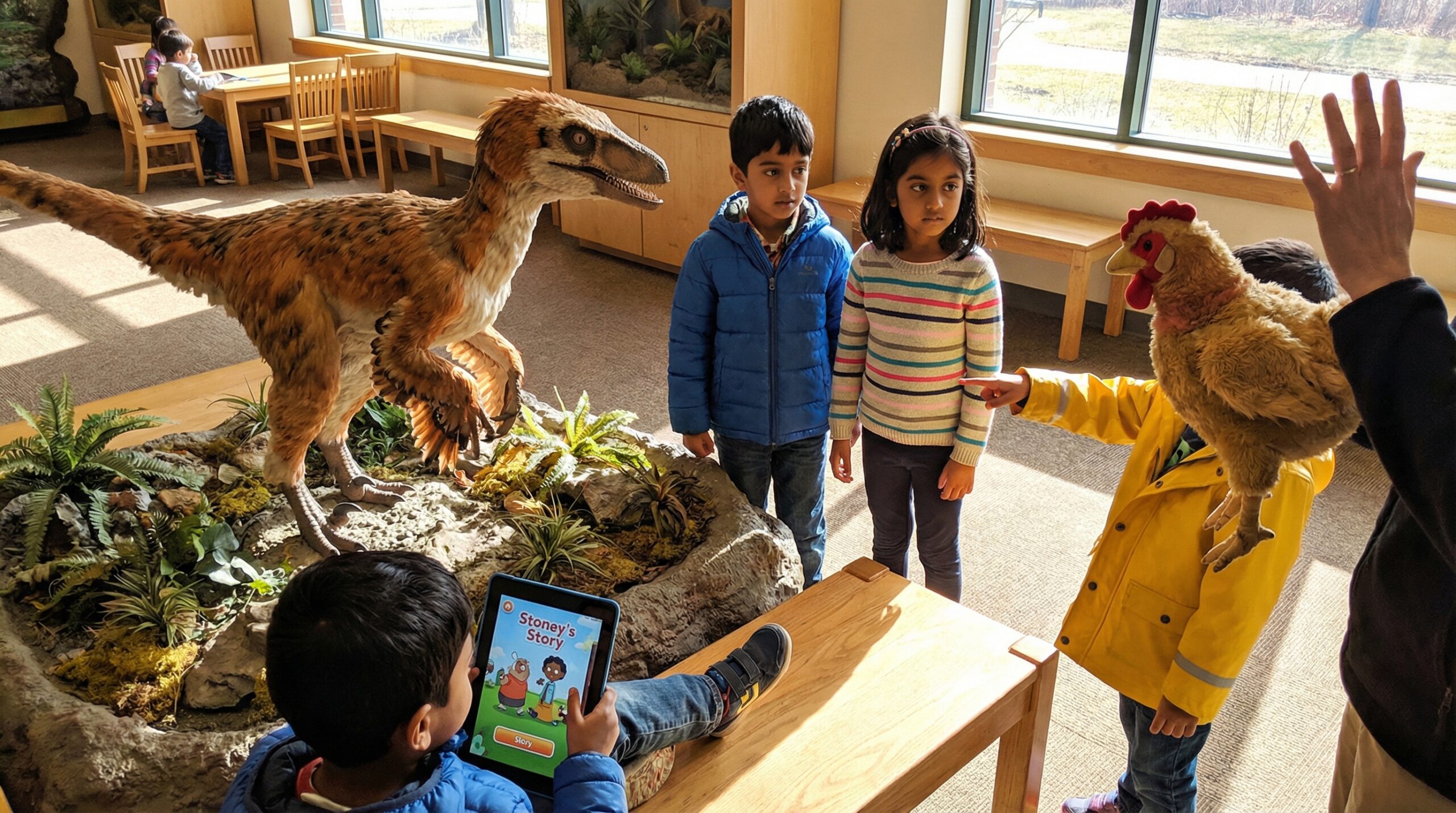
Velociraptor facts for kids start with a surprise: it looked more like a bird than a movie monster.
Small but fierce
Velociraptor stood about the size of a large turkey or a small dog. It lived in the Late Cretaceous, roughly 75 to 71 million years ago. Most fossils come from Mongolia and parts of China. Adult Velociraptors measured between 1.5 to 2.07 meters (4.9 to 6.8 feet) in length, stood about 0.5 meters (1.6 feet) tall at the hips, and weighed approximately 14.1 to 19.7 kilograms (31 to 43 pounds). So, yes, it was smaller than movies show. Yet kids still love it for its speed and shape.
Feathers and form
Velociraptor had feathers. Scientists found quill knobs on its forearm bones, which are direct evidence of its feathered appearance. Also, feathers likely helped with warmth, display, brooding eggs, and quick turns while running. It had a long stiff tail for balance and a low skull full of sharp teeth. Big eye sockets suggest sharp vision. Imagine a bird on a long tail, darting through dusty plains.
Special tools
The famous sickle claw sat on each second toe. That curved claw, which could grip or slash prey, measured up to 6.5 centimeters (2.6 inches) along its outer edge. Its hands had three grasping fingers. A long tail helped it twist fast in a chase. Scientists debate whether Velociraptor hunted alone or in groups. However, one fossil delivers a dramatic snapshot: the Fighting Dinosaurs fossil shows a Velociraptor locked with a Protoceratops. That single scene freezes a deadly moment in time.
Velociraptor and birds
Velociraptor shares many bones and features with birds. For example, it had a wishbone and similar wrist bones. Paleontologists place it on the branch that led to modern birds. Therefore birds are living dinosaurs. Ask a child which modern animal reminds them of Velociraptor. Most will say a bird. That answer sparks big eyes and big questions.
Movie myths vs fossil facts
Movies mixed up different raptors and made them giant and scaly. In truth, Velociraptor was smaller and feathered. Scientists keep updating the picture as new fossils appear. For instance, the first Velociraptor fossil was discovered on 11 August 1923 at the Flaming Cliffs in the Gobi Desert during an American Museum of Natural History Central Asiatic Expedition. That process makes paleontology exciting and surprising.
Quick way to share at home
Tell a short first-person scene. I like to say: I crept behind a dusty rock and smelled feathers in the wind. Keep it under a minute. Then ask one question to spark curiosity: Why would a meat-eating dinosaur have feathers?
Read or listen to a story about Velociraptor now: Read or listen to a story about Velociraptor now: For 3-5 year olds, For 6-8 year olds, For 8-10 year olds, and For 10-12 year olds.
Tip: Play a five-minute Storypie story, then ask one why question. Try it tonight. Keep it playful and celebrate curious answers.