Architecture for kids: What it is
Architecture for kids is about making places where people live, play, and feel safe. It means designing homes, schools, parks, and playgrounds that meet practical needs and spark wonder. Architecture tells stories about culture, community, and technology. Playful, bold, and full of surprises, it invites curious minds to notice shapes, light, and space.
Read or listen to a story about Architecture now: Read or listen to a story about Architecture now: For 3-5 year olds, For 6-8 year olds, For 8-10 year olds, and For 10-12 year olds.
Quick time travel tour
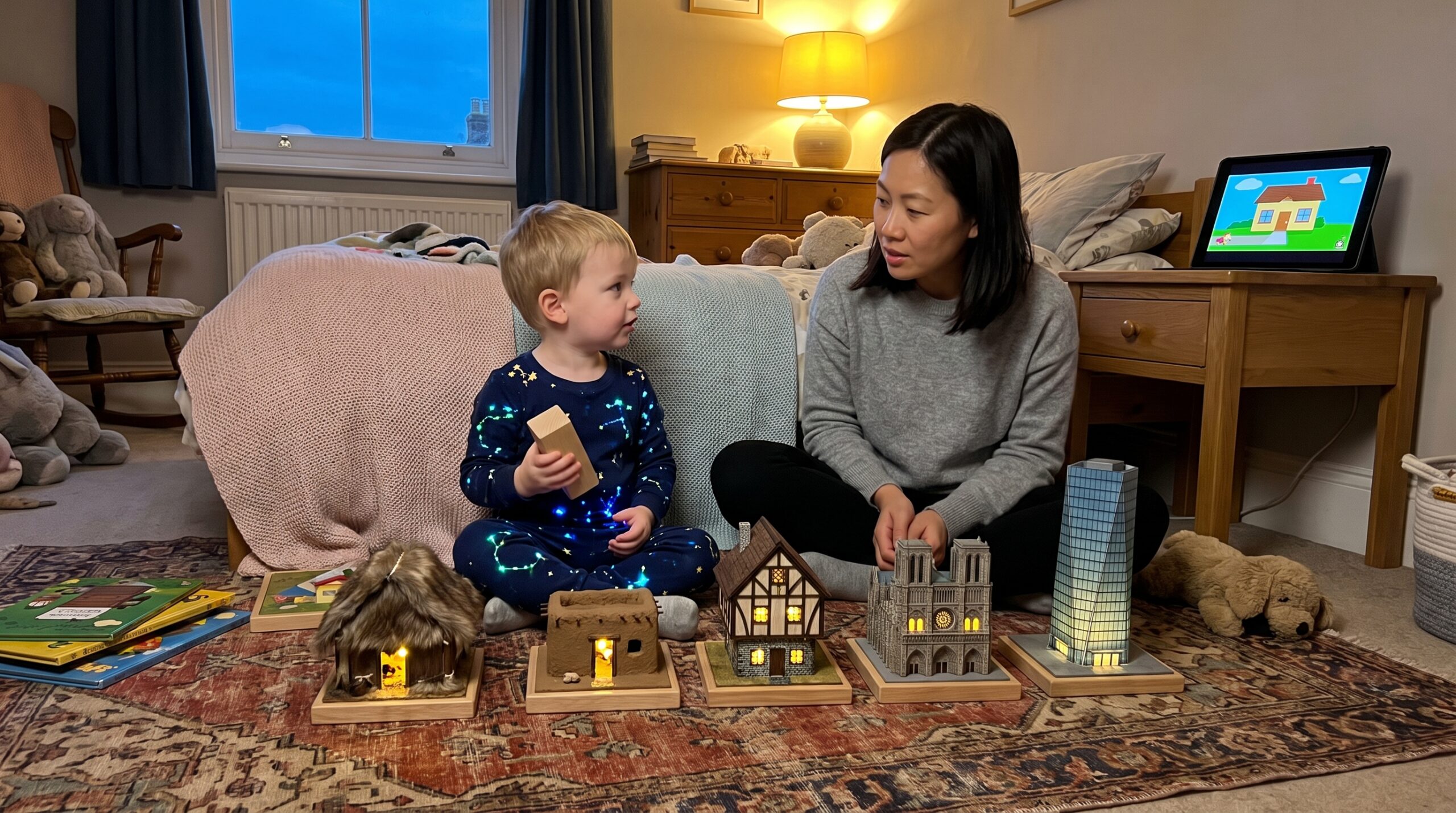
People have built shelters for tens of thousands of years. First, they used wood, hides, and bones. Later, ancient builders shaped stone circles and temples like Göbekli Tepe. Egyptians raised pyramids. Greeks tuned columns and proportion. Romans pioneered arches and concrete. In the Middle Ages, cathedrals sought the sky. Then the Industrial Revolution brought iron, steel, and glass. Finally, skyscrapers and smart materials changed cities forever. Today, architects mix tradition and high tech for striking results.
Basic parts, materials, and simple terms
Buildings include foundations, walls, roofs, doors, and windows. They also use columns, beams, arches, domes, and floors. Materials changed with time and place. For example, people used timber, stone, and mudbrick for centuries. Later, fired brick, glass, iron, steel, and concrete became common. Local materials shape local styles. For instance, stilt houses suit flood zones and thatch keeps cool in rural areas.
Quick list: common building parts
- Foundation and floor
- Walls, doors, and windows
- Roof, beams, and columns
- Arches, domes, and stairs
How architecture reflects culture and climate
Look at a town square, a market, or a playground. You will see local stories. In rainy regions roofs are steep. In hot places buildings use shade and airflow. Architects listen to people and sketch ideas. Then they make models and work with engineers to ensure safety. Rules like building codes and accessibility help make places usable for everyone. In short, architecture solves problems while telling a community’s story.
Sustainability and everyday green design
Green design helps people and the planet. Simple moves make a big difference. For example, insulation saves energy. Solar panels generate power. Green roofs and rainwater collection help nature. Planting trees creates shade and cooler streets. Clever eco-projects show how design can protect the earth. In fact, in 2024, participants in the AIA 2030 Commitment reported a 56 percent reduction in predicted Energy Use Intensity (pEUI) across 41,369 projects, demonstrating a strong commitment to sustainability in architecture. This is crucial for educating kids about responsible design. Also, small home changes teach children to care for their environment.
Famous and friendly landmarks
Kids often spot famous places in pictures and books. Stonehenge, the Eiffel Tower, Tower Bridge, St. Pauls Cathedral, and the Shard are familiar. The Eden Project is a fun example of green design. These landmarks spark questions and drawings. They also offer a window into history and imagination.
Try this at home tonight
We made a short, ten-minute story where Architecture speaks. Play it tonight and ask one simple question before lights out: “What would you build?” Keep the chat playful and short.
Other quick activities:
- Build a mini house from a shoebox and recycled bits
- Take a walk and count three different doors
- Compare roof shapes in photos and name each one
Final thought
Encourage design that includes everyone. Think ramps, wide doors, benches, and safe stairs. Keep activities playful to grow curiosity and problem solving. Architecture for kids builds a love of places and a habit of seeing details. Happy building and exploring!
We also suggest more stories and activities on Storypie to extend curiosity and learning.