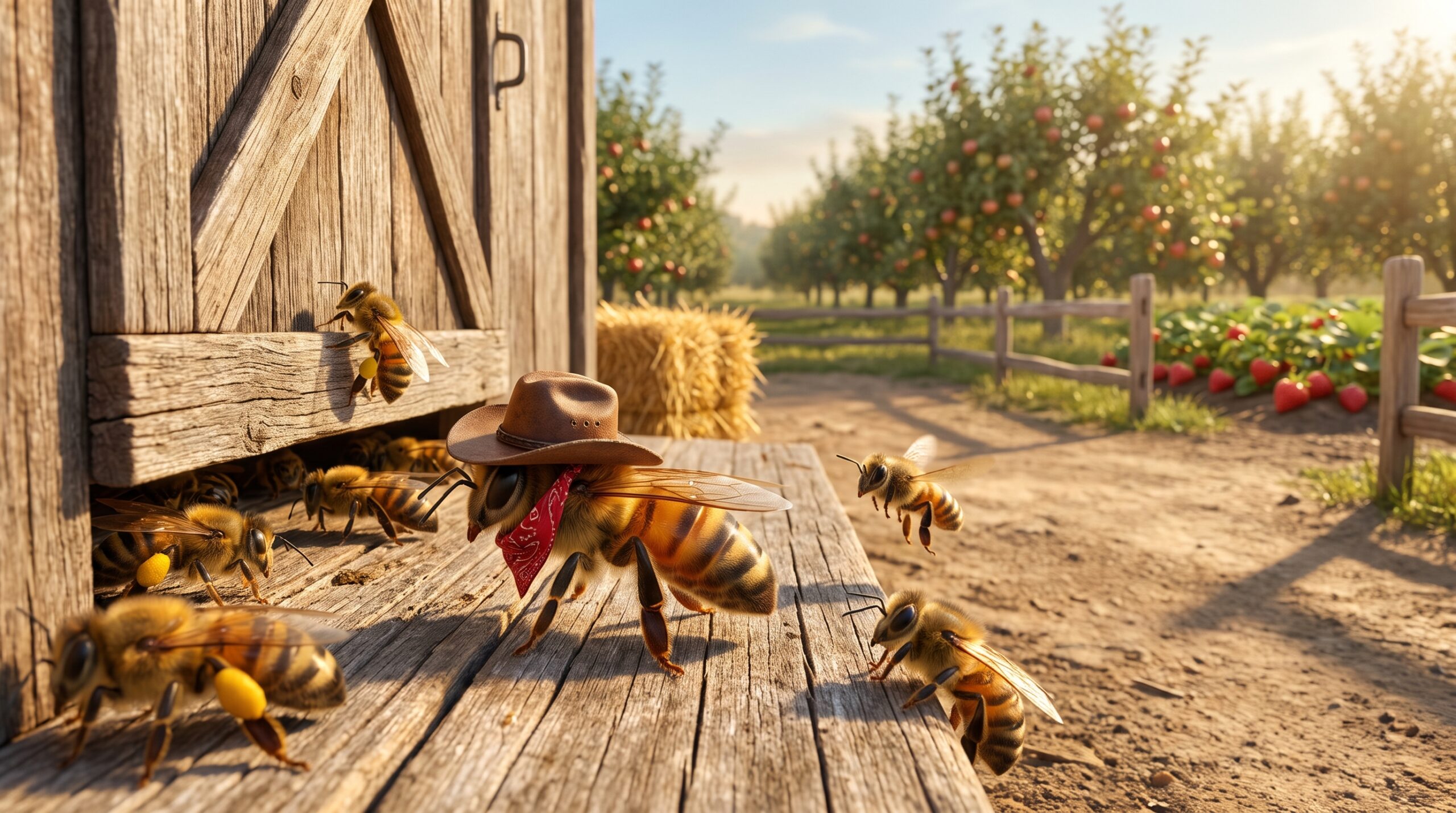
The Western honey bee for kids opens a tiny world of work, warmth, and wonder. Meet Apis mellifera, a golden worker who starts life as a warm egg. In about three weeks she becomes an adult. This life follows tidy stages: egg, larva, pupa, adult. Worker bees take about 21 days to develop. Queens grow faster and drones take a bit longer.
Western honey bee for kids: Life stages and chores
Young workers clean and feed the brood. Then they move to cell building. Next they make wax from abdominal glands. Later they guard the hive entrance. Finally they take their first flights to forage.
Foragers bring back nectar and pollen. Nectar becomes honey through regurgitation and careful drying. When done, honey holds about 17 to 20 percent water. What a small wonder honey is, and what a clever economy a hive makes.
Hive numbers, roles, and the busy society
A typical colony has one queen, thousands of workers, and a few hundred drones in summer. Young workers do the indoor jobs. Middle-aged workers make comb and care for stores. Older workers guard the hive and then forage. The whole group runs like a tiny, buzzing city. In fact, in 2024, there were approximately 100 million managed Western Honey Bee colonies worldwide, producing about 1.8 billion kilograms of honey annually.
Hive architecture and communication
Workers build hexagonal wax cells to raise brood and to store honey. Inside the hive, bees keep brood near 34 degrees Celsius. They fan or cluster to hold that warmth. Communication in the hive is tidy and clever.
When a forager finds a rich flower patch she performs a waggle dance. The dance tells direction and distance relative to the sun. Karl von Frisch decoded that language and won recognition in 1973. The round dance means food is very near. These dances are astonishingly precise and quietly brilliant.
Why the Western honey bee matters
Western honey bees pollinate apples, strawberries, blueberries, cucumbers, melons, and almonds. They support many crops and family gardens. In 2024, U.S. agricultural producers spent over $400 million on honey bee pollination services to cover 1.728 million acres, with almond pollination alone generating $325.8 million. However, they are not the only pollinators. Bumblebees and solitary bees also do vital work. A healthy garden needs pollinator diversity.
Simple ways families can help
- Plant a mix of nectar and pollen rich flowers.
- Provide a shallow water dish with stones for landing.
- Avoid spraying insecticides while flowers are open.
- Leave small patches of bare ground for solitary miners.
Practical notes for families
Honey bees usually sting only to defend themselves. Most people have mild reactions. If someone is stung, remove the sting and clean the site. Watch for allergic signs and seek help if needed.
On warm, sunny days, watch flowers like lavender, thyme, clover, and fruit blossom. Honey bees fly with purpose and often carry pollen on their hind legs. They look golden brown and banded. Bumblebees appear rounder and hairier.
Seasonal rhythm and a tiny storytime
Spring is brood and blossom. Summer is foraging and honey. Autumn is storing and preparing. Winter is clustering and keeping warm. Small, steady family actions help bees and the fruit on our table. However, the challenges faced by honey bees are significant. Between April 1, 2025 and April 1, 2026, U.S. beekeepers lost an estimated 39.9 percent of their managed Western honey bee colonies, with summer losses estimated at 23.3 percent, highlighting the importance of conservation efforts.
Read or listen to a story about Western Honey Bee now: For 3-5 year olds, For 6-8 year olds, For 8-10 year olds, and For 10-12 year olds.
Also explore the full story page on Storypie: Read or listen to a story about Western Honey Bee now. For a quick backyard follow-up, download the Storypie app: Get the Storypie app.