
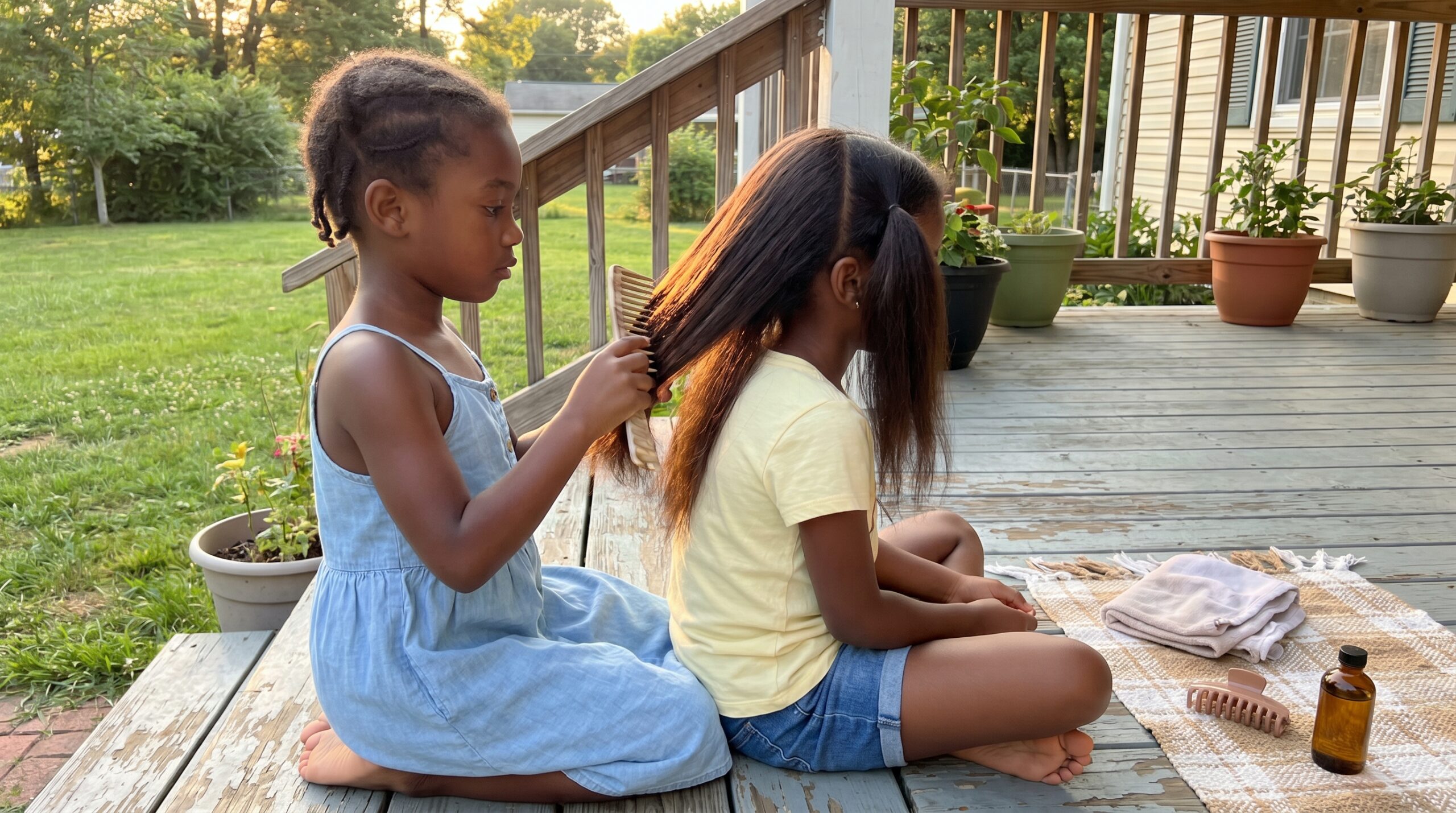
Brushing my child’s hair can be calm and tear-free. Start at the ends, and you will avoid most yanks and breaks. Also, hold the hair near the root while you work to protect the scalp. It’s important to understand that the average person loses between 50 and 100 hairs daily as part of the natural hair growth cycle, so parents can manage expectations when brushing their child’s hair.
Brushing My Child’s Hair: Start at the Ends
Begin in small sections. Work from the tips upward. This method loosens knots without the pull. For stubborn tangles, add a little conditioner or oil. Then let it sit for a minute before trying again. Remember, dermatologists state that the old advice to brush ‘100 strokes a day’ is a myth — hair never needs 100 brush strokes a day, which emphasizes the importance of gentle brushing techniques for children’s hair.
Choose the Right Tool
Pick tools that match hair type and wetness. For wet or curly hair, use a wide-tooth comb or a wet brush. For long, straight hair, a paddle brush or boar-bristle brush smooths and spreads natural oils. For heat styling, choose a vented brush and always use a heat protector spray. For little ones, select a soft silicone-tipped brush or very soft nylon bristles to avoid scratching. Keep in mind that brushing wet hair can lead to increased breakage, as hair is more fragile when wet, according to Hims Health Blog.
Quick brush guide
- Wide-tooth comb or wet brush: wet and curly hair.
- Paddle or boar-bristle brush: long, straight hair.
- Vented brush: heat styling only, with protection.
- Soft silicone or soft nylon: toddlers and sensitive scalps.
Gentle Detangling Steps
Wet the hair slightly or add a leave-in conditioner or detangling spray. Then work in small sections and start at the ends. Slowly move upward until the knot gives. Never yank. If a child resists, sing a short song, count to three, and reward calm with a silly compliment. Play makes the routine stick.
Timing, Frequency, and Why It Helps
How often you brush depends on hair type. Straight fine hair often benefits from daily gentle brushing. Curly and textured hair do better with less frequent dry brushing and more detangling during showers. Brushing before bed spreads natural scalp oils overnight and can reduce morning tangles for many families. Brushing moves oils down the shaft to add shine and manageability. It can also gently stimulate the scalp and help shed flakes. However, brushing will not reliably speed long-term hair growth.
Excessive brushing can cause hair breakage by damaging the cuticle layer, leading to split ends and weakened hair strands, as noted in research from the Journal of Cosmetic Science. This underscores the importance of gentle brushing to maintain hair health, particularly for children with delicate hair.
Common Mistakes and Care
Avoid yanking through knots, using the wrong brush on wet hair, and aggressive brushing that causes split ends. Also avoid sharing brushes. Hold the hair base to reduce pulling. Replace brushes when bristles bend or pads wear out. Clean brushes by removing hair and washing with warm soapy water. Dry them bristle-side down.
Special Guidance for Children
Keep sessions short and playful. Use a leave-in conditioner for smoother detangling. Praise and distraction help more than threats. If hair is severely matted, take time with conditioner and patience or seek a stylist. Additionally, after 24 cycles of washing and heat styling, a 2025 study found that the tensile strength of virgin textured hair decreased by approximately 90%, emphasizing the need for careful hair care practices, especially for textured hair.
Read or listen to a story about Brushing My Hair now: Read or listen to a story about Brushing My Hair now: For 3-5 year olds, For 6-8 year olds, For 8-10 year olds, and For 10-12 year olds.
Try the Storypie app to play and save short family stories. Small rituals, tiny rewards, and a playful voice can turn a chore into a calm, confident moment.