
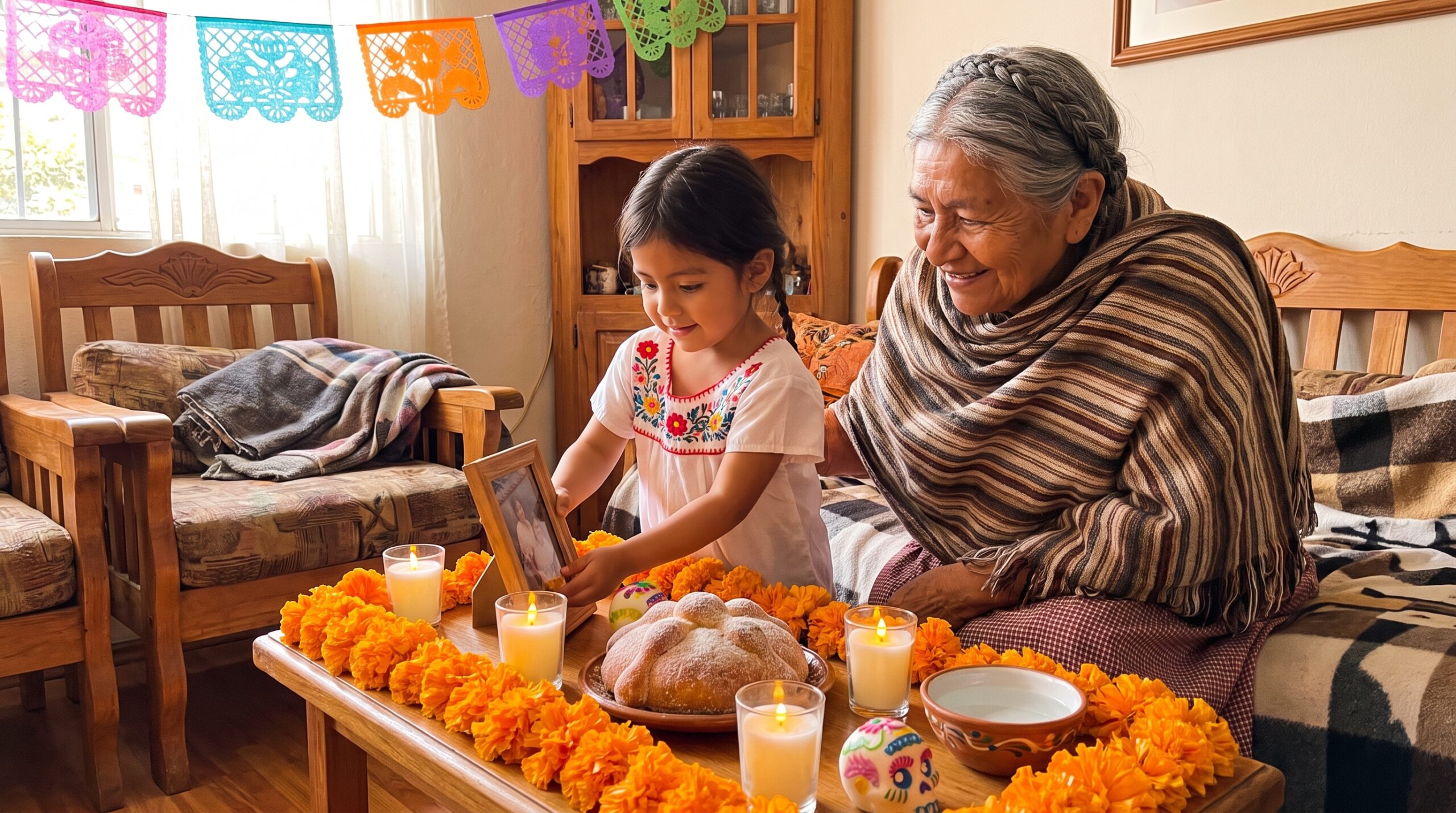
This autumn, Abuela Elena helps a child build a small ofrenda. In this Día de los Muertos family guide, she teaches gentle history and simple memory work. Also, she lets the child pick one photo and tell a short memory while placing it. Small rituals stick. Then they become stories kids return to again and again.
About Día de los Muertos
Día de los Muertos is a multi day holiday rooted in Mexican and Mesoamerican cultures. For families, the mood often feels celebratory rather than only sad. Also, people gather on November 1 and 2 to remember and celebrate those who have died. In fact, November 1 is dedicated to honoring deceased children, while November 2 is set aside for adults. Over time, the traditions blended with Catholic feast days during colonization. Still, the holiday keeps a living sense of continuity between generations. According to the Smithsonian Institution, this structure is a key aspect of the celebration.
Origins and feeling
The holiday grew from ancestor veneration among Nahua, Maya, and other peoples. In addition, families passed practices from elders to children. UNESCO recognized these community rituals in 2008 as intangible cultural heritage. For many, that recognition felt fitting and wonderful.
Main elements of the holiday
Ofrendas sit at the heart of celebration. Families build home altars with photos, candles, water, and favorite foods. Also, cempasúchil marigolds guide spirits with bright color and scent. Papel picado flutters like tiny flags. Pan de muerto and sugar skulls add playful sweetness. In fact, according to the National Alliance of Small Merchants (ANPEC), 70% of Mexicans consume pan de muerto, 50% set up an altar, and 15% take offerings to the cemetery during Día de los Muertos. In addition, calacas and La Catrina remind us that death is part of life. Finally, copal or incense helps purify the air.
Different days and places
November 1 often honors children who have died and appears as Día de los Angelitos. November 2 usually honors adult relatives. However, families vary widely by region and by household. For example, Michoacán hosts candlelit island vigils. Mixquic holds evocative nighttime cemetery rituals. Also, Oaxaca’s markets burst with offerings and crafts.
Cemetery visits and community life
Families clean graves, repaint headstones, and lay bright flowers. Often they hold vigils and share food and stories through the night. In cities and abroad, parades and community altars bring the holiday into public life. A Statista survey showed that around 91% of respondents in Mexico celebrate Día de los Muertos, equating to roughly 116 million people. Still, family altars remain the heart of the celebration.
How to share Día de los Muertos with children
Keep your approach small, warm, and respectful. Let kids make a tiny ofrenda and pick one photo to talk about. Also, cut simple papel picado or fold paper marigolds together. Taste a slice of pan de muerto and explain sugar skulls as playful, not scary. Finally, teach cemetery etiquette and ask permission before photographing private altars.
A note on respect
Día de los Muertos is a sacred practice for many families. Therefore, avoid trivializing symbols or using makeup that mocks the tradition. Instead, learn from elders or local cultural centers. Also, when you attend public events, listen kindly and ask questions with respect.
Read or listen to a story about Día de los Muertos now: Read or listen to a story about Día de los Muertos now: For 3-5 year olds, For 6-8 year olds, For 8-10 year olds, and For 10-12 year olds.
Small, steady acts of remembering help the holiday matter. When a child returns to the altar to tell the same short memory again, you know the work has taken root. That is the point. That is the gift. For more family stories and resources, visit Storypie.










