
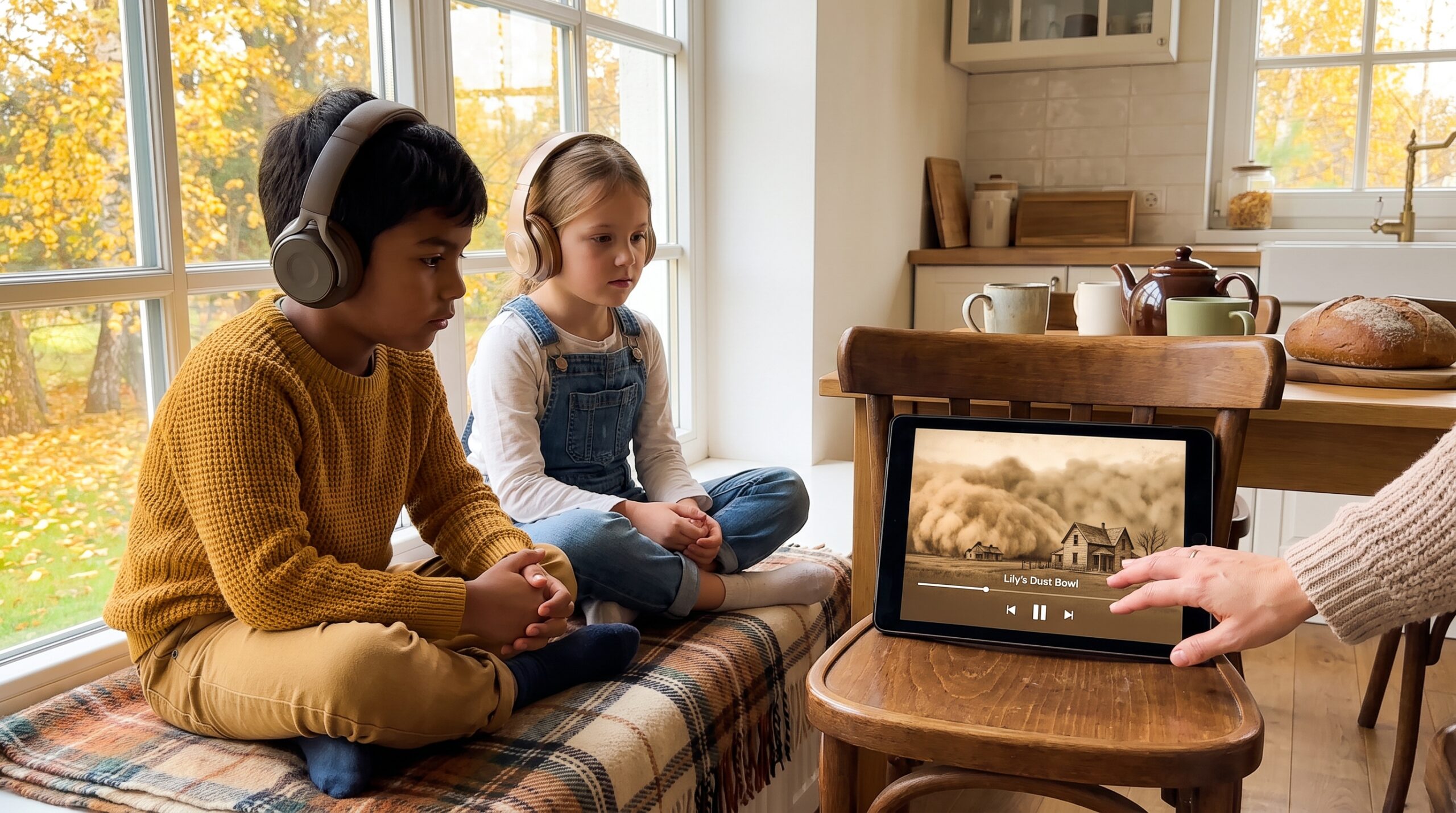
Dust Bowl for kids is a simple phrase. It tells us we will explain a big event in a gentle way for families and teachers.
Dust Bowl for Kids: What happened
In the 1930s, strong winds and very dry soil created huge dust clouds. These clouds blew across farms and towns. Many days looked like evening, even at noon. The Dust Bowl occurred from 1931 to 1939, during which the Great Plains experienced severe drought conditions.
First, people farmed the Great Plains for years. Then, drought arrived. Farmers planted large areas of grass and wheat. Over time, the soil lost its cover. In fact, in 1935, one-third of the Dust Bowl region—approximately 33 million acres—lay ungrassed and exposed to wind erosion. As a result, the wind could pick up loose topsoil.
Who lived through the Dust Bowl
Families, children, and animals all felt the Dust Bowl. Approximately 2.5 million Americans migrated westward during the Dust Bowl era, seeking better living conditions. Some people stayed on their land. Others moved far away to find work. Many families found life very hard. In 1937, 21 percent of rural families in the Great Plains were receiving federal emergency relief targeted at drought-impacted areas. Still, many kept hope and helped each other.
Also, the Dust Bowl changed towns and schools. Children sometimes missed school because of storms. Schools and communities worked hard to keep kids safe and learning.
Short facts you can share
- When: Mostly the 1930s.
- Where: The Great Plains regions of the United States.
- Why: Drought plus loose soil and strong winds.
- Outcome: New farming rules and tools to protect soil.
For parents and teachers, the phrase Dust Bowl for kids helps you find calm, clear explanations. It points to stories that treat children with care and honesty. The Dust Bowl’s extent shrank from 100 million acres in 1935 to 22 million acres by 1940, illustrating the recovery of the land over time.
Read or listen to a story about Dust Bowl now: For 3-5 year olds, For 6-8 year olds, For 8-10 year olds, and For 10-12 year olds.
If you want more, visit Storypie for gentle, age-ready history stories. These stories help kids feel connected to the past and to real families who lived through the Dust Bowl.
Finally, remember that the Dust Bowl for kids is a starting point. Use it to guide calm, caring conversations with children. Then explore stories and facts together at Storypie.









