The Harlem Renaissance for kids begins with one clear idea. It bloomed as a flowering of Black literature, music, visual art and thought in Harlem, New York. Lasting from about 1918 to the mid 1930s, it peaked in the 1920s. The era gave voice to racial pride, bold artistic self-expression and new ideas about Black identity. Also, it pushed for social equality while facing segregation and economic limits. During the Harlem Renaissance, Harlem’s African American population grew from approximately 50,000 in 1914 to 200,000 by 1930, largely due to the Great Migration, illustrating the demographic changes that fueled this cultural movement (SoftSchools.com).
Harlem Renaissance for kids: A simple family ritual
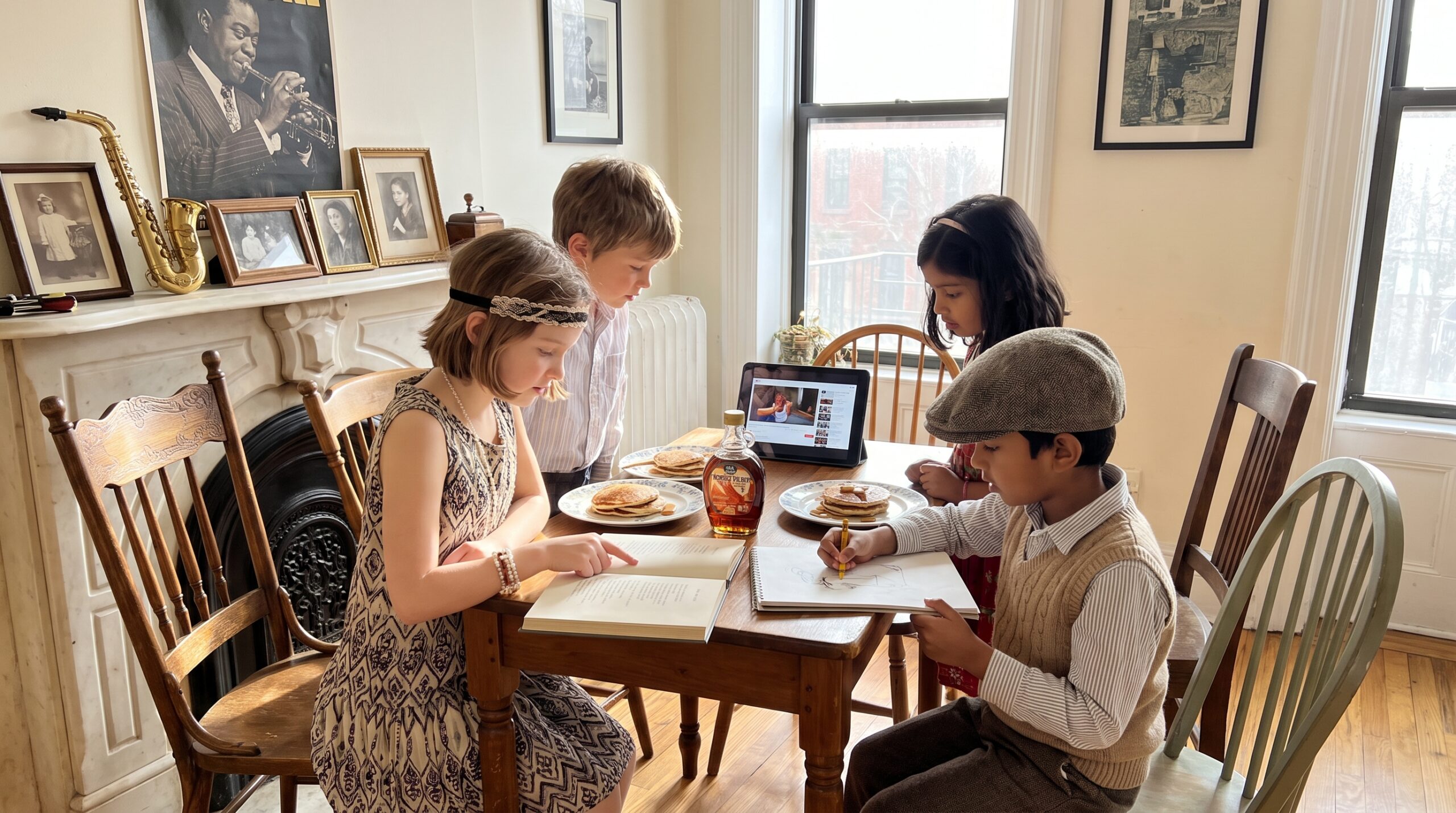
First, start small. Pick a ten minute ritual at breakfast. Play a short jazz clip or a Storypie story. Let the music or poem be the spark. Then, ask one simple question. Try “What do you hear?” Keep it calm. Let curiosity grow. A tiny, joyful ritual works wonders for busy mornings.
Quick morning ideas
- Play a 10 minute Storypie story at breakfast.
- Listen to a short jazz clip and draw what the music makes you see.
- Read a short poem aloud and pause to wonder.
What to listen for during the Harlem Renaissance for kids
Listen for rhythm first. Jazz and blues brought new sounds and fresh energy. For example, think Duke Ellington and Louis Armstrong. Also, listen for voices that talk back to history. Read a short Langston Hughes poem aloud. Try a line like My soul has grown deep like the rivers. Then, let the words land. Pause and say why they matter. Make it brassy and brilliant, then soft again.
Where the Harlem Renaissance came from
The movement grew from the Great Migration. Black families moved north after World War I. As a result, Harlem became a busy cultural hub. During the 1920s, the Black population of New York City doubled, helping transform Harlem into a central hub for African-American art, music, literature, and politics (OpenStax U.S. History). New publishers and performance venues helped artists reach wider audiences. Also, a growing Black urban middle class supported salons, magazines and night clubs. Together these forces made a bright, creative scene.
People and places to remember
Names to know include Langston Hughes, Zora Neale Hurston and Claude McKay. Think of Alain Locke and W. E. B. Du Bois as key thinkers and editors. Also, Aaron Douglas showed bold visual art. Magazines such as The Crisis and Opportunity shaped debate. Langston Hughes published his first poem, ‘The Negro Speaks of Rivers,’ in the June 1921 issue of The Crisis; two years later, Jean Toomer’s Cane became the first book of fiction by an African American writer published in New York since 1905 (Academy of American Poets). The New Negro anthology gathered many voices. Venues like the Cotton Club and the Apollo Theater hosted performances that still echo today.
Why the Harlem Renaissance for kids matters today
The Harlem Renaissance shaped American music, literature and visual culture. It helped popularize jazz and blues. Between 1922 and 1937, the sixteen best-known Black authors of the Harlem Renaissance published more than fifty books, showcasing the prolific literary output that influenced American literature (Library of America). Also, it influenced later civil rights work and future waves of Black artists. Many materials live at the Schomburg Center for Research in Black Culture. Museums and libraries offer family guides and online exhibits.
Simple activities for families
Try short, playful activities that fit busy days. For example, use a Storypie audio piece for a breakfast ritual. Then, follow with a drawing or a clap pattern. Keep it short and fun.
- Play a 10 minute Storypie story at breakfast to spark questions.
- Listen to a short jazz clip and draw what you hear.
- Read a child friendly picture book biography together and ask what surprised you.
Read or listen to a story about Harlem Renaissance now: Read or listen to a story about Harlem Renaissance now: For 3-5 year olds, For 6-8 year olds, For 8-10 year olds, and For 10-12 year olds.
Finally, try the quick test. If your child returns to the sound or page alone, you have done something right. Wonder that winks. A small steady habit plants pride and curiosity. Also visit Storypie for more short family stories and audio pieces for busy mornings.