La Llorona Latin American is a name you might hear at family gatherings. The phrase means the weeping woman and sounds like lah yo-ROH-nah. At its heart, the story follows a woman who mourns and searches for lost children near rivers and lakes. For many families, it blends ghost story and family lesson across Mexico, Central America, parts of South America, and Mexican-American communities. In fact, a recent study found that La Llorona is one of the most recognized legends among traditional tales in Mexico, comprising 35.1% of such stories told, highlighting its deep cultural roots and significance (Imaginarios culturales y emocionales).
La Llorona Latin American: What the story says
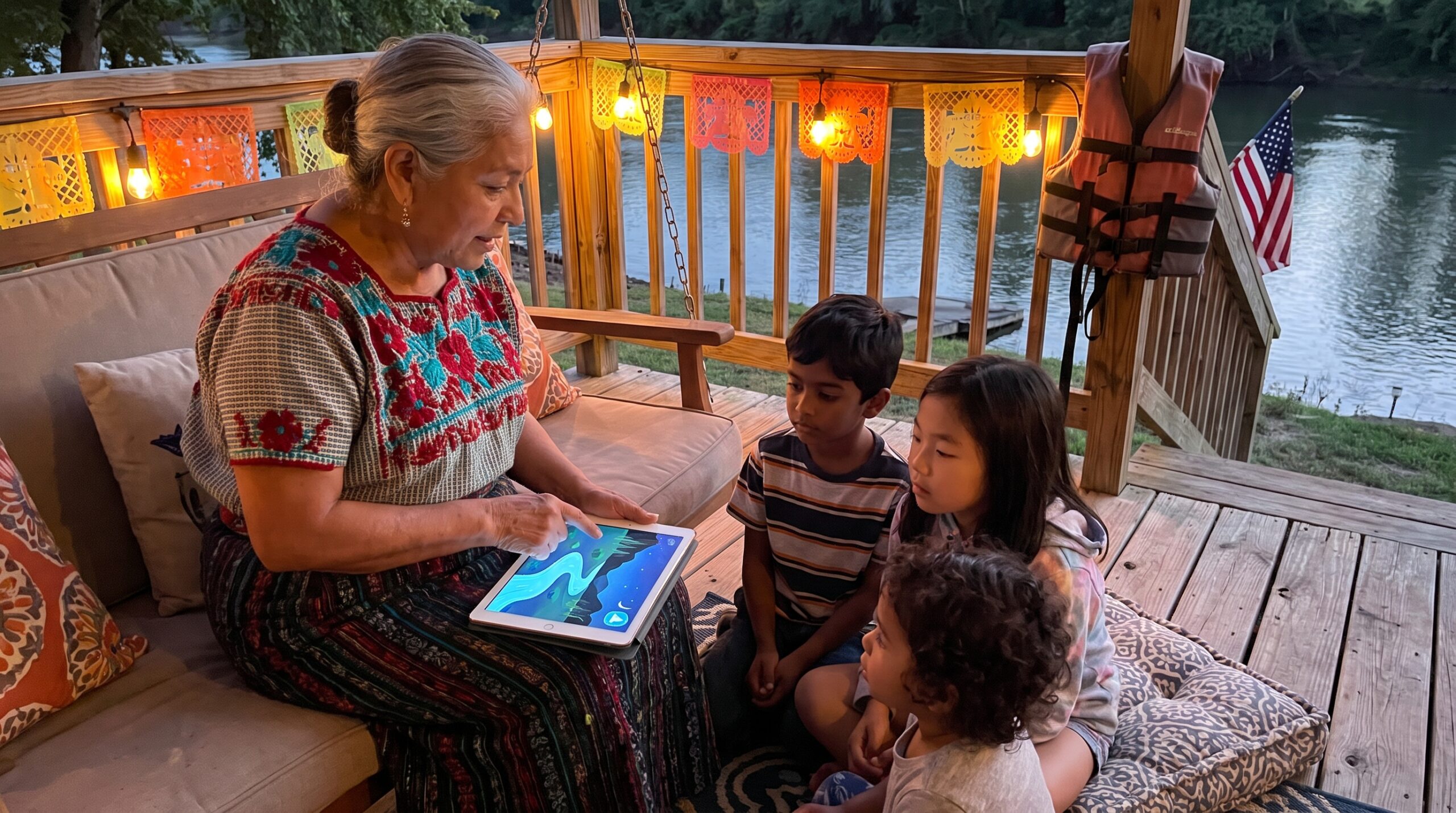
On a warm porch, Abuela may tell a quiet version of the tale. It often teaches family, choices, and river safety. After a retelling, ask a child one simple water rule. For example, ask where adults should stand near water.
The legend has many versions. Some say the children drowned by accident. Others say anger, neglect, or fate caused the deaths. Motifs repeat: a white dress, long dark hair, night-time visits, and the cry “¡Ay, mis hijos!” Also, many versions connect to pre-Hispanic mourning women and colonial-era stories. Therefore, the tale evolved for centuries and shows local colors. In a 2023 survey in Colombia, 97% of respondents reported knowing the myth of La Llorona, making it the most widely known among Mestizo myths in that study (Folclore y mitos mestizos en Colombia).
Why families tell La Llorona
Families and communities use the story in different ways. For young children, gentle retellings become cautionary tales about water and listening to adults. For older listeners, the legend prompts talk about grief, remorse, and how choices affect others. It is one of the gentlest ways to teach a serious lesson, often with a wink. Notably, the knowledge of La Llorona spans across generations in Colombia, with 98% awareness among ages 5–19 and ages 20–34, indicating its continued relevance (Folclore y mitos mestizos en Colombia).
Quick safety prompts to pair with a retelling
Turn a spooky mood into practical learning with short rules. Try this tiny list:
- Stay where an adult can see you near water.
- Wear a life jacket when boating or near deep water.
- Learn to swim and practice with a grown-up.
Story notes and cultural care
La Llorona is not a single fixed story. Local names, settings, and reasons vary widely. Folklorists study how the tale reflects gender, family, and community concerns. When sharing, choose age-appropriate versions and name the tale’s roots. Also, ask grandparents or local storytellers about their version. That respect keeps the tale lively and honest. Furthermore, a comparative study noted that La Llorona is one of the most widespread and representative legends across Hispanic America, especially in migratory communities in the United States, highlighting its transnational impact (La Llorona, la Ciguanaba y otros espectros femeninos).
Modern life and gentle retellings
La Llorona appears in movies, songs, children’s books, and school lessons. The first Mexican horror film titled ‘La Llorona’ was released in 1933, marking a significant moment in the country’s cinematic history (La Llorona (1933 film)). Contemporary adaptations range from spooky horror to calm teaching versions. Picture books and museum programs often tone down frightening parts and focus on empathy and safety. For a safe introduction, try kid-friendly retellings before sharing darker versions.
Read or listen to a story about La Llorona – Latin American now: Read or listen to a story about La Llorona – Latin American now: For 3-5 year olds, For 6-8 year olds, For 8-10 year olds, and For 10-12 year olds.
Final thought
La Llorona invites us to talk about loss, family, and safety. Tell a gentle version. Ask a question. Share a memory. Finally, explore Storypie for a respectful, kid-friendly retelling that opens conversation and keeps little listeners safe and curious.
Explore Storypie for more family-friendly folktales and resources.