Safe water for kids keeps children free from harmful germs and chemicals. In this post we explain what safe water for kids means, why it matters, and simple daily habits you can use today.
Why safe water for kids matters
Contaminated water can cause diarrhoea, parasites, and long term harm from chemicals like lead or PFAS. Children and babies are especially vulnerable. Also, pregnant people, older adults, and immunocompromised family members need extra care. In fact, a striking 2023 report from the U.S. Environmental Protection Agency revealed that approximately 7% of children in the United States were served by community drinking water systems that did not meet all health-based drinking water standards.
For example, historic outbreaks show how important clean water is for public health. Therefore, keeping drinking water safe helps protect the whole family. Additionally, about 18% of children in the U.S. were served by community water systems with at least one monitoring or reporting violation in 2023, highlighting the prevalence of issues in water quality monitoring.
How public tap water is treated
Municipal systems use coagulation, sedimentation, filtration, and disinfection. Often they use chlorination and regular testing. These steps remove most germs and make tap water safe in many towns and cities.
However, old lead pipes or a local contamination event can change that. If you worry about your supply, check your local water quality report or your national regulator for guidance.
Simple routines to make safe water at home
Small habits add up. Try these easy routines to keep drinking water safer for kids.
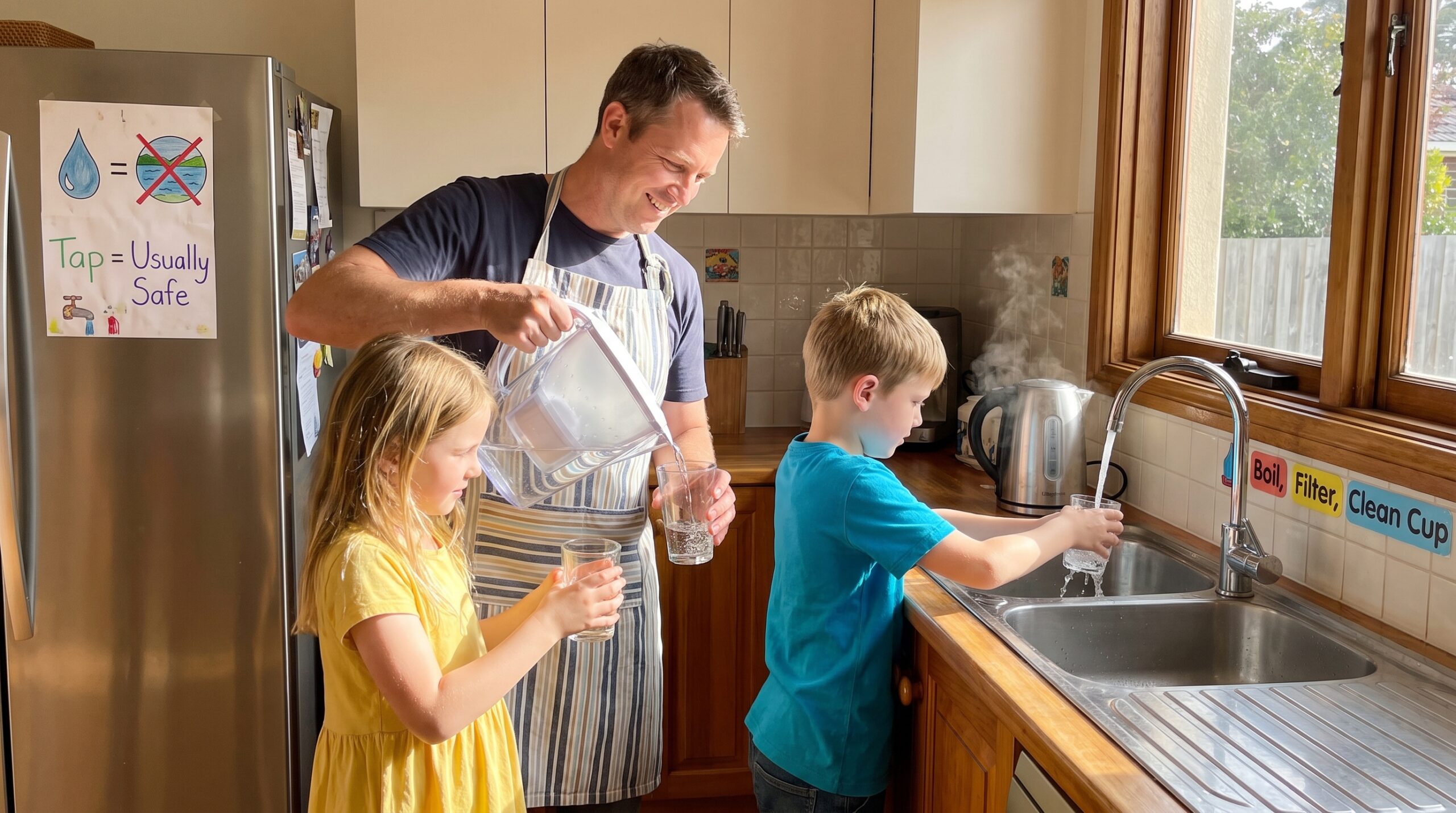
- Use a clean cup reserved for drinking. Also, wash it daily.
- Wash bottles and lids every day. Then dry them before use.
- Teach children to wash hands before drinking.
- Run cold tap water for a few seconds if the pipe sat unused overnight.
- If you have a private well, test the water at least once a year.
Everyday treatment options
Boiling, filtering, and disinfecting all help. Boil water for one minute to kill microbes. Above 2000 metres, boil for three minutes.
Certified mechanical filters remove bacteria and protozoa. Reverse osmosis and distillation remove many chemicals. Chlorine tablets or diluted household bleach disinfect most pathogens. UV devices in clear water inactivate microbes. Each method has limits, so choose what fits your local risks.
What to do during advisories and outdoors
Follow local instructions during a boil-water advisory. Boil water for one minute for drinking and formula, or use bottled water.
Outdoors, do not let children drink from streams, lakes, or puddles. Even clear mountain streams can carry Giardia. Pack bottled water or use a certified personal filter on hikes.
Teaching moments and next steps
Explain microbes as tiny germs that can make your tummy hurt. Also, describe chemicals as invisible stuff that is bad in large amounts. Celebrate small habits and create joyful routines.
Read or listen to a story about Safe Water now: Read or listen to a story about Safe Water now: For 3-5 year olds, For 6-8 year olds, For 8-10 year olds, and For 10-12 year olds.
Final thought
Check local reports, maintain filters, and plan for advisories. Finally, praise daily wins and enjoy simple routines. For related stories and gentle audio guides, visit Storypie to explore more. Remember, as of 2024, 2.1 billion people still lack safely managed drinking water, with 1.5 billion having only basic services and 106 million collecting water from untreated sources, according to UNICEF. This highlights the importance of our efforts to ensure safe water for our children and communities.