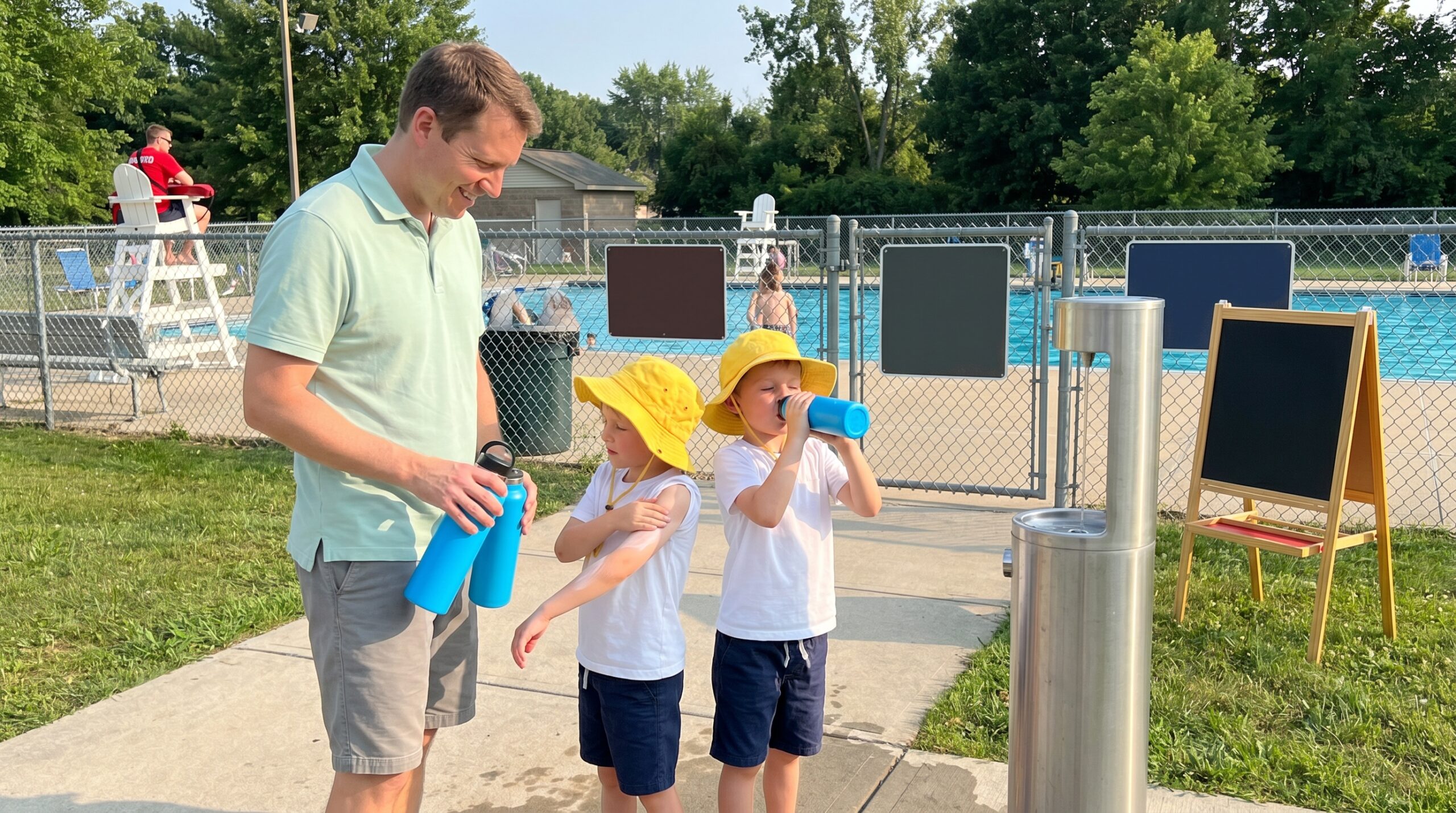
Safe water for kids matters every day. Clean water keeps children healthy, growing, and bright. On hot afternoons a cool sip can work magic. So pack a clean bottle and remind kids not to swallow pool water.
Why safe water for kids matters
Clean drinking water prevents diarrhoea and many infections. In fact, unsafe water is a leading cause of childhood diarrhoeal disease worldwide, with unsafe water, sanitation and hygiene (WASH) potentially preventing at least 1.4 million deaths and 74 million disability-adjusted life years (DALYs) in 2019. As of 2024, approximately 2.1 billion people globally—about 1 in 4—still lack access to safely managed drinking water, highlighting the urgent need for safe water initiatives for children. Many municipal systems receive treatment, monitoring, and regular tests. Therefore tap water is often safer than untreated lakes and streams.
How municipal treatment protects taps
Utilities screen, coagulate, and settle water. Then they filter and disinfect with chlorine or UV. A low disinfectant level travels in pipes to cut recontamination. Also, utilities publish water quality reports. Regulators set standards and require testing. In 2023, about 7% of children in the United States were served by community drinking water systems that did not meet all health-based standards, a significant decrease from nearly 20% in 1993, indicating progress in improving water safety for children.
Easy steps to keep water safe at home
Flush taps after a long pause. Run cold water for drinking and cooking. Follow boil water advisories exactly when officials warn you. Use certified point-of-use filters when needed, especially to reduce lead. For private wells, test annually for bacteria and nitrates.
- Flush taps briefly before use
- Use cold water for food and drinks
- Choose certified filters for specific contaminants
- Test wells yearly and act on results
Pools, lakes, and germs
Pools and lakes are fun, but they can spread germs. Pools need proper disinfection and balance. Do not swallow pool or lake water. If a child feels sick, keep them out of the pool. Cryptosporidium can resist chlorine and cause outbreaks, so filtration and excluding sick swimmers matter.
Reusable bottles and simple habits
Packing a clean reusable bottle is simple and powerful. Wash it daily with hot, soapy water and let it dry. Bring a spare bottle on hot days. Stainless steel or BPA-free bottles work well. Also, teach kids not to share mouthpieces to cut germ spread.
Warning signs and quick actions
Know the signs of trouble: a change in taste, smell, colour, or visible particles. If you notice odd smells or clusters of illness after water exposure, contact your water utility or local public health authority. In emergencies, boil water for one minute, or three minutes above 2000 metres. Unscented household bleach can disinfect in a pinch when you follow public guidance.
Make water safety small and joyful
Turn water safety into tiny experiments and small wins. For example, show kids a simple cloth and charcoal filter demo. Make a hydration chart and celebrate water checks with stickers. Also, save water by turning off the tap while brushing. Water the plants with a can. Those tiny moments build gratitude and feel wonderfully triumphant.
I remember my child returning from the park, sticky and tired, then melting into a grin after a long cool drink. Those tiny wins make the whole effort worthwhile.
Read or listen to a story about Safe Water now: For 3-5 year olds, For 6-8 year olds, For 8-10 year olds, and For 10-12 year olds.
Find more parent-friendly guides and stories at Storypie. Keep tips short and keep water safe. Small steps help a lot.