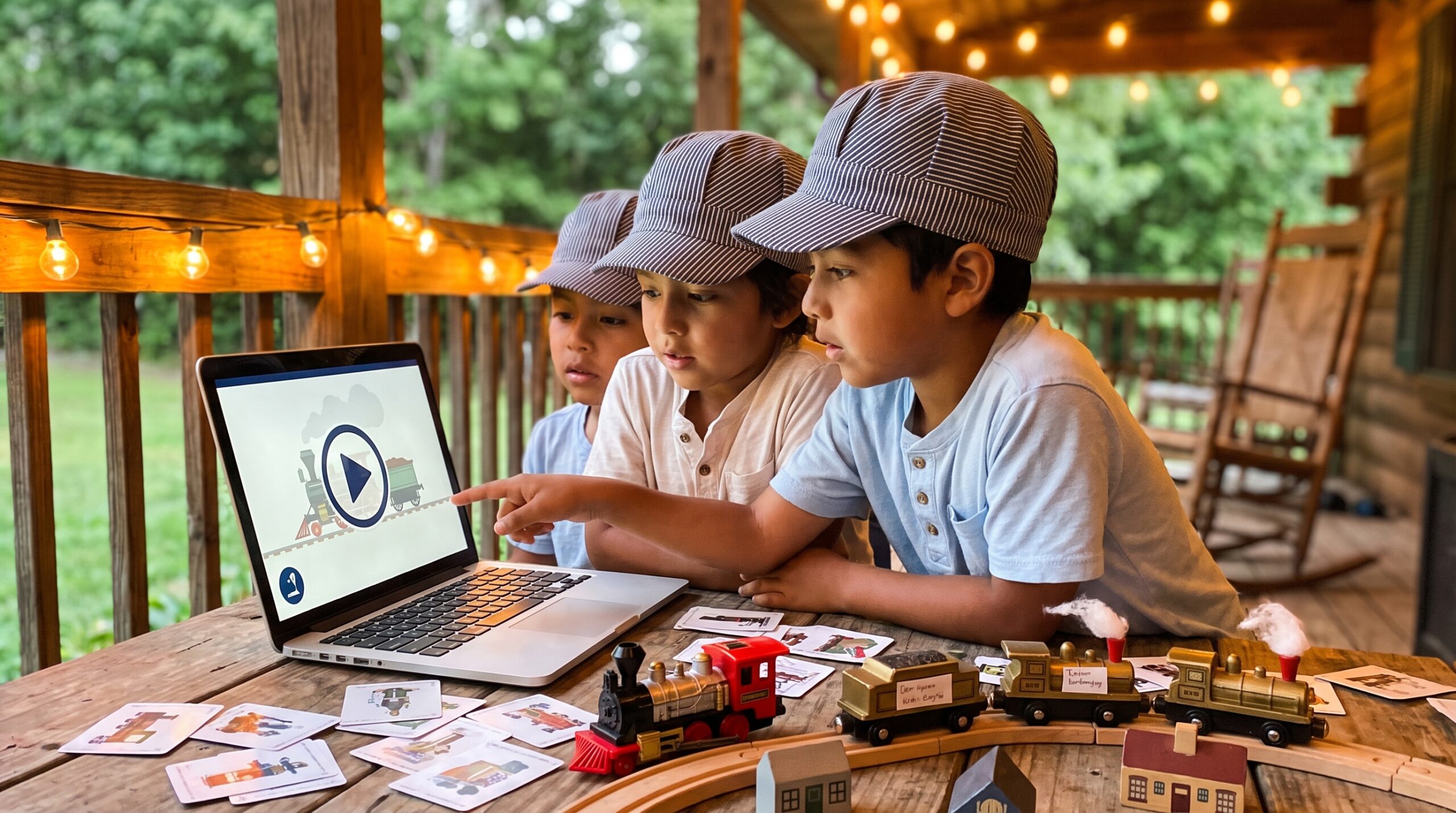
At Storypie I like to tell a short summer-evening tale about a steam locomotive for kids. First I open with a small spark. Kids lean in when a story speaks to them. Try a 12-minute locomotive story tonight to wake the wonder.
What is a Steam Locomotive?
A steam locomotive is a railway engine that uses steam pressure to move. Heat turns water into steam. Then the steam pushes pistons and turns wheels. It often burns coal, oil, or wood. Many locomotives pulled a tender behind them to carry extra water and fuel. For example, the famous Union Pacific “Big Boy” No. 4012, built in November 1941, is an impressive example of a 4-8-8-4 steam locomotive that showcases the engineering prowess of its time.
How a Steam Locomotive for Kids Works
Fuel burns in the firebox. Next, heat goes into the boiler and makes steam. The steam flows into cylinders and pushes pistons. Pistons move rods that turn the driving wheels. A chimney and smokebox send smoke away. Safety valves and gauges keep pressure safe. It is simple in idea and truly spectacular to watch.
From Trevithick to Stephenson: A Short Timeline
In 1804 Richard Trevithick built the first high pressure locomotive. He ran it on rails at Penydarren in Wales. It hauled loads and proved motion by steam was possible. Then George Stephenson built reliable engines for collieries. He helped set the standard gauge. The Stockton and Darlington Railway began public steam service in 1825. Then the Rainhill Trials in 1829 chose Robert Stephenson’s Rocket as the winner. The Liverpool and Manchester Railway opened in 1830. It set the pattern for railways worldwide. Notably, the 999 Steam Locomotive achieved a record speed of 112.5 mph on May 10, 1893, becoming the fastest land vehicle at that time, illustrating the advancements in transportation speed made possible by steam technology, as noted by the Griffin Museum of Science and Industry.
Famous Locomotives and Fun Facts
Early names you might hear are Puffing Billy and Rocket. Later stars include Flying Scotsman and Mallard. Mallard set the steam speed record at 126 mph in 1938. Locomotives are often described by wheel codes like 4-6-2. Children love the sounds. For example, the chuff and the whistle get big smiles. Bring ear defenders for little ears near whistles. Today, there are about 755 preserved British steam locomotives recorded across heritage railways, working depots, and museum collections in the UK and Ireland, a testament to the preservation efforts for these historic machines.
Why Steam Locomotives Mattered
They made travel much faster. Journeys that once took days fell to hours. They moved coal, iron, and goods cheaply. Towns grew near lines. People could visit the seaside for a day trip. Timetables led to standard time. Steam changed work and play in dramatic ways. Globally, there are approximately 20,339 steam locomotives still in existence today, as indicated by a comprehensive overview from steamlocomotive.info, highlighting the ongoing relevance and fascination with these machines.
Where to See a Steam Locomotive for Kids Today
Many museums and heritage railways still run steam services. In the UK try the National Railway Museum, the Bluebell Railway, or the Keighley and Worth Valley line. Heritage events let families hear and sometimes ride real steam engines. Preservation kept these big machines alive so kids can touch history. For instance, the Union Pacific 844, built in December 1944, remains operational and is notable for being the only Class I North American steam locomotive never retired by its original railroad, emphasizing the importance of maintaining these historical treasures (Wikipedia).
Quick tips for visits
- Check timetables before you travel.
- Arrive early to meet staff and see the engine up close.
- Hold hands on platforms and keep behind safety lines.
Simple Craft and a Safety Note
Read a short story, then make a paper locomotive. Give it a name and make a whistle with a straw. Speak it aloud in first person. Try a mini game: each person says one thing the engine sees on the line. Keep sentences short. Celebrate the attempts, not the polish.
Never play on or near tracks. Always stay behind platform lines and hold hands. Boiler safety was a real issue historically, so follow museum staff instructions. Safety keeps the wonder safe.
Read or listen to a story about Steam Locomotive now: For 3-5 year olds, For 6-8 year olds, For 8-10 year olds, and For 10-12 year olds.
For more on this invention, visit Storypie to explore related stories and activities. Enjoy the big history and big joy of the steam locomotive for kids.