Handwashing for kids removes invisible germs and keeps families and classrooms healthier. It feels small, but it matters a lot. Also, it can be joyful and quick.
Read or listen to a story about Handwashing now: Read or listen to a story about Handwashing now: For 3-5 year olds, For 6-8 year olds, For 8-10 year olds, and For 10-12 year olds.
Handwashing for kids: what it is and why it matters
Handwashing uses soap and water or an alcohol hand rub to remove dirt, bacteria, and viruses. In short, it physically removes germs you cannot see. Studies show handwashing lowers diarrheal illness by about 30 to 50 percent. In fact, community handwashing education and promotion reduces diarrheal illness by 23–40%, reduces respiratory illnesses in the general population by 16–21%, and reduces school absenteeism due to gastrointestinal illness by 29–57%. It also cuts some respiratory infections. As a result, families have fewer sick days and classrooms stay happier.
When to wash hands
Teach these key moments. They help children remember and form a habit.
- Before preparing or eating food
- After using the toilet or changing diapers
- After coughing, sneezing, or blowing a nose
- After touching animals or garbage
- After caring for someone who is sick
How to wash hands correctly
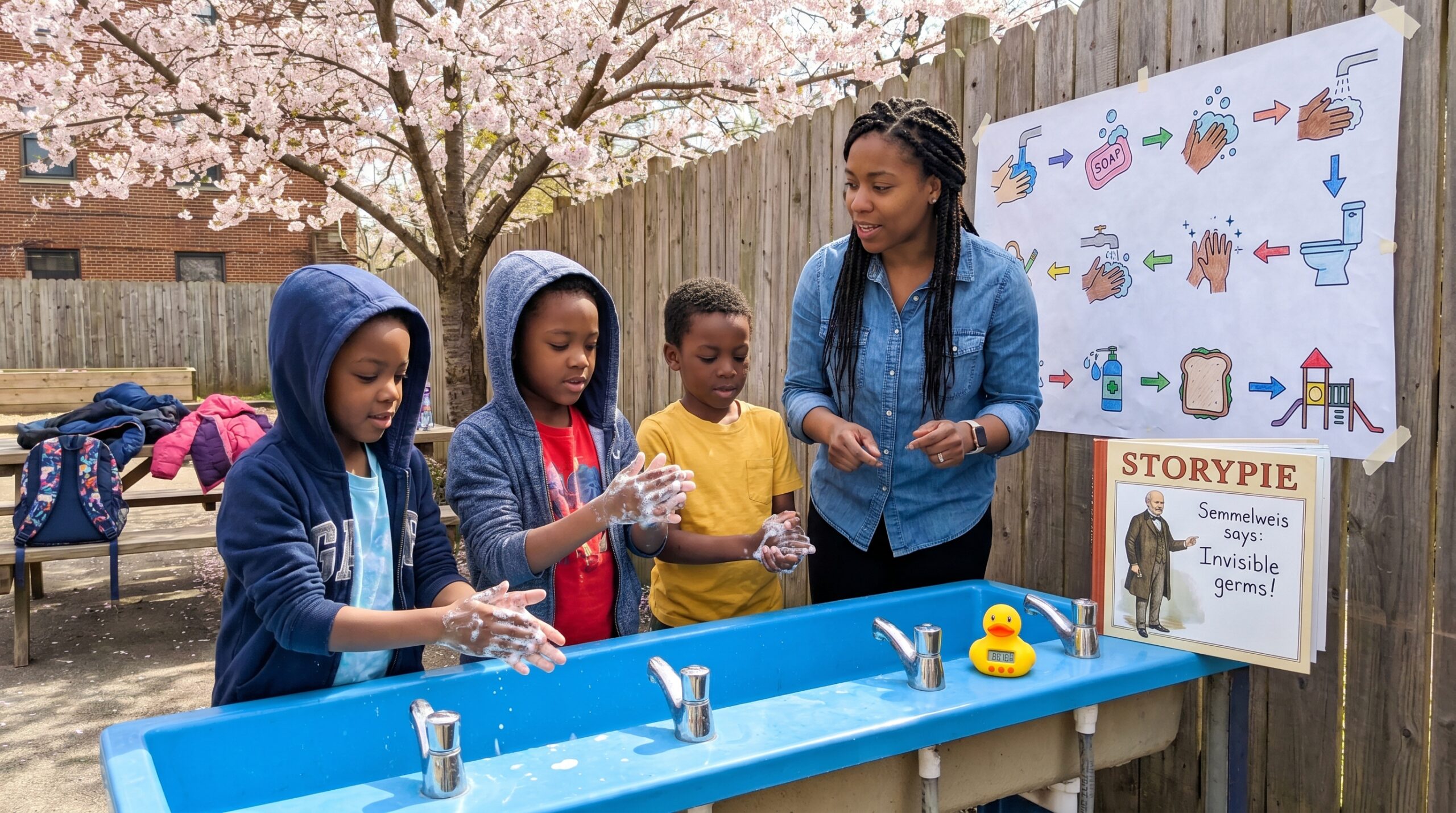
- Wet hands with clean running water.
- Apply soap and lather every surface: palms, backs, between fingers, under nails, thumbs, fingertips, and wrists.
- Rub for at least 20 seconds. For fun, sing Happy Birthday twice or a silly tune.
- Rinse under running water.
- Dry with a clean towel or air dry.
When soap and water are not available
Use an alcohol-based hand rub with at least 60 percent ethanol or 70 percent isopropanol. Rub all hand surfaces until dry, about 20 to 30 seconds. However, choose soap and water when hands look dirty or after care for vomiting or diarrhea.
A brief history and a simple hero
In the 1840s Ignaz Semmelweis noticed that cleaning hands cut infections in maternity wards. His idea changed medicine. Today we teach a short 20 second routine to every child. That past to present link feels like a tiny marvel.
Practical tips for teachers and parents
Make handwashing playful and simple. Also, small changes make routines stick.
- Try a glitter germs demo to show how germs spread.
- Keep a sticker chart for consistency.
- Post a step-by-step poster at the sink.
- Place a small stool so children can reach independently.
- Use single-user liquid soap in shared settings when possible.
- In low-water areas, consider tippy-taps or alcohol rubs to reduce barriers.
Final thought
Model the habit and celebrate small wins. Teach the 20 second routine and make it ordinary and fun. For easy stories and audio to help practice, explore Storypie.
Parent and teacher takeaway
- Model washing every time.
- Use a 20 second song or rhyme.
- Make sinks reachable and fun.
For more simple stories and audio that show steps and lively characters, visit Storypie.