
Childhood fear is a normal and useful emotion. It warns children about danger and helps keep them safe. For example, that sudden jump at a loud noise is childhood fear in action. In fact, in 2024, 12% of U.S. adults regularly reported feelings of worry, nervousness, or anxiety, highlighting that feelings of fear and anxiety are prevalent even in adults.
Understanding childhood fear
Fear feels both physical and emotional. The brain notices a threat and the body responds. Heart rate rises, breathing quickens, muscles tense, and the child may freeze or move away. These reactions help protect children in short bursts. Research indicates that 9.1% of U.S. adults had a specific phobia in the past year, suggesting that fears can persist into adulthood and may start as childhood fears.
How fears change with age
Fear shifts as children grow. Infants startle at loud sounds. Toddlers often worry about separation. Preschoolers fear monsters and the dark. School-age children worry about real dangers and injuries. Teens fear social judgment and peer rejection. These changes track growing thinking and social skills. Understanding societal fears can also help contextualize children’s fears; for example, in 2025, 69.1% of Americans reported being afraid or very afraid of corrupt government officials, which may influence how children perceive authority and safety in their environment.
Normal fear versus a problem
Most fears ease with time and support. However, a phobia or anxiety disorder lasts many months and disrupts daily life. If fear causes severe physical symptoms, school refusal, or persistent distress, get help from a pediatrician or mental health professional. In fact, if we consider that 50.6% of Americans reported being afraid or very afraid of a loved one becoming seriously ill, it highlights the potential for fears to impact family dynamics and children’s emotional well-being.
Simple ways parents can help with childhood fear
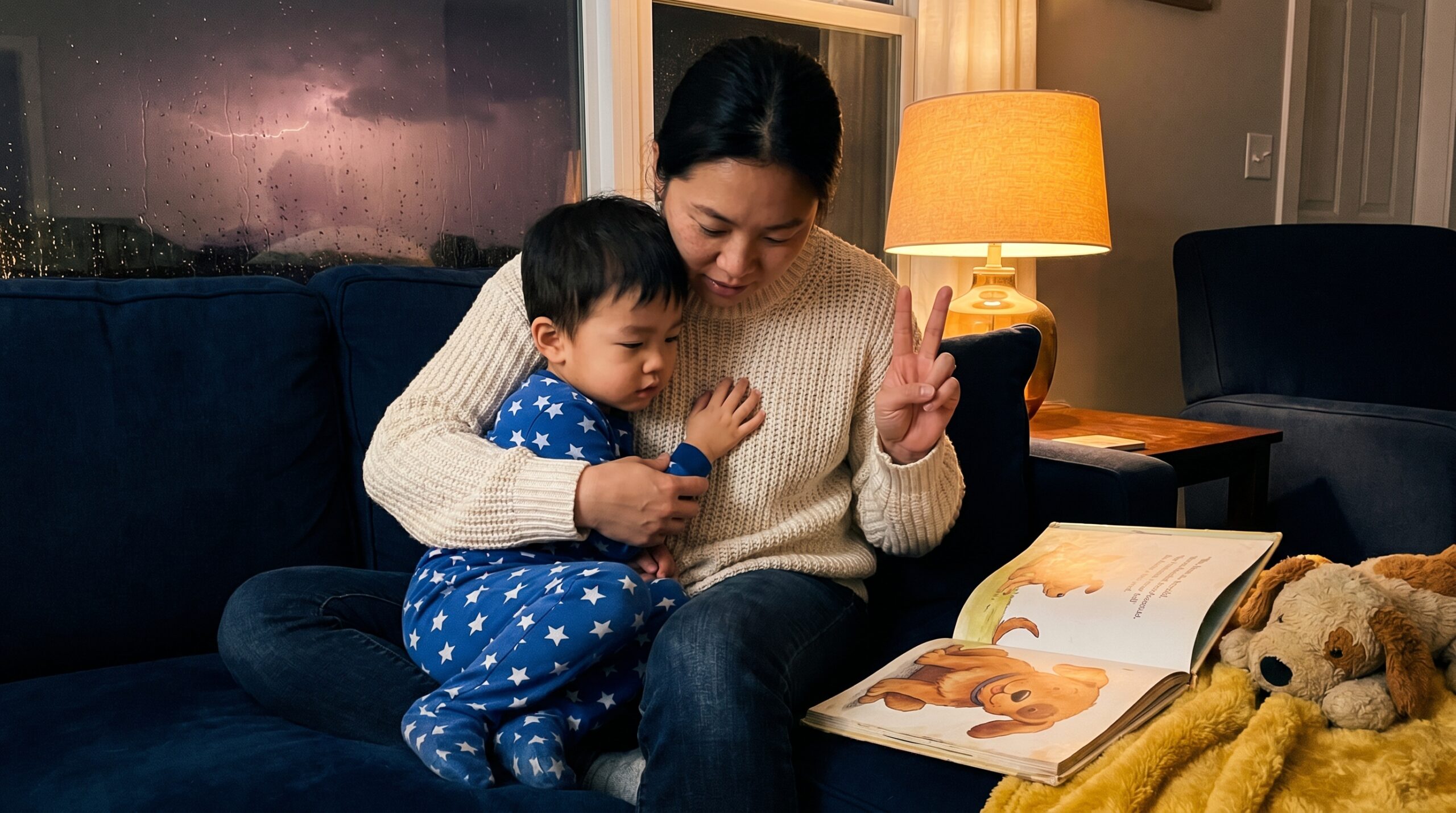
Parents can do many small things to help. First, name the feeling: “I can see you are scared.” Naming calms and teaches emotion words. Next, breathe together using three slow counts. Put a hand on the belly so the child can feel it rise and fall.
- Validate feelings and stay calm. Children learn regulation by watching grown-ups.
- Create routines for sleep and meals to reduce worry.
- Use gentle, gradual steps toward feared situations to build confidence.
Safety tips for common triggers
Practical steps make a big difference. Around dogs, always ask the owner first. Keep hands low and still. Teach a child to stand like a tree if a dog approaches. For thunderstorms, make a cozy spot with a blanket and soft light. Explain that storms are temporary and practice the breathing trick before a storm. It’s important to recognize that, as of 2023, 40% of Americans reported being afraid to walk alone at night within a mile of their home, which may contribute to children’s fears about personal safety.
When to seek help and what works
If fear is persistent and disabling, evidence-based treatments help. Cognitive behavioral therapy often works well, and parent-led components can boost results. Schools and pediatricians can help coordinate care. For gentle tools and friendly characters, explore Storypie for prompts and warm stories.
Read or listen to a story about Fear now: For 3-5 year olds, For 6-8 year olds, For 8-10 year olds, and For 10-12 year olds.
Explore Storypie for more calm prompts and warm characters that help children name and manage childhood fear.