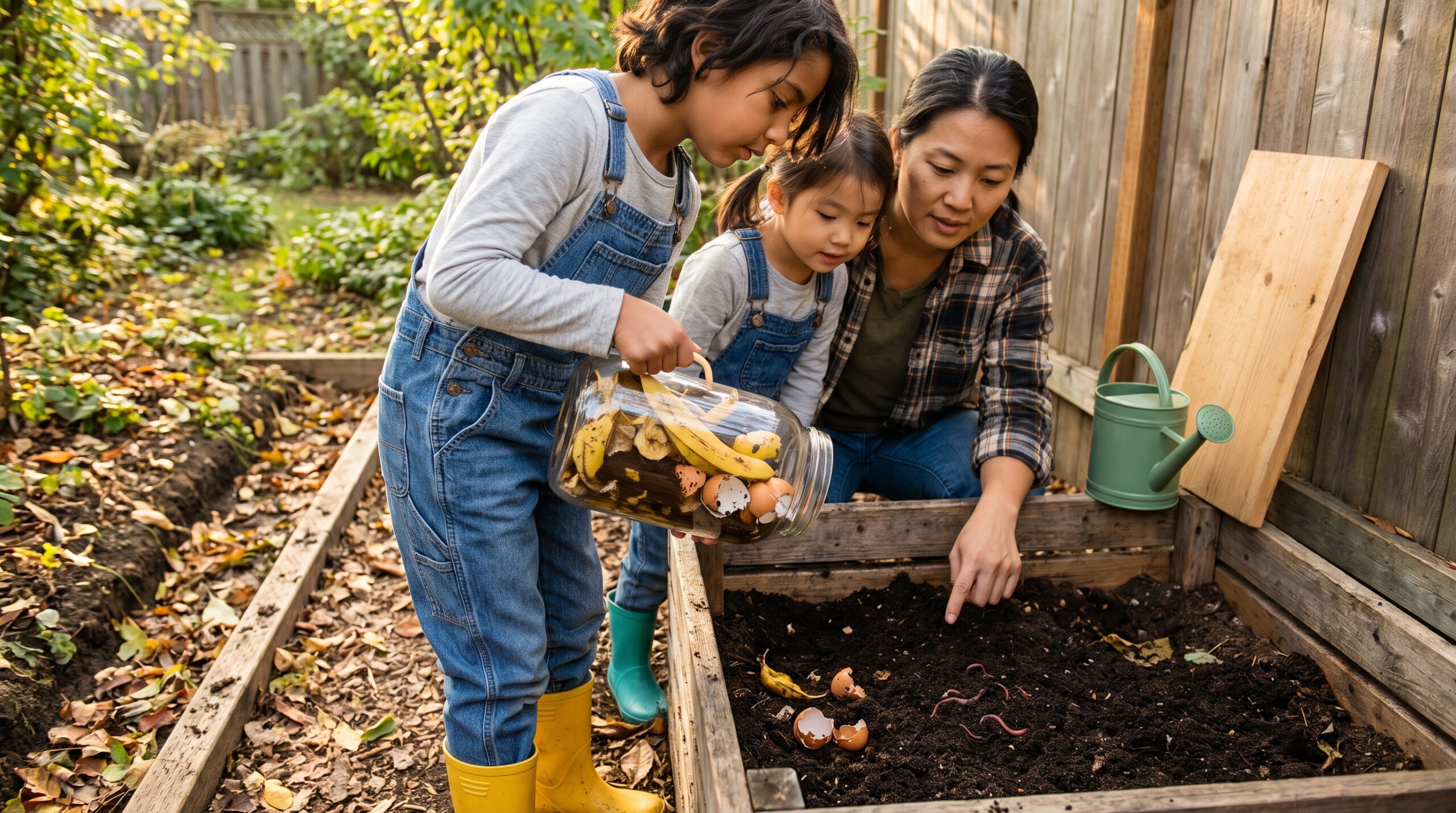
Home composting with kids turns kitchen scraps into dark, crumbly soil that plants adore. At Storypie we celebrate this small loop with a cozy, earth-first tale and a gentle tip: start a kitchen-scrap jar children can empty weekly. It is a tiny, delicious miracle and a lovely way to teach responsibility.
Why home composting with kids matters
Composting is the biological breakdown of organic matter by tiny microbes. For thousands of years people returned plant waste to the land. Today composting cuts household waste and lowers landfill methane. In fact, composting food waste and land-applying it can lead to a 78% reduction in greenhouse gas emissions compared to landfilling. Also, finished compost feeds gardens and builds healthy soil life. In 2023, U.S. Composting Council (USCC) member compost producers processed a total of 14,379,113 tons of organic feedstock, an increase of 5,513,600 tons compared to 2020.
Getting started at home
Start small and keep it simple. Place a sealed kitchen caddy or jar on the counter for vegetable peels, fruit scraps, coffee grounds and tea bags. Then store it in a cool spot or the fridge if you prefer.
Every week empty the jar into a backyard heap, a bin, or a tumbler. For flats try a worm box or bokashi system. Also look into local council food waste collections if available.
Balance the pile
Kids can help sort, and this is a great task. Greens give nitrogen: fresh vegetable scraps, grass clippings, coffee grounds. Browns give carbon: dry leaves, straw, shredded cardboard and paper. Aim for a mix so the pile is not soggy or all woody. Think of it as layering colors rather than chemistry.
Simple methods for families
There are different ways to compost depending on your time and space. Hot composting needs attention and regular turns. It can finish in weeks or months and kill many weed seeds. Cold composting is low effort and may take six months to a year. Vermicomposting with red wigglers suits small spaces and flats. Bokashi ferments more food types, including small cooked leftovers, and is followed by a burying step.
Care rules and quick fixes
Keep compost like a wrung out sponge, not wet, not dry. Turn with a fork to add air and avoid smells. If the pile smells rotten add more browns and turn it. If pests visit, cover food scraps and use a closed bin. Also, slow breakdown often means not enough nitrogen or moisture.
Easy checklist
- Collect scraps in a sealed jar on the counter.
- Layer greens and browns for balance.
- Turn the pile every few weeks.
- Add browns if it smells bad and water if it is dry.
Finished compost and joyful uses
Finished compost is dark, crumbly and smells earthy. Use it as mulch, mix it into potting blends, or work it into beds. In autumn collect leaves as browns and insulate heaps for winter. For kids try a weekly compost detective activity to see which scraps vanish fastest. In 2023, USCC members produced 6,002,260 tons of finished compost, up from 5,159,986 tons in 2021, showcasing the rising production and positive trend in recycling organic waste.
Small weekly rituals families love
Start with a kitchen-scrap jar and celebrate small weekly victories. Make a counting game, watch bugs, or measure the pile. Also read together to spark wonder. Download the Storypie app to read a composting tale and share the routine.
Read or listen to a story about Composting now: For 3-5 year olds, For 3-5 year olds, For 6-8 year olds, For 8-10 year olds, and For 10-12 year olds.