
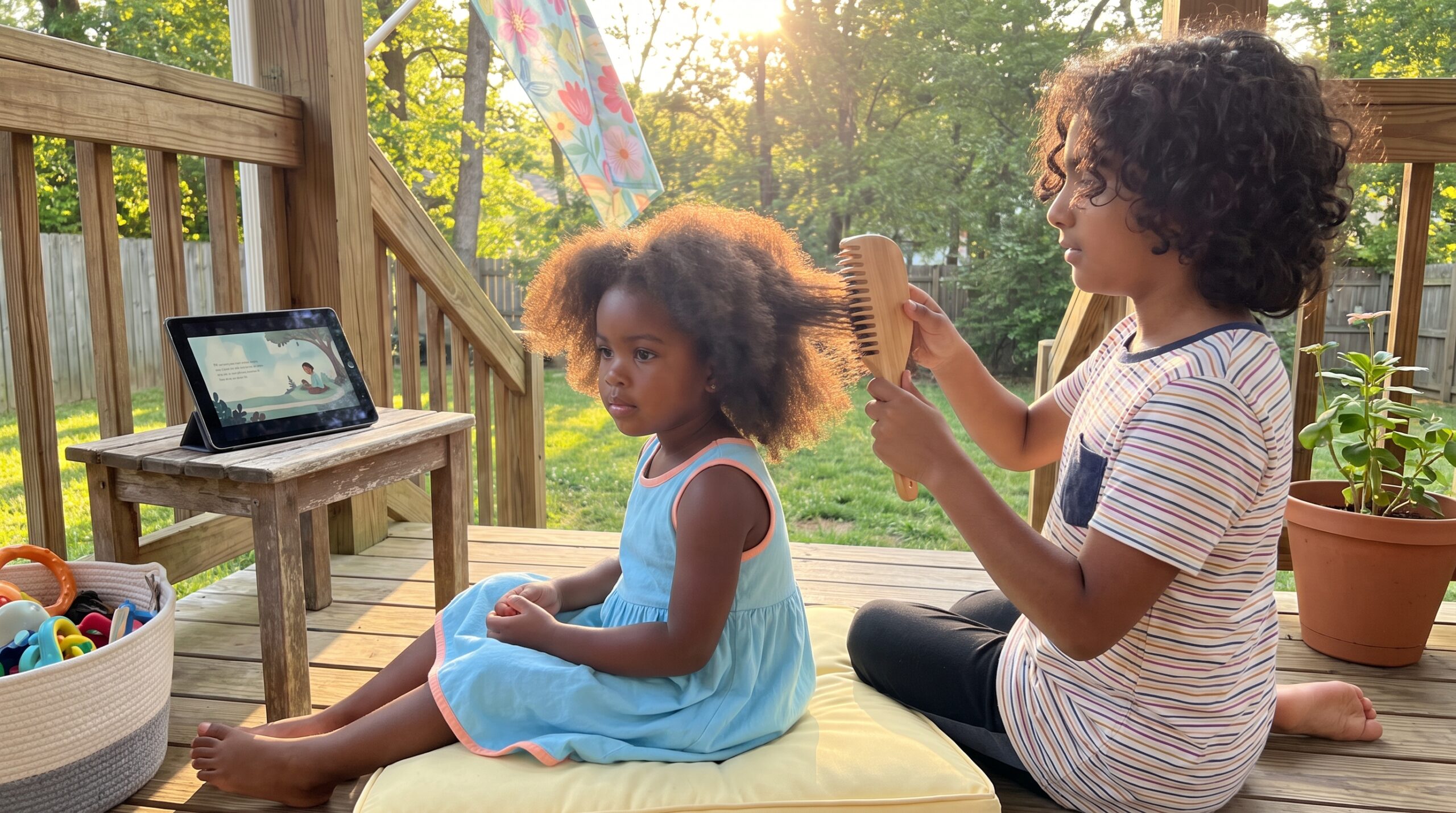
Brushing my hair for kids can be calm, kind, and even a little playful. This short guide shows safe steps, the right tools, and gentle tricks. Use these tips at home or before school.
Brushing My Hair for Kids: Purpose and Tools
First, know why brushing matters. Brushing detangles hair, spreads natural scalp oils, and lightly stimulates circulation. It keeps hair neat and helps comfort a child during routines. In fact, hair grows at a rate of approximately 0.35 mm per day, and about 100 hairs are shed daily, making regular brushing an important part of hair maintenance.
Next, pick tools by need. Match brush and comb to hair type. Some great options include:
- Wide-tooth comb for wet tangles
- Paddle brush for straight or wavy hair
- Boar-bristle brush to smooth and spread sebum
- Flexible detangling brush or wet brush to cut snapping
Step-by-step Routine
Prepare hair first. Dampen hair, or rinse if needed. Add a little conditioner or a leave-in detangler. Clip sections away so you work in small parts.
Start at the ends and work up. This reduces pulling and pain. While detangling, pinch the hair a few inches above a knot. This trick lowers pressure on the scalp. Research shows that improper use of hairbrushes can lead to conditions like trichomalacia, trichorrhexis nodosa, and traction alopecia, so it’s important to be gentle.
Finally, finish with long, gentle strokes to spread natural oils. Reward cooperation with a quick praise or a smile. Small rituals make brushing feel kinder and calmer.
Wet Hair and Different Textures
Wet hair is more elastic and also more fragile. For curly or coily hair, detangle when damp with lots of conditioner. Use a wide-tooth comb or fingers.
Wavy hair benefits from gentle finger work to keep pattern and bounce. Straight hair smooths well with a paddle brush or a boar-bristle mix.
Frequency, Mistakes, and Care
Most children need brushing once or twice a day. Avoid over-brushing and never tug on soaking wet hair. According to an August 2018 Ipsos poll, Americans brush their hair an average of 1.8 times per day, which can serve as a useful benchmark for teaching kids about their own routines. Using the wrong tool or rushing can cause split ends and breakage. The American Academy of Dermatology warns that brushing your hair 100 strokes each day can cause split ends, so moderation is key.
Also, ditch the old 100-strokes rule. Instead, be gentle and steady. If a tangle resists, mist with detangler and work from ends inward. Breathe easy and take your time.
Make Brushing My Hair for Kids Child Friendly
Turn brushing into a tiny ritual. Sing a two-line rhyme. Let the child hold a small toy. Offer choices like which clip or which brush.
Use slow, small strokes and praise cooperation. If a tangle stays put, stop and try conditioner or fingers. Keep it short, sweet, and proudly ordinary.
Hygiene, Products, and Troubleshooting
Clean brushes weekly. Remove hair, wash with mild shampoo, rinse, and dry bristles facing down. Avoid sharing brushes when lice or scalp infections are a concern.
For dry ends, a tiny dab of jojoba or argan oil adds shine. However, avoid heavy oils on fine hair. Leave-in conditioners and detangling sprays can speed the routine.
Troubleshooting tips:
- Persistent knots: soak with conditioner and tease knots with a wide-tooth comb
- Static: try a leave-in spray or a light mist of water
- Breakage: switch to gentler tools and trim split ends
Try this five-minute ritual: a short story, a toy, gentle strokes. Make brushing tiny, proud, and wonderfully ordinary.
Read or listen to a story about Brushing My Hair now: For 3-5 year olds, For 6-8 year olds, For 8-10 year olds, and For 10-12 year olds.
For more stories and calm routines, visit Storypie. Keep brushing soft, steady, and predictable.