
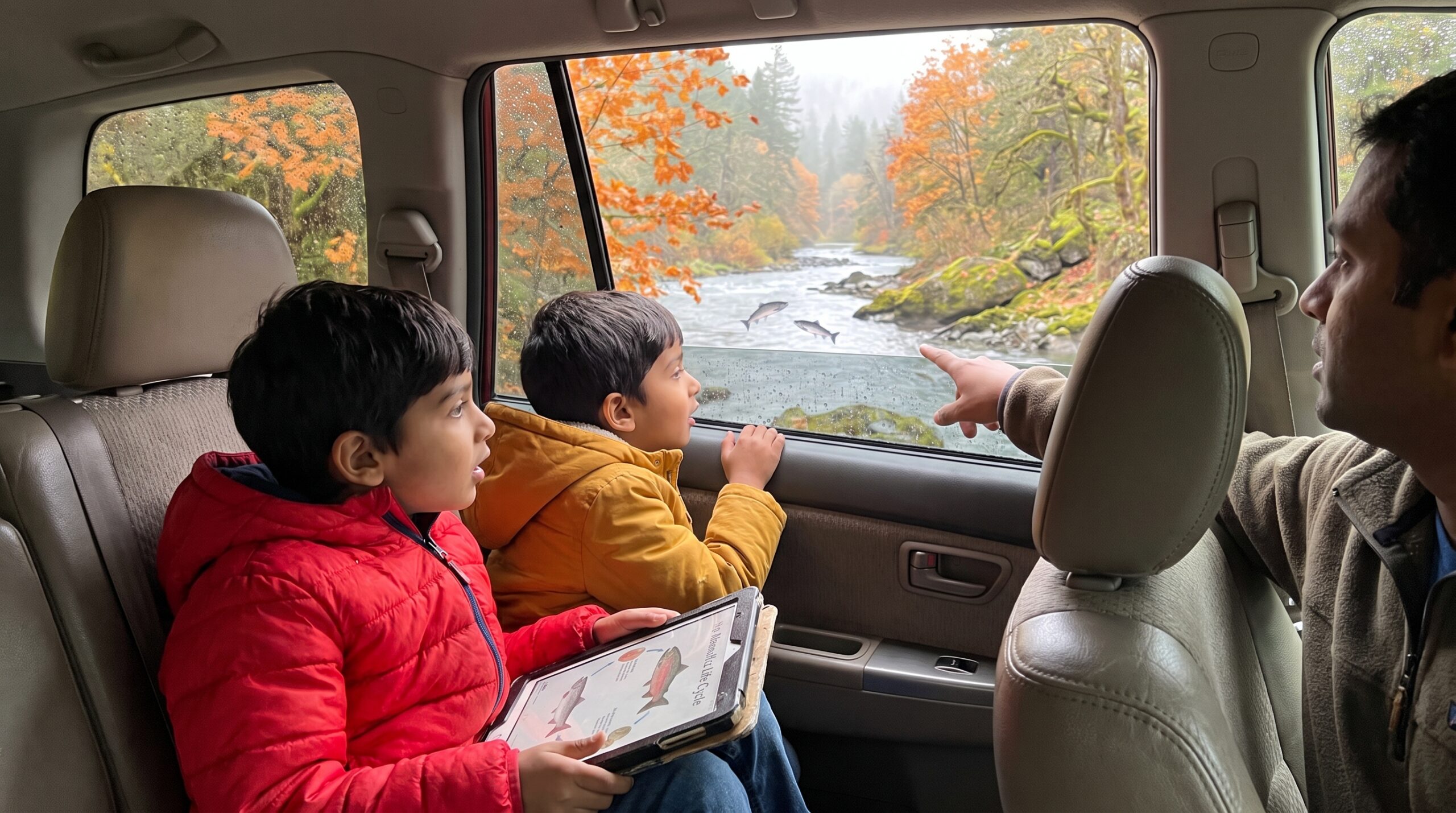
On a crisp October morning, I told my kids about the salmon life cycle for kids. I said a salmon begins as a tiny egg in river gravel. Then it grows, travels, and returns. That short portrait sparks big questions.
Salmon life cycle for kids: River to sea
First, salmon hatch in freshwater gravel nests called redds. Next, alevin hatch and hide with a yolk sac. Then fry swim and start to eat. After that, parr wear vertical stripes. Soon smolt turn silver and ready themselves for salt water. Finally adults feast in the ocean for months or years. Many return in the fall to spawn. For Pacific salmon, this often ends their life cycle. Atlantic salmon sometimes survive to spawn again. However, the population of wild Atlantic salmon is concerningly low; in 2023, the total reported rod catch in Scotland was just 32,477, marking the lowest number since records began in 1952, which is a 24% decrease from 2022 and significantly below the five-year average, according to Scottish Government statistics.
Three simple reasons salmon feel magical
- They move between fresh water and the sea. Most salmon are anadromous, so they grow big and strong.
- They remember the scent of home. Young salmon imprint on their stream and use that memory to return.
- They feed forests. When many Pacific salmon die after spawning, their bodies bring ocean nutrients to rivers and trees.
What salmon look like
Point out a salmon body that is streamlined for fast swimming. Also show gills, the small adipose fin, and the forked tail. Their pink-orange flesh comes from tiny crustaceans and carotenoids in their diet. Predators make dramatic characters in the story: bears, eagles, seals, and even orcas. Little salmon face birds and bigger fish. It’s interesting to note that a 100-gram serving of raw farmed Atlantic salmon provides approximately 1.97 grams of omega-3 fatty acids and 20 grams of protein, meeting 41% of the Daily Reference Value for protein, making it a nutritious choice for kids and adults alike, as reported in the Global Salmon Initiative Sustainability Report.
People, threats, and hope
People have shaped salmon runs for centuries. Dams can block migration. Also warm water from climate change harms salmon. Pollution and overfishing add pressure. In fact, the declared salmon catch by rod in England and Wales decreased to 5,188 in 2023, an 18.8% drop from 2022 and a 36.3% decrease compared to the five-year mean, according to UK Government data. Yet many fixes bring hope. Families celebrate dam removals and riparian planting. Indigenous stewardship and managed fisheries help runs rebound. I pick sustainable salmon at the market and cheer when local runs return.
Simple steps to share the story
Keep it short and active. Try a car ride version: “I was a tiny egg in a river. I grew. I traveled far. I came home.” Add a map and draw the ocean route. Make a life-cycle wheel with paper plates. Tip the viewing rules: watch from a distance, do not step on redds, and check visitor center times.
Read or listen to a story about Salmon now: For 3-5 year olds, For 3-5 year olds, For 6-8 year olds, For 8-10 year olds, and For 10-12 year olds.
Open these in the Storypie app to listen together. Then try a tiny experiment tonight. Ask your child to draw the moment they change color or the moment they return home. That small image will stick. Hang the drawing on the fridge or tuck it in a family album for safekeeping.









