
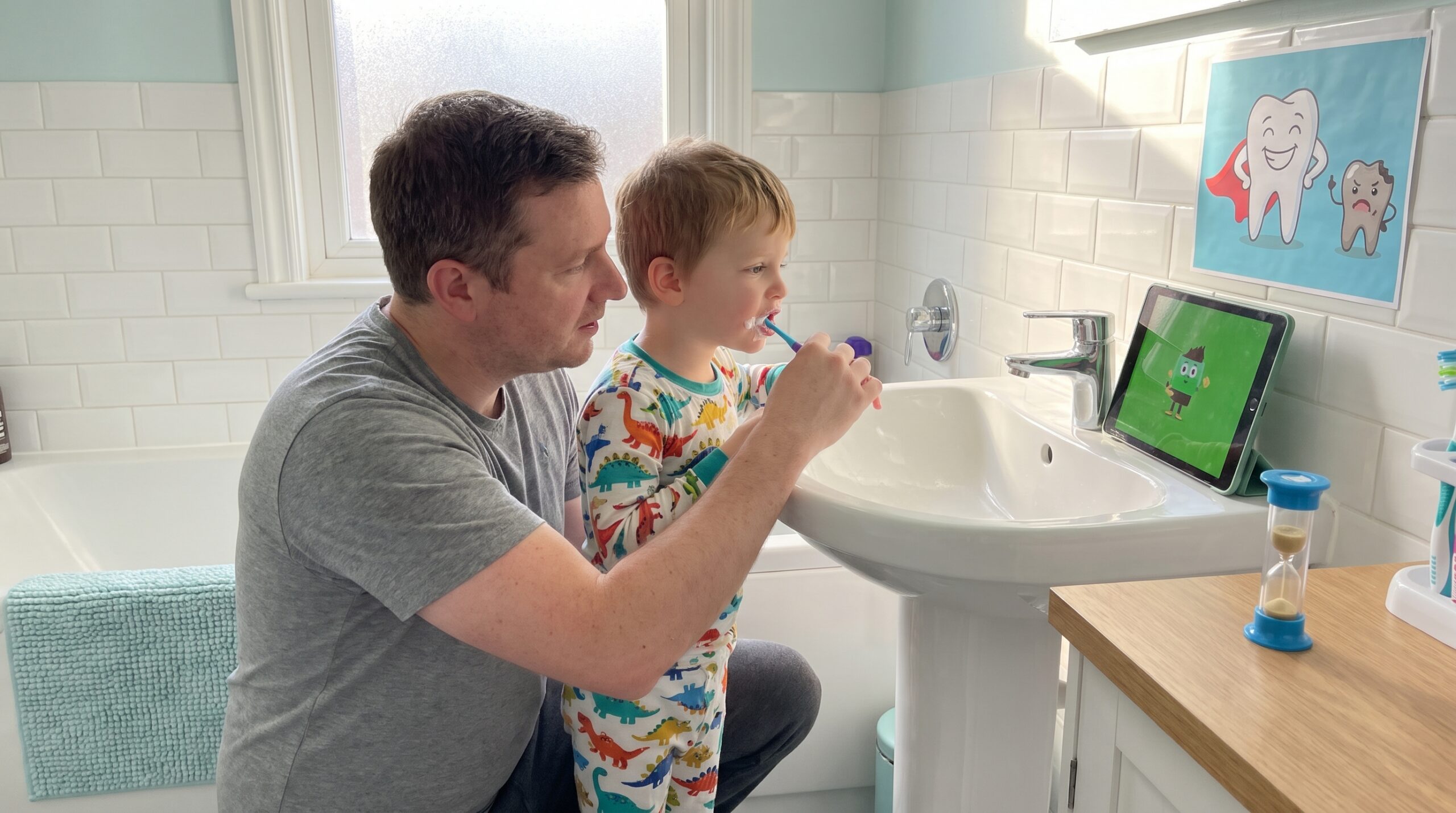
Dental caries in children means tooth decay caused by bacteria and sugar. It is local, progressive, and contagious. In short, plaque bacteria eat sugars and make acid. Then the acid lowers pH and pulls minerals from enamel. Early damage looks like a white spot. Fortunately, white spots can reverse with fluoride and fewer sugary snacks. Small rituals win. Make it fun. Brushing can be a tiny adventure. In fact, according to the 2024 CDC Oral Health Surveillance Report, about 11% of U.S. children aged 2–5 years had at least one untreated cavity in their primary teeth, highlighting the importance of early dental care.
How dental caries develop
Plaque is a sticky biofilm on teeth. When you feed plaque frequent sugars, acid attacks repeat. Saliva normally buffers acid and brings minerals back. However, when acid wins, demineralization outpaces repair. Then the lesion deepens, enamel breaks, dentine gets involved, and the pulp can be affected. In baby teeth this can happen faster than you expect.
Signs to watch for
Look for these common signs. For parents, simple checks work well.
- White chalky spots on enamel
- Brown patches or visible holes
- Sensitivity or pain with eating
- Night wakings or refusal to eat in young children
If untreated, caries can lead to abscess, infection, missed school, and lost sleep. So act early and calmly. Research shows that among children aged 6–9 years in the United States, nearly 17% had at least one primary or permanent tooth with untreated decay, and about 50% had at least one decayed, filled, or missing tooth. This underscores the significant impact of dental caries on children’s oral health, reinforcing the need for preventive measures.
Risk factors that raise concern
Some things increase a child’s risk. First, frequent snacking on sugary or sticky foods is high risk. Second, night-time bottles with milk or juice often cause early childhood caries. Also, reduced saliva, certain medications, enamel defects, and sharing utensils can help spread bacteria. Social and access barriers matter too. Overall, caries is one of the most common chronic diseases worldwide and also one of the most preventable. A staggering statistic is that nearly 90% of U.S. adults aged 20–64 years have experienced dental caries in their permanent teeth, according to data from the National Institute of Dental and Craniofacial Research (NIDCR).
Age and where cavities appear
Age changes the pattern. Infants can get baby bottle caries. School-age children often get cavities in molar pits and fissures. Newly erupted permanent molars are prime candidates for sealants. Meanwhile older adults face root caries and dry mouth from medicines.
Simple, powerful prevention
Prevention is straightforward and works. Fluoride helps remineralize early lesions. Use a rice-grain smear of fluoride toothpaste for under 3s. For ages 3 to 6 use a pea-sized amount. Supervise brushing until about age 6 or 7. Also, brush twice daily with gentle small circles. Limit sugary snacks and swap sweet drinks for water between meals. Finally, avoid putting a child to bed with anything but water.
Extras that help
- Professional fluoride varnish every 3 to 6 months for high-risk children
- Sealants for molars using resin or glass ionomer
- Xylitol gum for older children and caregivers
- Silver diamine fluoride to arrest lesions when care is hard to access
Detecting and treating dental caries
Detection relies on visual checks and bitewing radiographs. Dentists use staging systems like ICDAS to plan care. Treatment can range from remineralization and small fillings to stainless steel crowns or pulpotomy for advanced disease. Antibiotics are for spreading infection only, not routine cavity care. Modern dentistry favors prevention and minimally invasive treatment.
Make routines feel like stories with Storypie
At Storypie, we help tiny routines feel like stories. For example, turn toothbrushing into a two minute story. Have kids brush in little circles each morning and night. Small steps add up and smiles stick.
Read or listen to a story about Dental Caries now: For 3-5 year olds, For 3-5 year olds, For 6-8 year olds, For 8-10 year olds, and For 10-12 year olds.
For a gentle nudge, try the app: Get the Storypie app. Start small, make it a story, and watch their smile stick.