
Following directions for kids is a basic skill with big effects. It means hearing or seeing an instruction, understanding it, holding it in mind, and doing it. Think of it as receptive language plus action. Simple, yet layered. According to the 2020 National Survey of Children’s Health, among U.S. children aged 3–5 years, 37.5% “always” and 45.8% “most of the time” can follow instructions to complete a simple task when paying attention, highlighting the prevalence and importance of this skill in early childhood development.
Following Directions for Kids: What it looks like
Early on, directions are short. A toddler follows a single-step cue like “Come here.” By two to three years, many children handle two-step requests. Preschoolers manage longer sequences. Individual speed varies. Working memory sets the limit on how many steps a child can keep in mind. In fact, a survey of 3,305 kindergarten teachers found that 78% rated “follows directions” as a “very important” or “essential” skill for kindergarten readiness, emphasizing the critical role this skill plays in preparing children for school.
Why following directions matters
First, it keeps children safe. Next, it smooths classroom routines. Finally, it builds independence and confidence. When kids can follow a short set of instructions, they join games, tidy up, and feel capable. It is quietly one of the most influential school readiness skills you will teach. Research shows that children who can follow 1- to 2-step directions are more likely to demonstrate independence in various settings; for instance, a 2009 teacher survey revealed that 46% of teachers reported their target students independently followed instructions presented verbally.
What underpins following directions
Several systems must work together. Attention, language comprehension, short-term memory, sequencing, auditory processing, and motor planning all play a role. Hearing is foundational. Even mild hearing loss can make oral directions fragile, especially in noisy rooms. Also, attention or self-regulation differences can look like misunderstanding when the issue is focus. A study found that among participants, 71.4% followed the provided instructions correctly, indicating the importance of reading and adhering to directions, as nearly 30% did not read them at all, which can be a common challenge for children.
How problems with following directions show up at home
Children may ignore multi-step requests. Or they follow only part of an instruction. They might need repeated prompts. Sometimes a child seems oppositional when they simply missed a key word. Also, a child can do fine during play but struggle in group settings.
When to check and seek help
First rule: check hearing. Next, note whether difficulty happens with different adults and in different settings. If concerns persist, ask for a speech and language screen or a classroom observation. Professionals use receptive language tests and working memory tasks to identify causes. Early help is better than waiting.
Practical steps to try at home
Keep language tidy. Use one instruction at a time. Choose short verbs and clear nouns. Also, chunk longer directions. Say step one, then step two. Pause between steps.
- Add visuals. A picture, a written list, or a toy cue lowers the memory load.
- Use rhythm. Clap or tap once for each step to make it playful.
- Check comprehension. Ask your child to repeat the steps back.
- Reduce noise. Move to a quieter corner for important directions.
- Practice with games. Simon Says and treasure hunts make practice fun.
- Make a tiny ritual. A “ready basket” with a bookmark and a timer turns practice into habit.
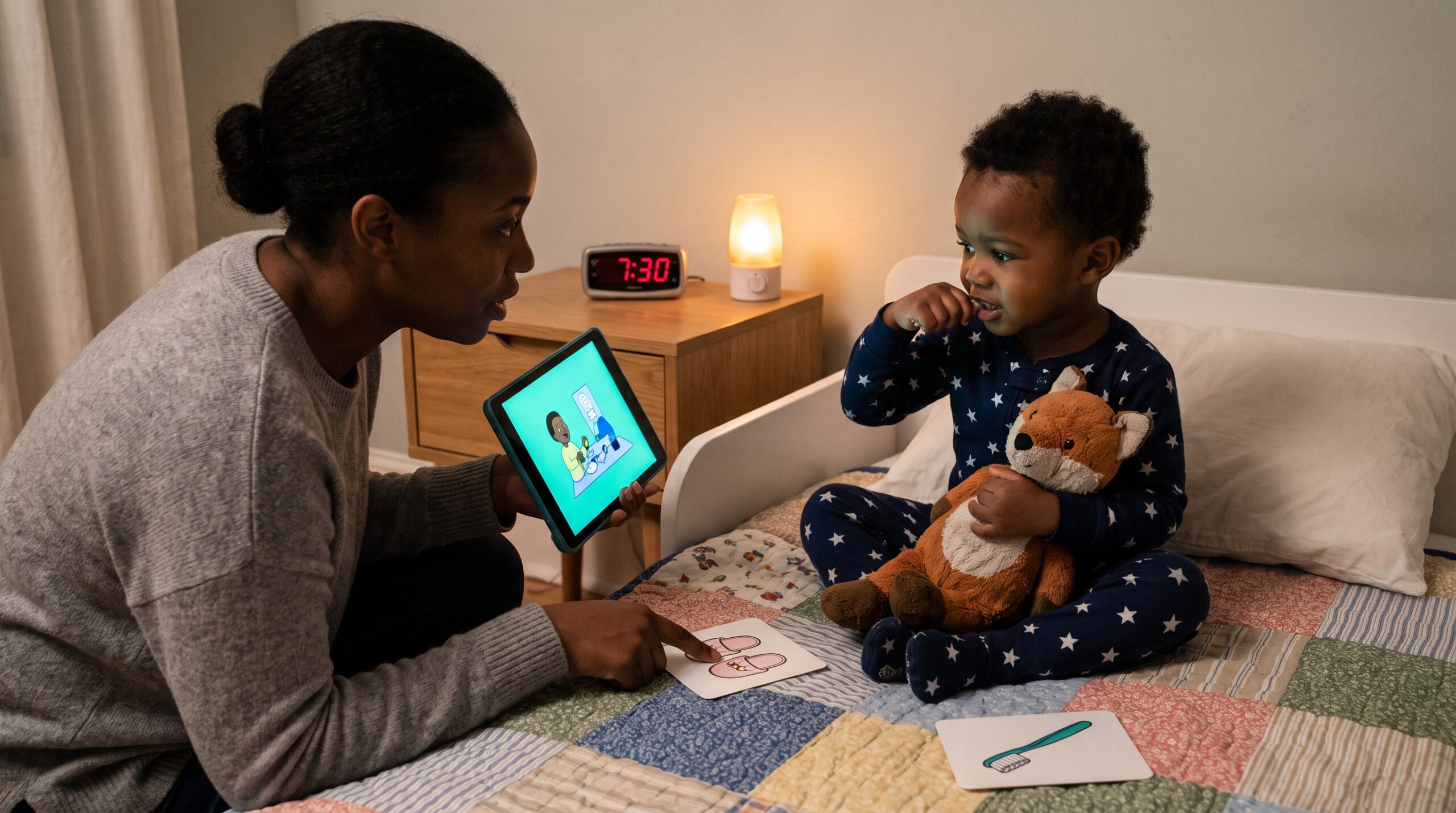
Bedtime mini scenario
Try this short routine: “Pajamas on, book on lap.” Two tiny steps. The child repeats each step back. It is a tiny daily win that trains sequencing and confidence.
When to seek evaluation
Consider evaluation if a child cannot follow one- to two-step directions by expected ages. Also seek help if difficulty appears across home and school. Finally, ask for evaluation if there are speech, attention, or hearing concerns.
Read or listen to a story about Following Directions now: For 3-5 year olds, For 3-5 year olds, For 6-8 year olds, For 8-10 year olds, and For 10-12 year olds.
To try a friendly routine, use Storypie stories at bedtime. After a short tale, ask your child to repeat two simple steps, one at a time. Also consider a quiet corner and a visual cue to make directions clearer.
For more resources, visit the Storypie wellness section on following directions. You can also download the Storypie app to practice small rituals together.